Observe
Start with observation. Not evaluation, not measurement — just paying attention. When you watch without an agenda, you see more than you expected.
A portfolio platform for capturing learning that matters and supporting what emerges.
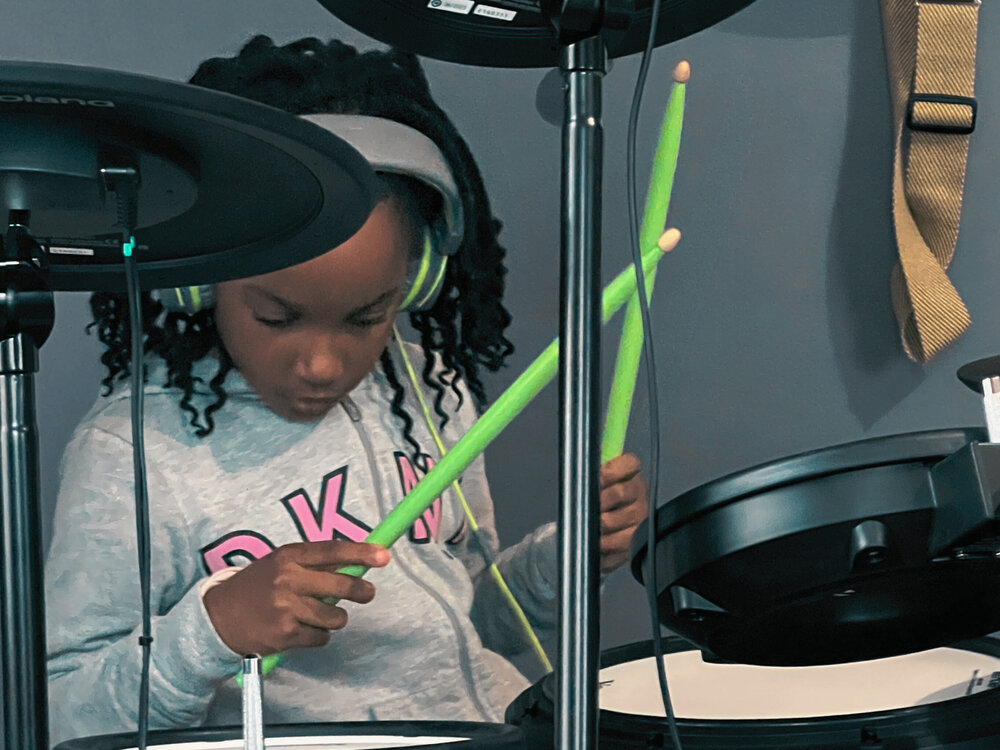
Lotus asked to stay late to keep practicing. She's been working on the same rhythm pattern for three days now, adjusting her tempo until it felt right.
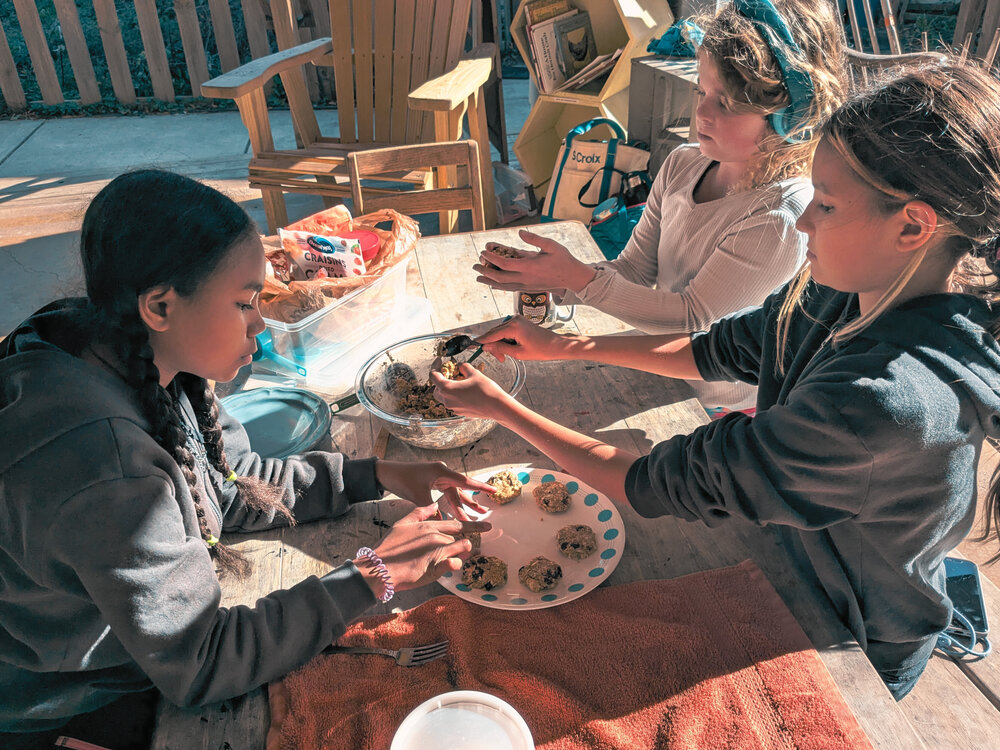
The girls decided to double the recipe, which meant figuring out what "1½ cups times two" actually meant. They debated, calculated, and got it right.
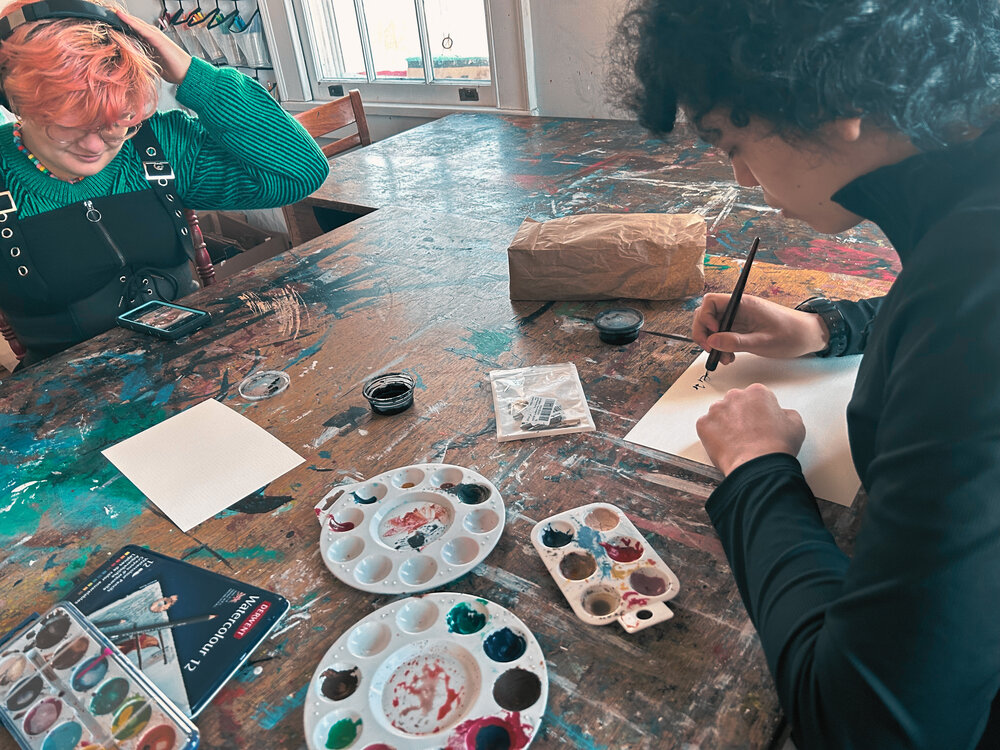
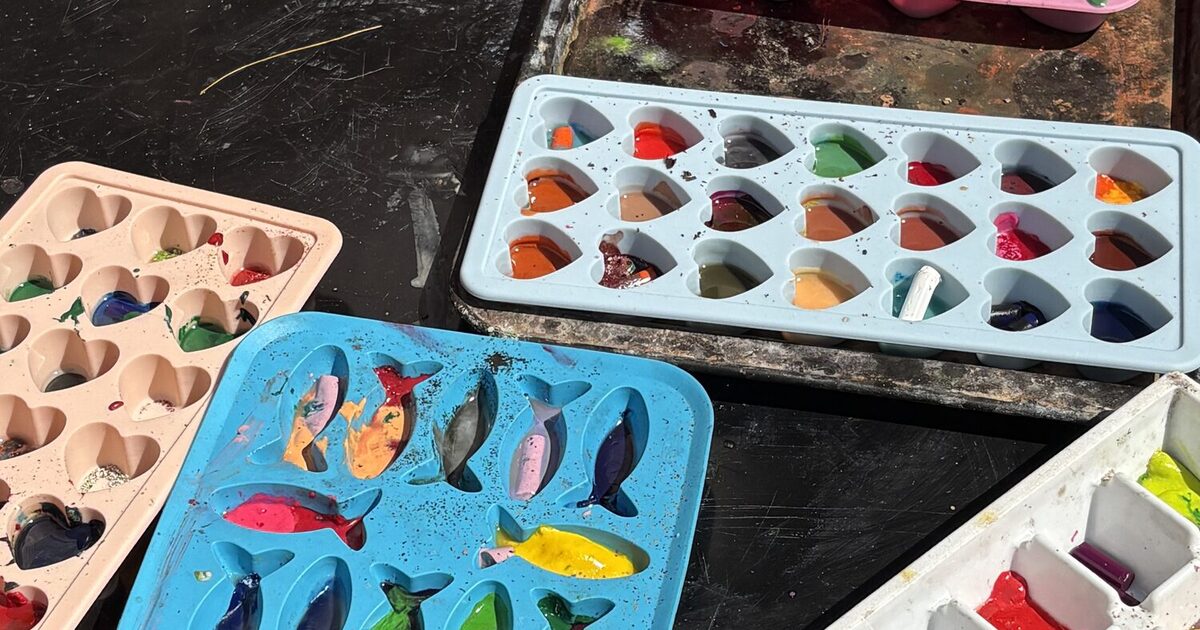
River experimented with letting the colors bleed into each other instead of fighting it. "I used to think mistakes ruined everything," she said. "Now I work with them."
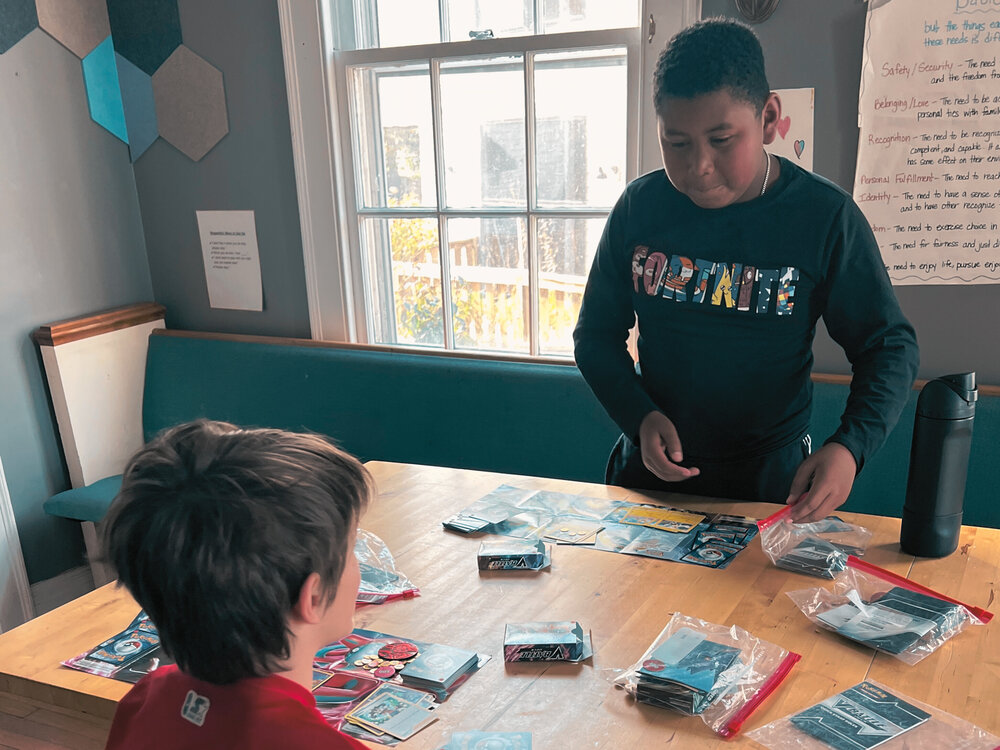
Theo spent twenty minutes explaining the card values and trading strategies to Marcus. He's become the go-to expert, and younger kids seek him out for advice.
Not because the curriculum was perfect. Not because someone assigned it.
It's just what children do: negotiate, experiment, persist, wonder, create.
The question isn't how to make learning happen. It's how to see it, and how to support it.
They're asking the wrong question. They want to know if your child is 'keeping up' with arbitrary standards. You want to know if your child is becoming who they're meant to be.
Start with observation. Not evaluation, not measurement — just paying attention. When you watch without an agenda, you see more than you expected.
Then you reflect it back. A photo, a few words, a moment captured. This isn't bureaucratic record-keeping. It's saying I noticed and this mattered.
The child sees themselves reflected. The parent sees what they couldn't witness. Patterns emerge that nobody planned. The documentation opens up what comes next.
The best teachers and facilitators bring intention to everything; structured lessons, curated offerings, and the space for something unexpected to emerge. You're doing more than delivering content. You're noticing what sparks curiosity. You're making space for projects and play. You can see where the real learning is happening — even when it doesn't look like "school."
Prism helps you capture all of it.
Scattered photos. Notes buried in apps. That familiar feeling of knowing your kids are learning incredible things, but not being able to show it. We've lived all of it.
You've got:
You've got:
Cool philosophy.
How does it work, though?
In the moment
A documentation practice has to survive a real day, with real children and eleven other things happening. So Prism takes it either way: a sentence you speak while your hands are full, or something longer you take real time over, because what you witnessed had more in it than you could catch in passing.
Your hands are full. The moment is happening right now. Tap the microphone and say what you're seeing out loud, and Prism writes it down for you, in your words.
Ten seconds of talking becomes a draft with your reflection already written. The audio isn't kept; the words are the record.
Maybe it was the outcome. Maybe it was the process. Maybe it was something that reached well past the activity itself.
Sometimes that's a photo and a line. Sometimes it's a reflection you write that evening, unpacking what your learner was working through and what surprised you. Prism holds both, and everything after the first keystroke saves itself.
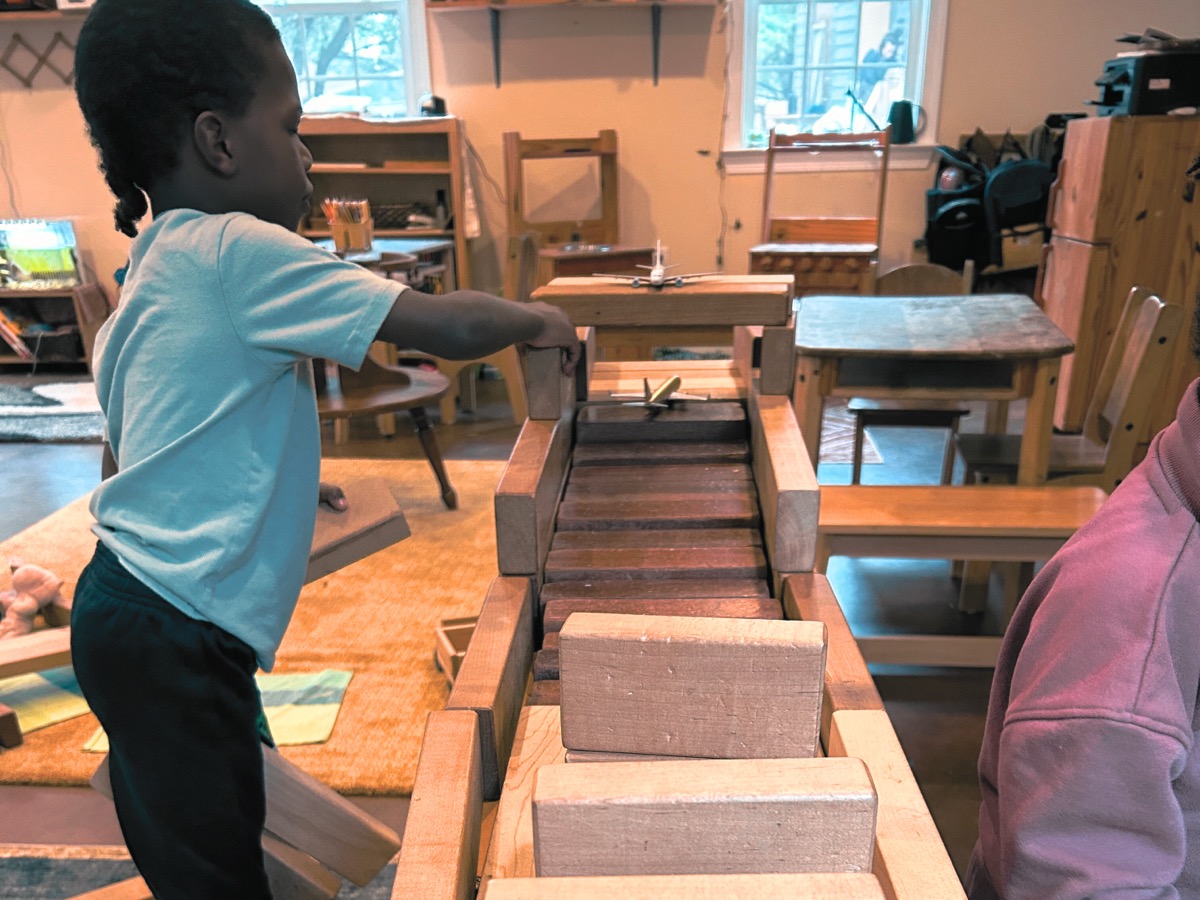
The moment happens at the creek, not at a desk. Prism's iPhone and Android apps put the capture button in the bottom bar and the camera one tap away, in light or dark to match the rest of your phone.
Catch it on your phone, finish it on a laptop. It's the same portfolio either way.
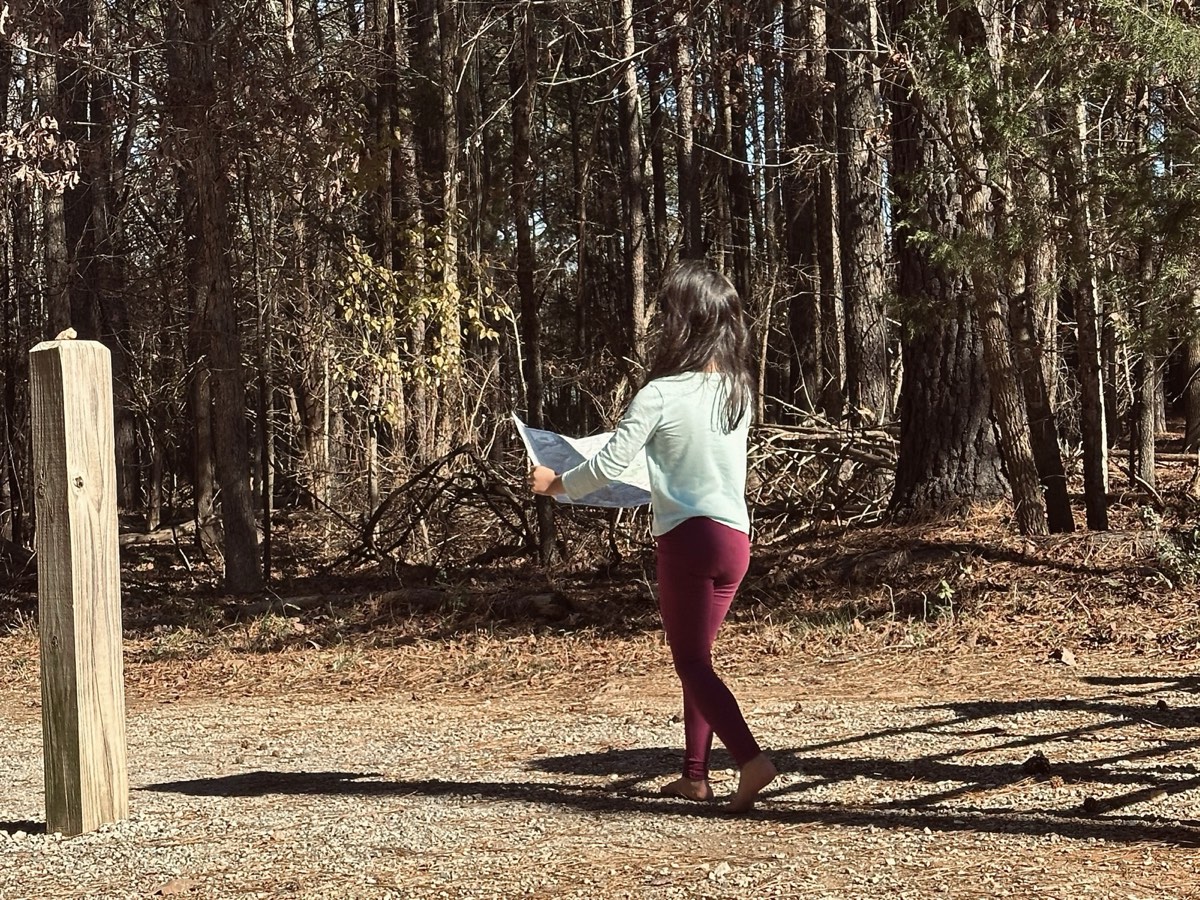
One child, one portfolio, and everyone who witnessed something writing into it. Two facilitators, both parents, a grandparent who had them for the weekend.
No one person has to hold the whole picture, which is what makes a documentation practice survive past the first enthusiastic month.
When a learner is ready for it, they can have an account of their own. That changes what the portfolio is: not a record kept about them, but one they are helping to write. And intentionally deciding what mattered is the most important kind of learning.
Over months
A grade flattens a child to a number. A test flattens a year to a percentile. A report card flattens all of it to five adjectives. Prism averages nothing. What you wrote stays what you wrote, and everything it produces points back to it.
Subjects, skills, developmental domains and interests, surfaced from what you actually described rather than picked off a list.
Which is why a richer reflection produces a truer picture than a caption ever will. The more you give Prism, the more it can see.
One entry is a snapshot. Dozens become a portrait. Themes surface across weeks and months that nobody set out to create.
You start to see what a child returns to, what they avoid, and where something is quietly getting stronger.
Every learner's portfolio is a library, and the Prism Assistant reads it only when you send it in with a question. "What should I leave on the coffee table next?" "Where has she used math without being asked?" The answers come from her actual entries: real books, real projects, real things happening near you.
It comes back with whole resources too: a learning story for a grandparent, a transcript for an evaluator, a report in whatever framework you need.
Every suggestion shows the moments it came from; if the portfolio doesn't show something, it says so.
When someone asks
The world will want a format. An evaluator needs days. A college needs credits. The next school needs a category. Prism produces all of it without giving up the child underneath.
Some of it maps to a course that already exists: the algebra, the literature. Most of the interesting parts don't.
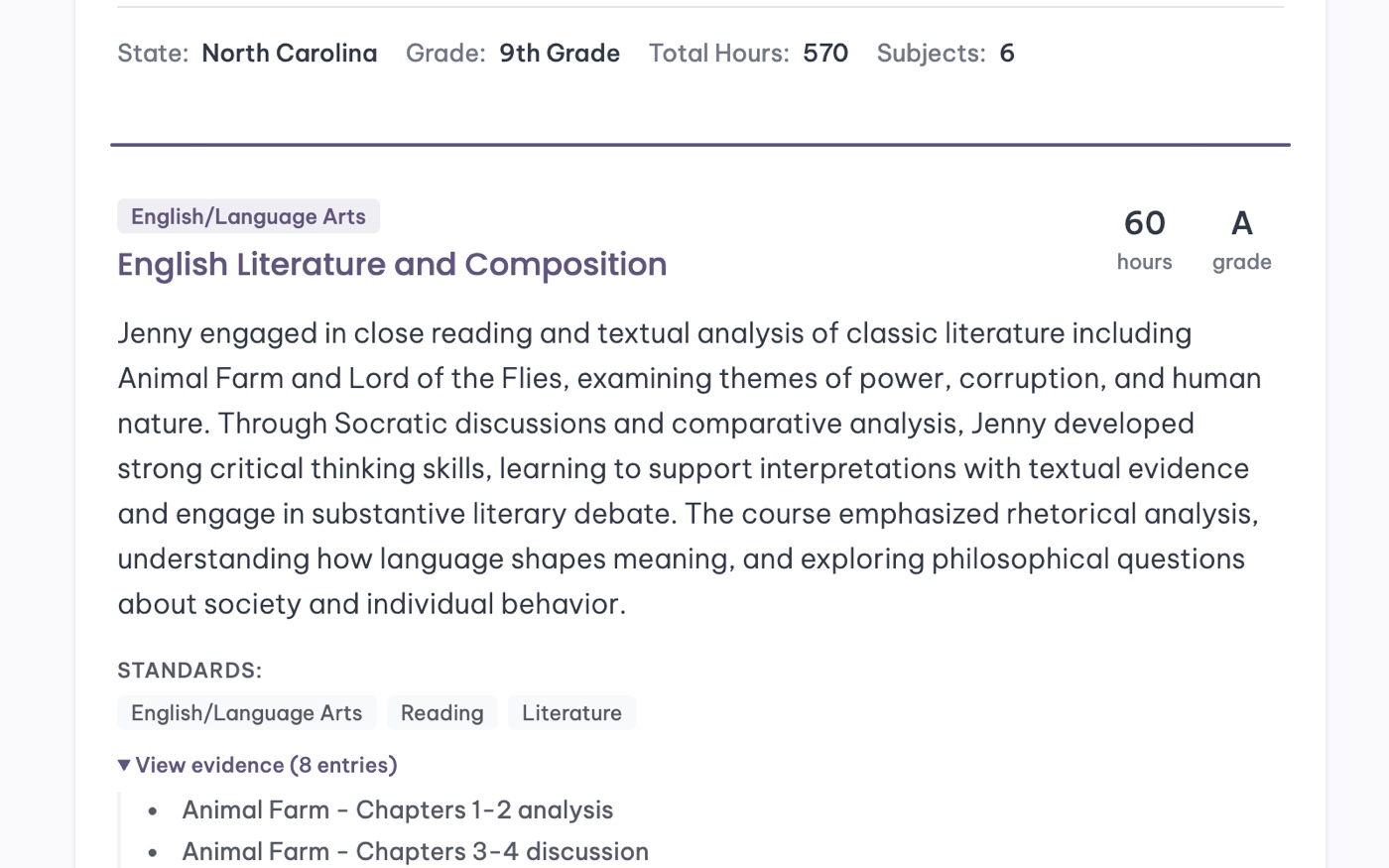
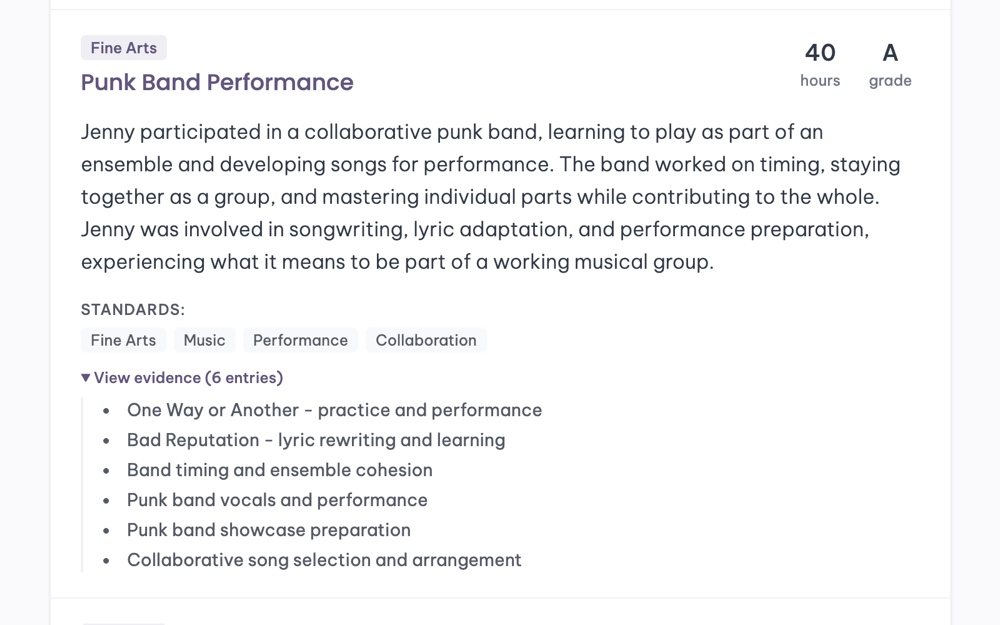
So Prism writes the course. A title and a description drawn from what your learner actually did, mapped to credit hours and subject categories a registrar can read, in language that still sounds like them.
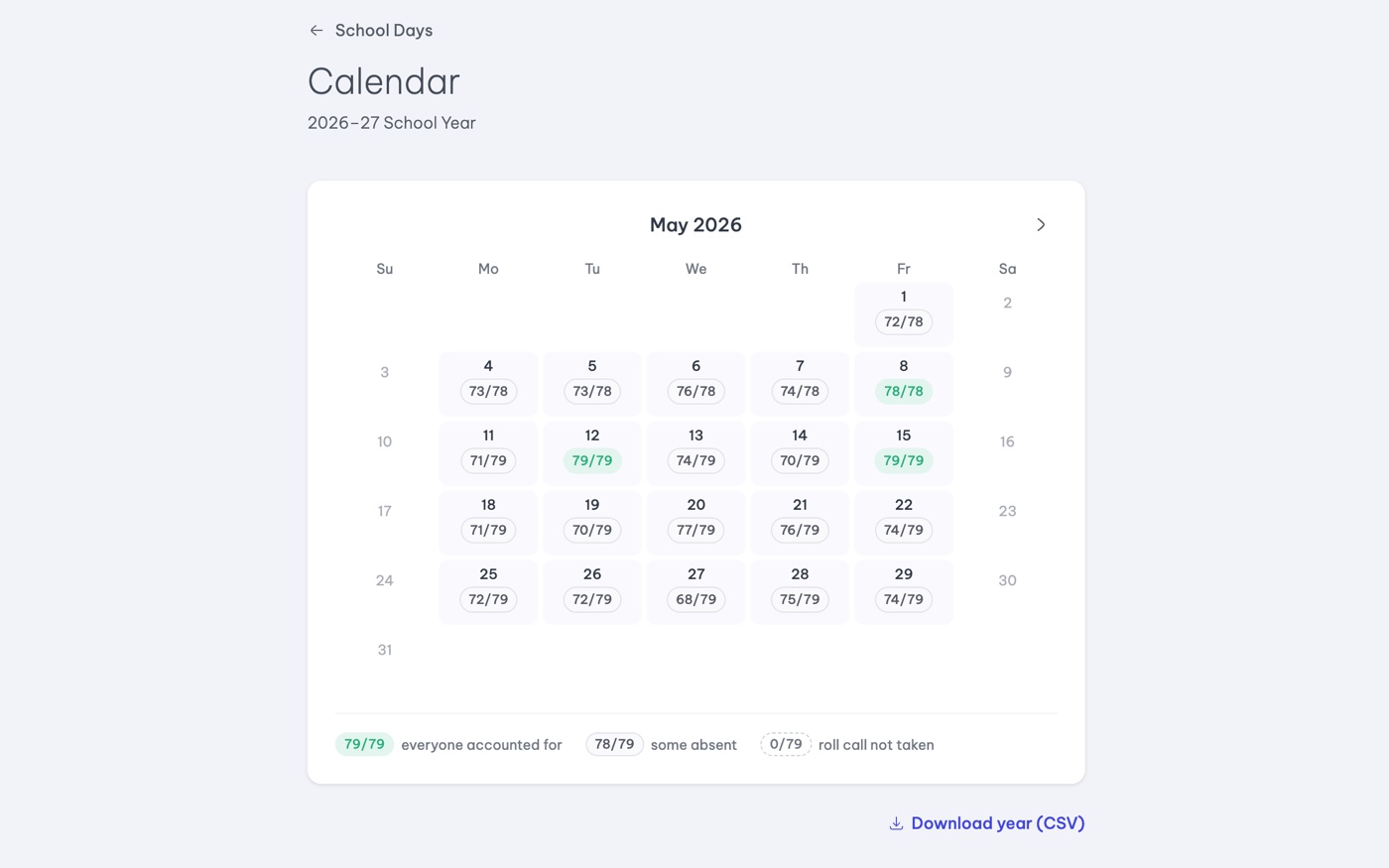
If your state asks for a hundred and eighty days, you shouldn't have to keep a second record to prove it. Every day you document a moment is a day that counts.
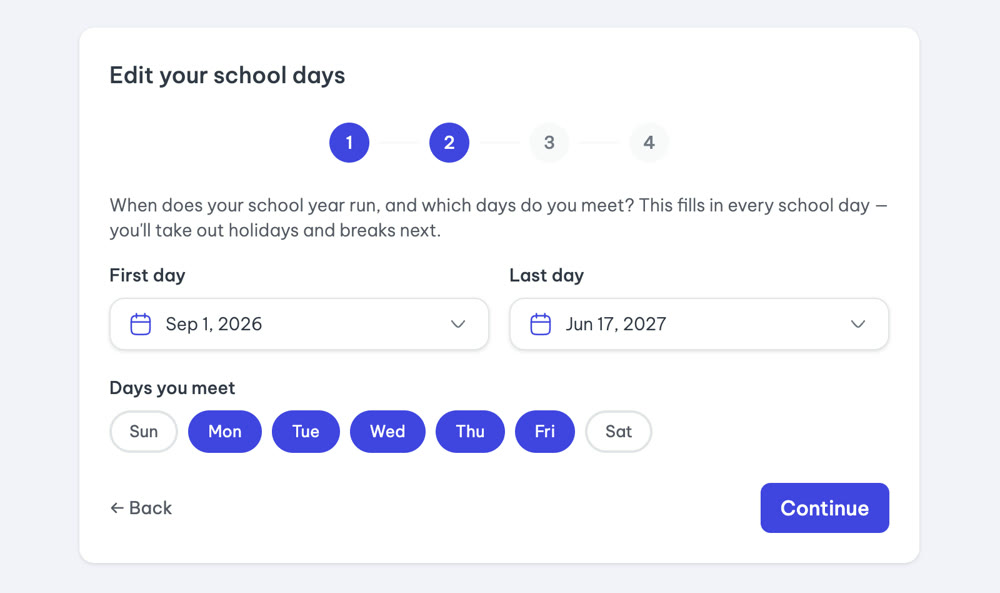
Set your school year once. The counter fills itself in from the documenting you were already doing. One entry can cover many dates too: a ten-day trip documented once, and every day of it counts.
Documents, generated from the entries you already wrote, for the evaluator, the next school, or the family.
Course titles, credit hours and subject categories mapped to your state's requirements.
A formatted PDF of the whole year, organized by subject, ready for an evaluator.
A narrative account of what a stretch of documentation adds up to.
Where a learner actually stands against goals you named, with the evidence.
These things matter, and they pull you away from being present. Prism handles the synthesis. You stay in the moment.
Programs can name the qualities their community actually cares about, in their own words, and Prism reads every learner's documented moments through them. It cites the entries behind each observation, and when a domain has nothing behind it yet, it says so rather than inventing something.
Start from an authored framework: the Mastery Transcript, Reggio Emilia, Charlotte Mason, the Emerging Portrait or the IB Learner Profile. Or create your own custom lens for any model or framework.
Not to us, and not to any program they pass through. Private by default, exportable whenever you want it, and when they move on, everything anyone wrote about them goes with them.
A year at a program, with Prism
Some of the first programs to keep a whole year in Prism, told month by month from what their educators wrote down.
 Sarasota, Florida
Curious and Kind Education
See their 2025-26 year
Sarasota, Florida
Curious and Kind Education
See their 2025-26 year
 Charlotte, North Carolina
ALC Mosaic
See their 2025-26 year
Charlotte, North Carolina
ALC Mosaic
See their 2025-26 year
 Durham, North Carolina
Wildly Inclusive
See their 2025-26 year
Durham, North Carolina
Wildly Inclusive
See their 2025-26 year
 Philadelphia, Pennsylvania
The Dandelion Project
See their 2025-26 year
Philadelphia, Pennsylvania
The Dandelion Project
See their 2025-26 year
 Conway, Arkansas
Evergreen Academy
See their 2025-26 year
Conway, Arkansas
Evergreen Academy
See their 2025-26 year
"As the parent of an unschooling child, I can attest to the fact that kids learn "academic" skills in the daily flow of life. Documenting that learning when it's happening all day can be a challenge, but Prism makes it so easy! With a quick photo upload and description, Prism's in-app AI feature brilliantly categorizes activities and allows for generation of summary reports and academic transcripts."
Adrienne Robinson
Parent
"What I love most about Prism is that it feels less like "record keeping" and more like storytelling. It allows me to capture real learning moments: conversations, projects, field trips, scavenger hunts, everyday discoveries. And not just completed assignments… Instead of scrambling in the spring to piece together a portfolio, I feel like I'm building one intentionally all year long."
Abbie Falls
Parent · App Store review
"Prism allows us to easily make visual all the embedded learning happening at Wildly Inclusive. Parents love seeing what learners are up to all day, and they rave about the ability to save individual photos on their personal devices."
Amber Crews
Program Director, Wildly Inclusive Cooperative
"Prism has been so helpful in streamlining our documenting system. It's made it simple for multiple facilitators to contribute, and easy to train them to use it. Parents appreciate that they can see what kinds of projects their kids are doing at school. I also like that parents and students can add to their portfolios on their own—because learning can happen anywhere!"
Jennie Jones
Founder and Director, The Treehouse
"Prism is everything I was looking for in a documentation app! All the pictures I take for documentation now have a home, learning outcomes can be identified and everything can easily be shared with families."
Sandra Rivas
Director, Peaceful Gatherings Nature School
"Prism has been everything our nature based microschool was looking for, and more. It has been so much fun being able to capture all of the incredible learning moments that happen in our environment, and then sufficiently be able to communicate those to caregivers. The addition of the AI technology has been even more amazing and has made it even easier for our staff to document."
Chelsea Harrington
Co-Founder and Director, Evergreen Academy
"Prism has quickly become an essential tool for our community. We view reflection as a key part of how learners understand themselves and their growth. Prism makes it easy to document and share those reflections with families, providing meaningful insight into what happens within the programs at Dandelion Project each day."
Lauren Umlauf
Executive Director, The Dandelion Project
"I love the Prism app. It has made such a profound impact in digesting my child's education. Prism serves as both a portfolio and a guide, supporting within the process of documenting and understanding the learning that is within our everyday experiences. The learning signals are a complete game changer, as I am now able to translate how unschooling connects to traditional education values."
Sasha Kelley
Parent
Guides and frameworks to help you document authentic learning.
A complete guide to implementing educational portfolios that capture authentic learning.
Read guideFrameworks for assessing deep learning through projects and real-world application.
Read guidePractical strategies for documenting learning that emerges from children's interests.
Read guideHow to document unschooling while meeting state requirements and college prep needs.
Read guideNow you have a way to show it.
No credit card required · View pricing