A nature based microschool.in their own words, evergreenacademyconway.com
Evergreen Academy is a secular, nature based microschool in the heart of Conway, Arkansas, serving students five to nine years old. In its own words, a modernized version of the traditional one-room schoolhouse, with cozy indoor learning spaces and immersive outdoor ones on an urban flower farm.
Evergreen keeps its record in Prism. Between August and May, three people wrote 520 entries about what happened there, most of it outside: a field with a pecan tree, a creek, a raised garden bed, a play yard with a gaga pit and a teepee. This is that year, a month at a time.
August
89 entries
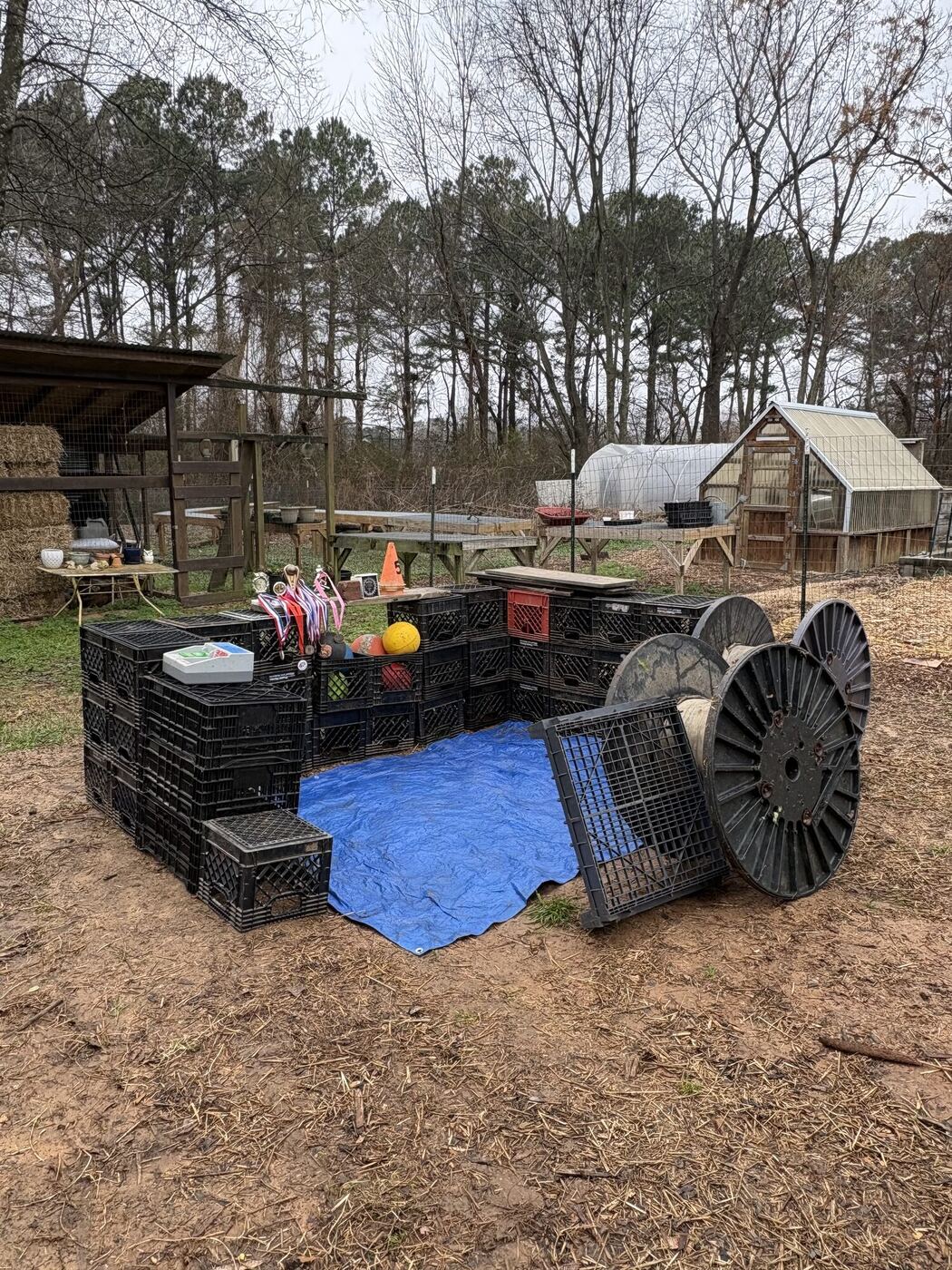
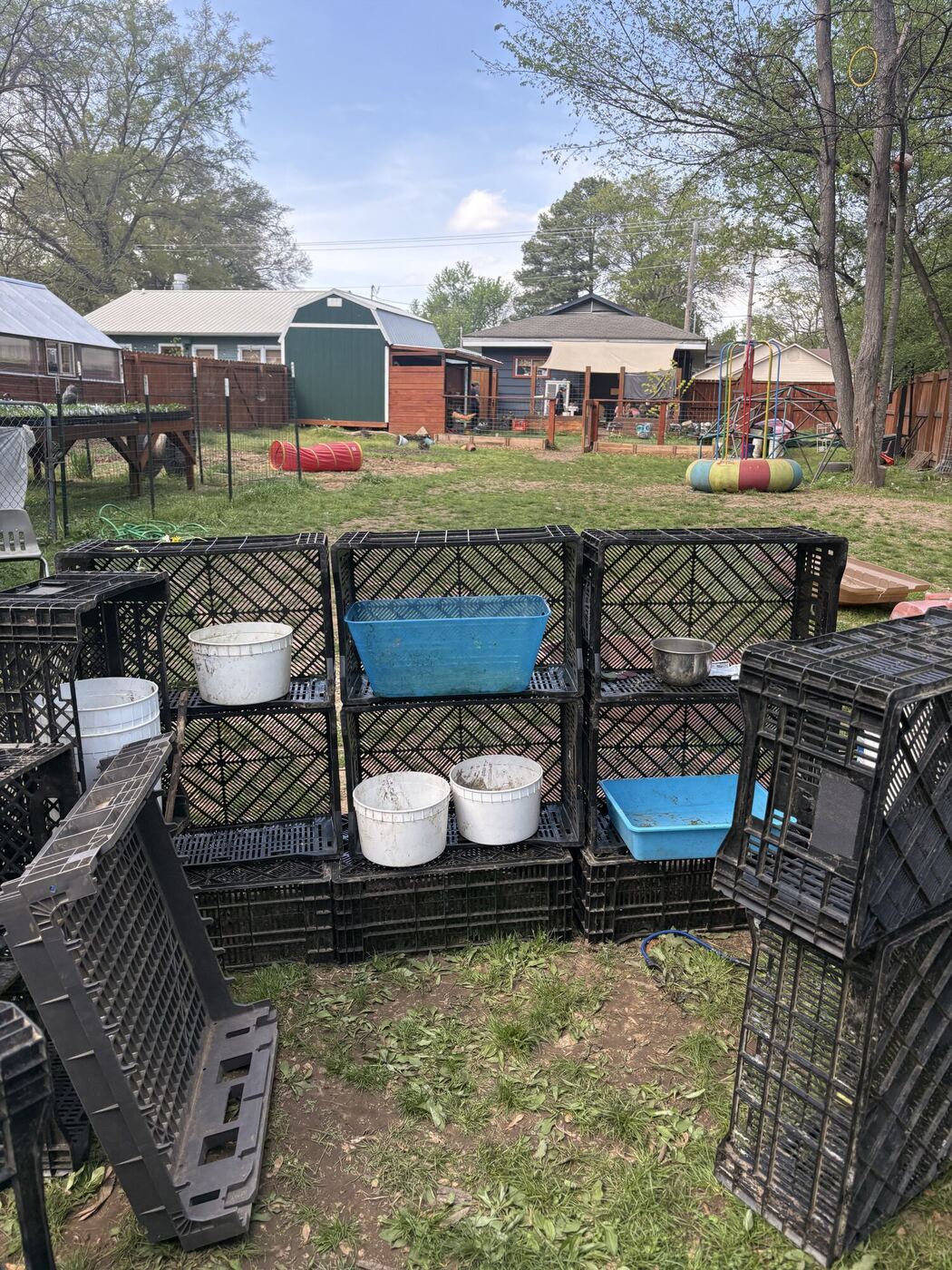
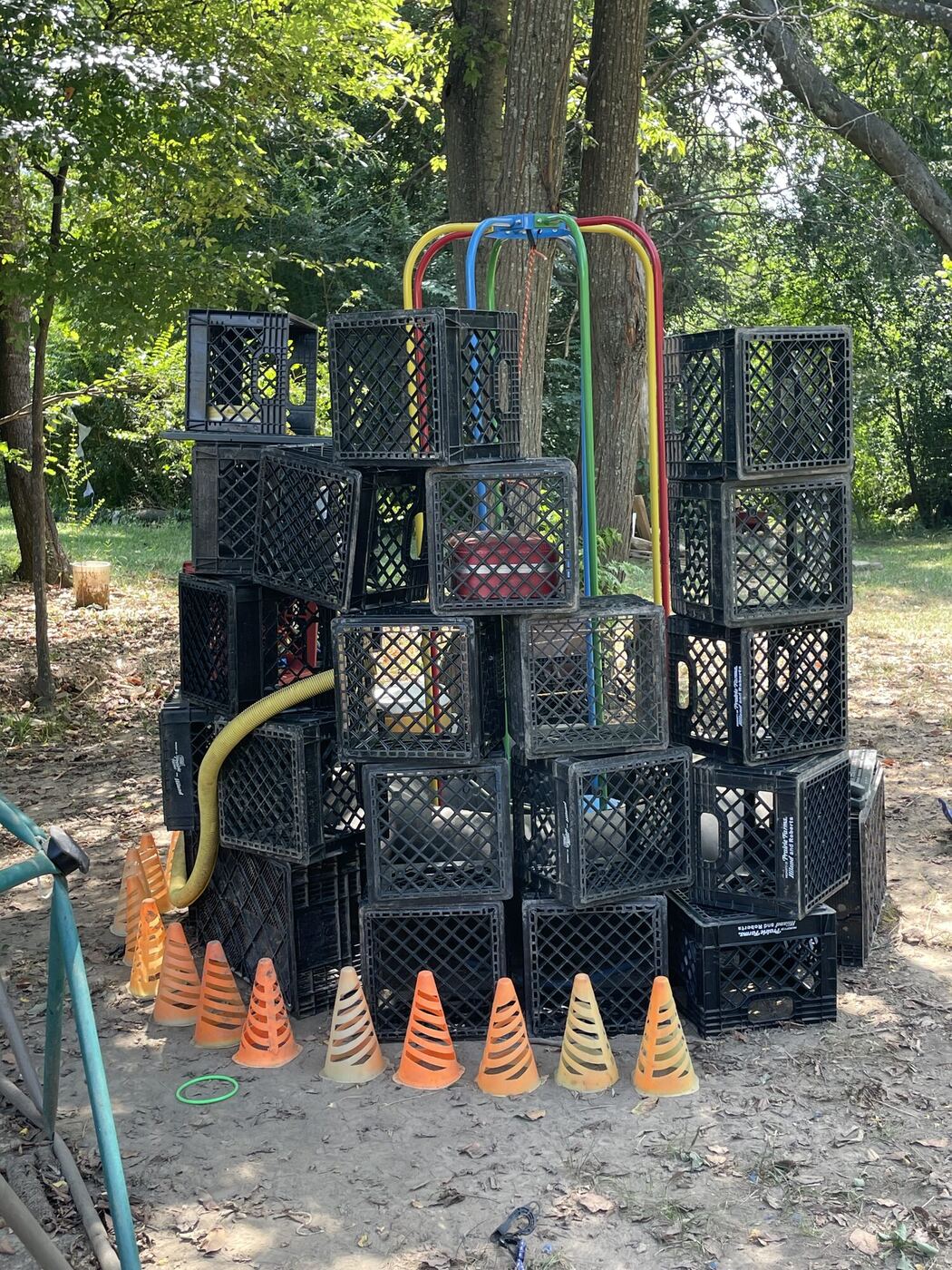
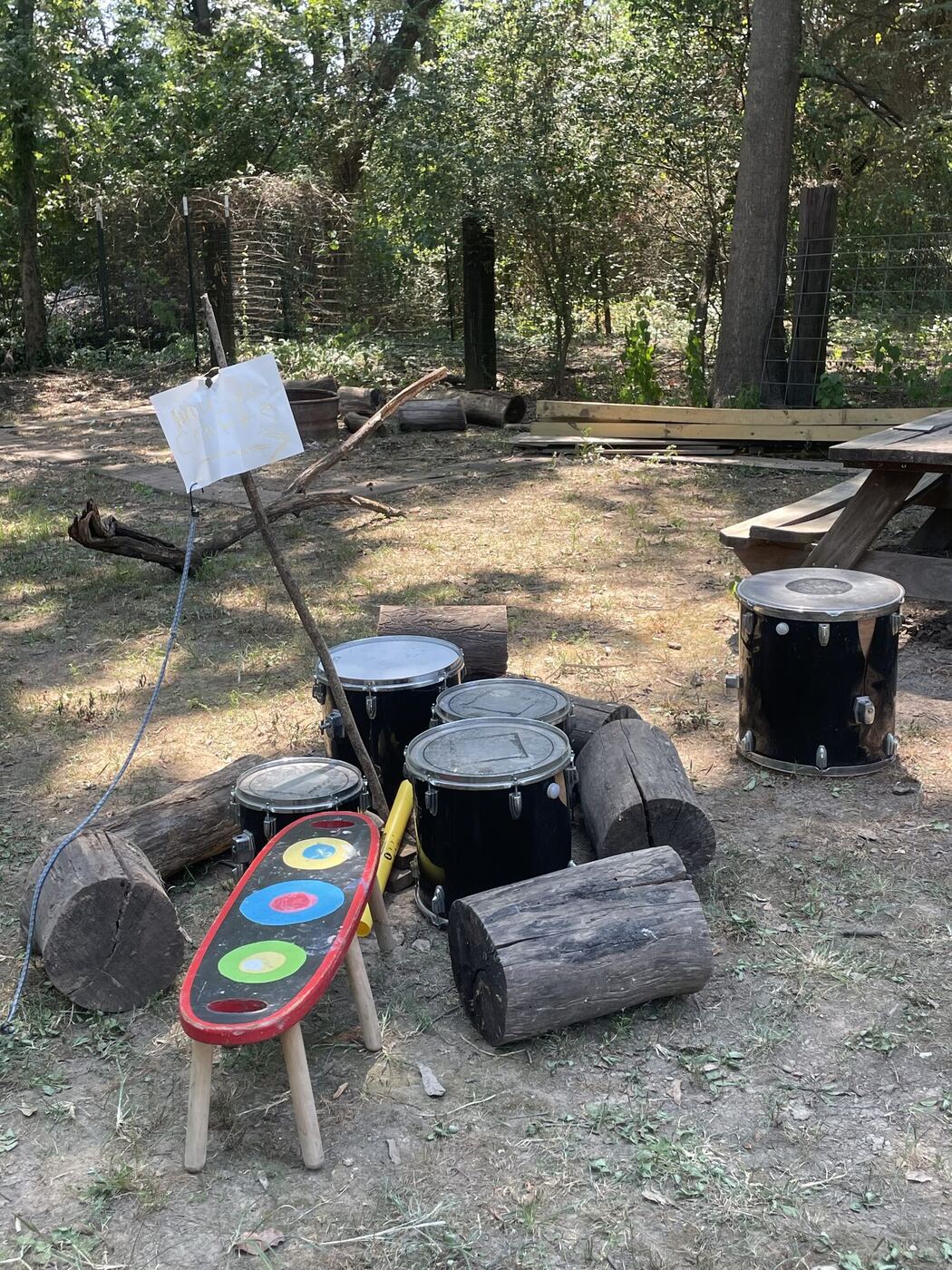
On the first day of nature play, a few of them built a structure out of crates and loose parts. Two days later came a music area, and then they played for the group.
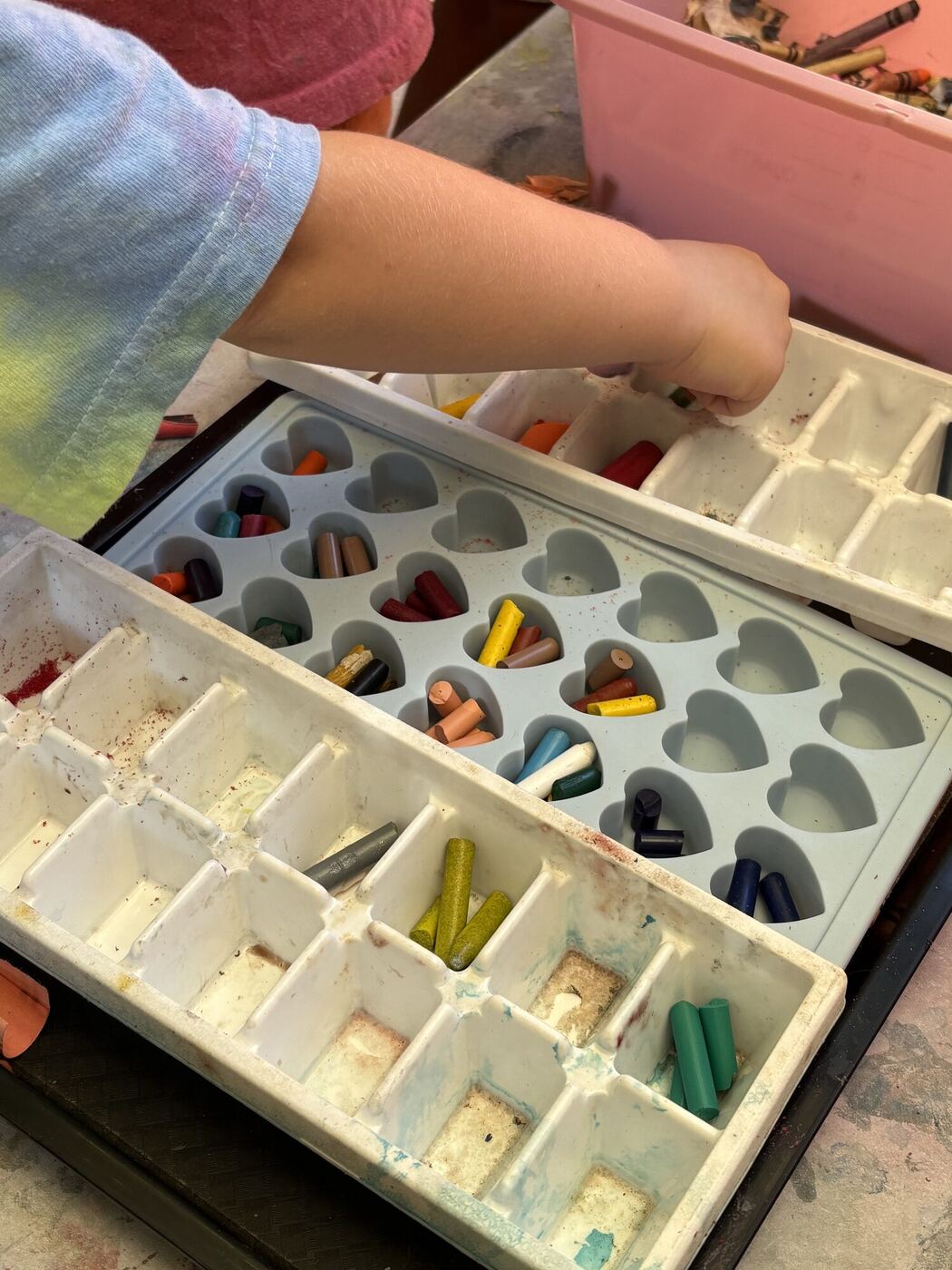
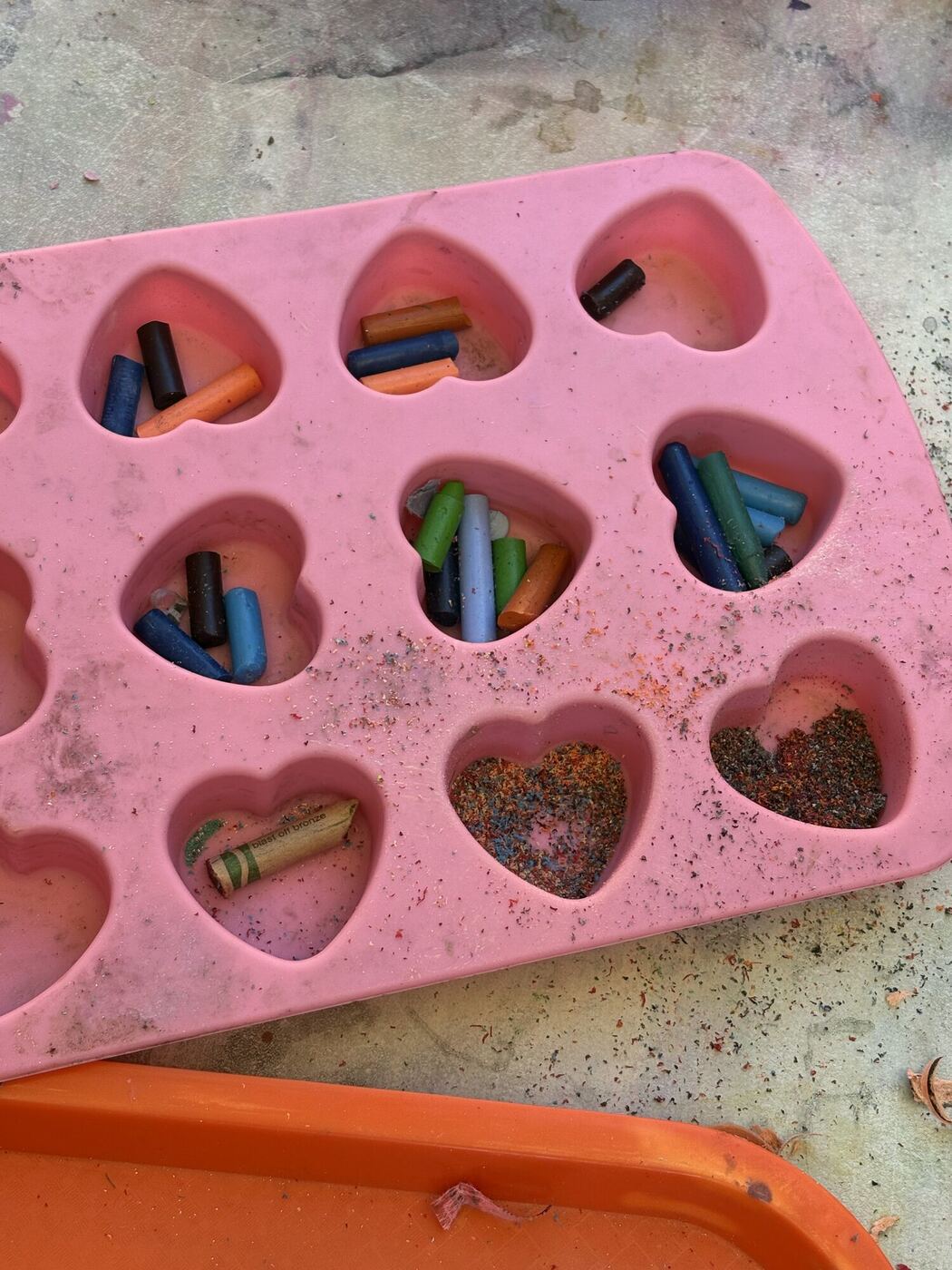
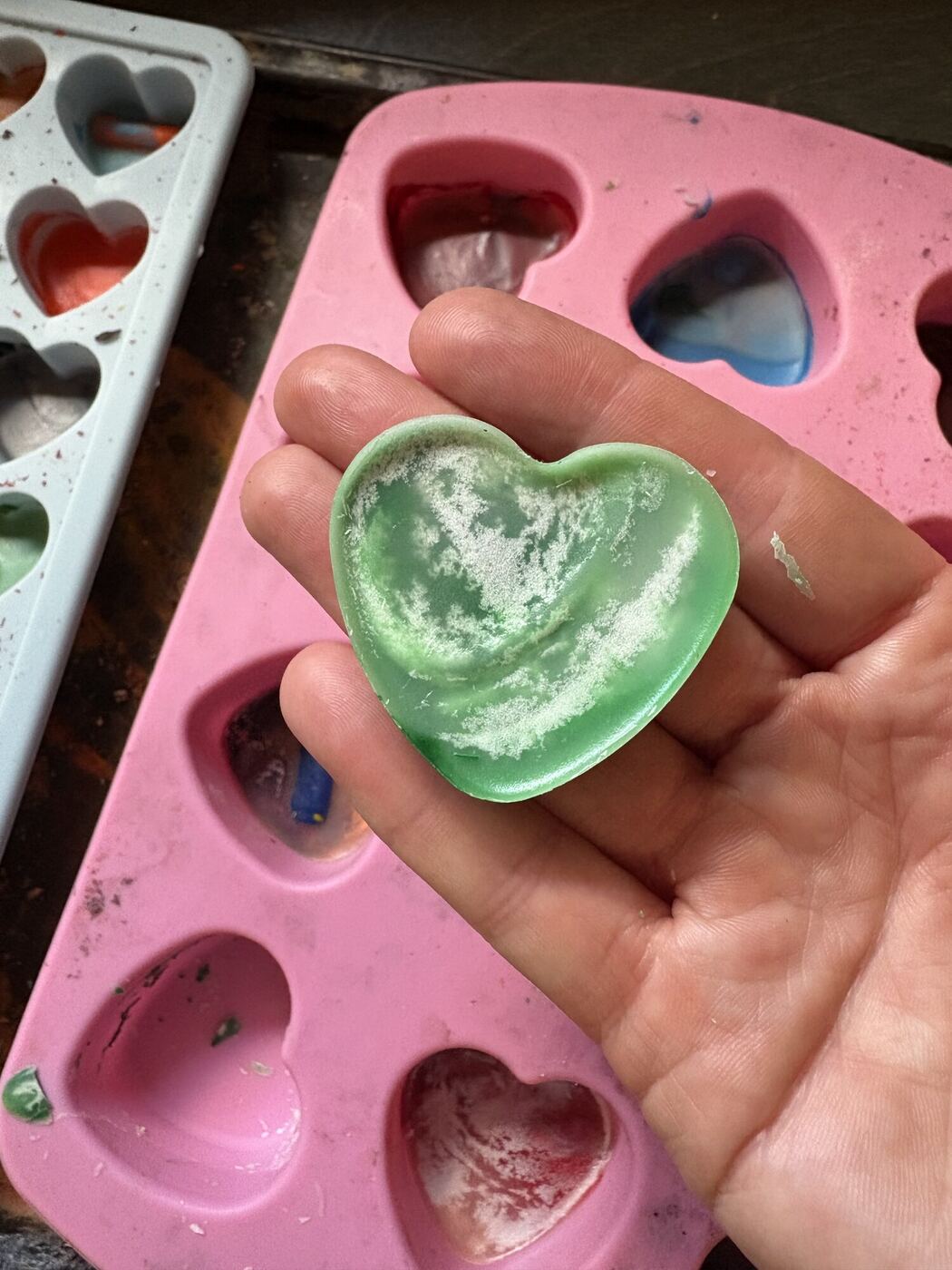
BrokenSortedMeltedOut
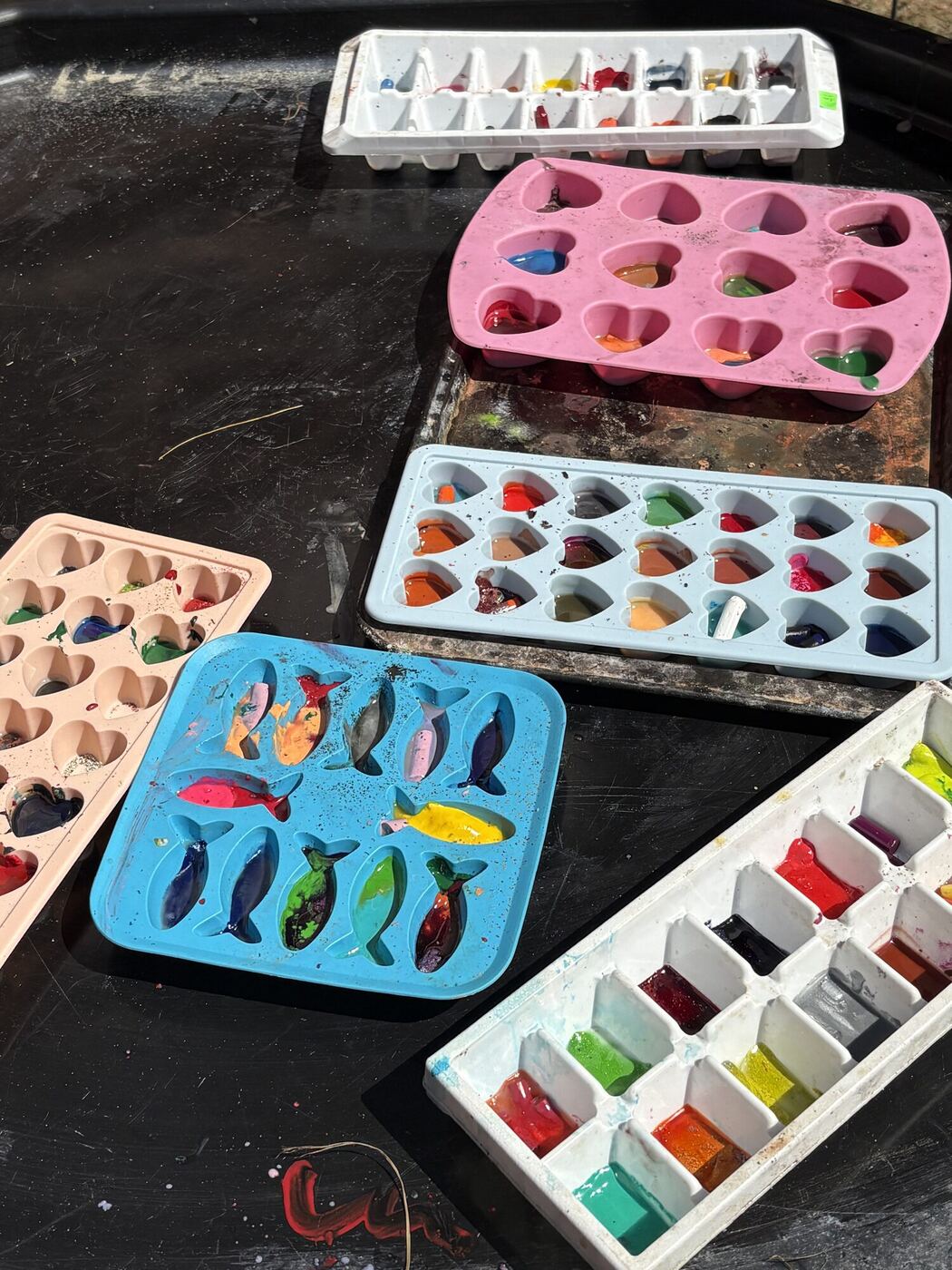
They unwrapped old crayons, broke them into pieces, set them in molds and put them out in the sun on the big field, predicting what the colors would do when they mixed.
Also in August
To find out which color soaks up the most heat, they laid out sheets of colored paper in the sun and took the temperature of each one.
They learned the three parts of an insect, head, thorax and abdomen, by making a praying mantis.
Geography words, made in play-doh.
A tiny backbone turned up outside, and they looked at it closely.
A sudden shower came at pickup time. They tasted the raindrops.
September
97 entries
At the pecan tree they found that twisting a pecan off works better than pulling, and that a cup is too narrow for the harvest. They went and got a bucket, and carried it together.
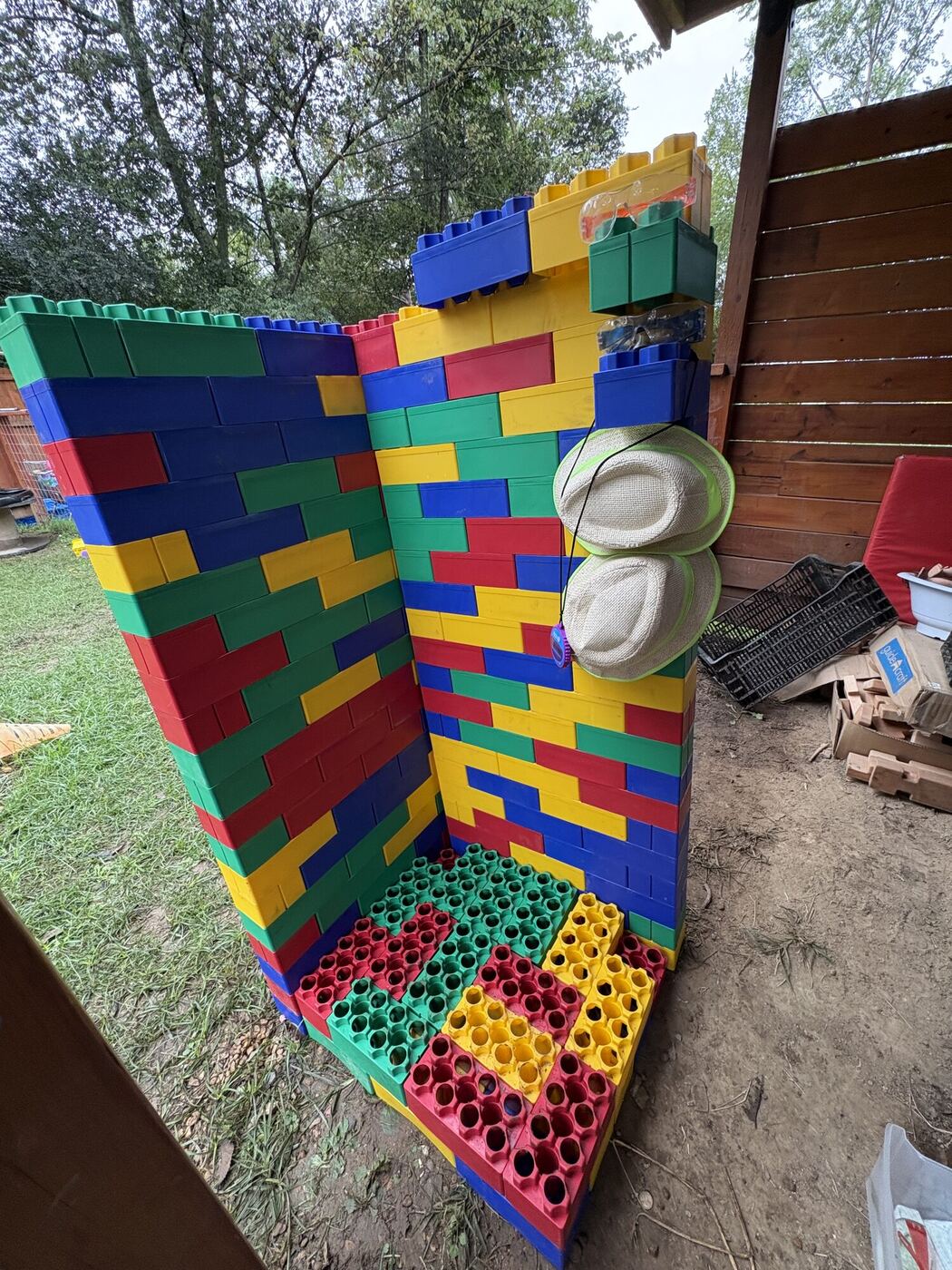
They used every outdoor block there was to build a base for their workers, with a floor and shelves.
Also in September
When the power went out, morning meeting carried on and the picture book was read in the dark.
After the rain they went down to the creek and came back with crayfish, worms and roaches.
A week of digging turned the dirt pile into a sifting station, a digging station, mud cakes and a mud store.
A store they built in the play yard kept falling apart. They kept building it again.
Crates stacked as high as they could go, counted one at a time on the way up.
Kickball, with the ones who knew the game teaching the ones playing it for the first time.
Clay crawdad chimneys, made while a facilitator read a story about a crawdad.
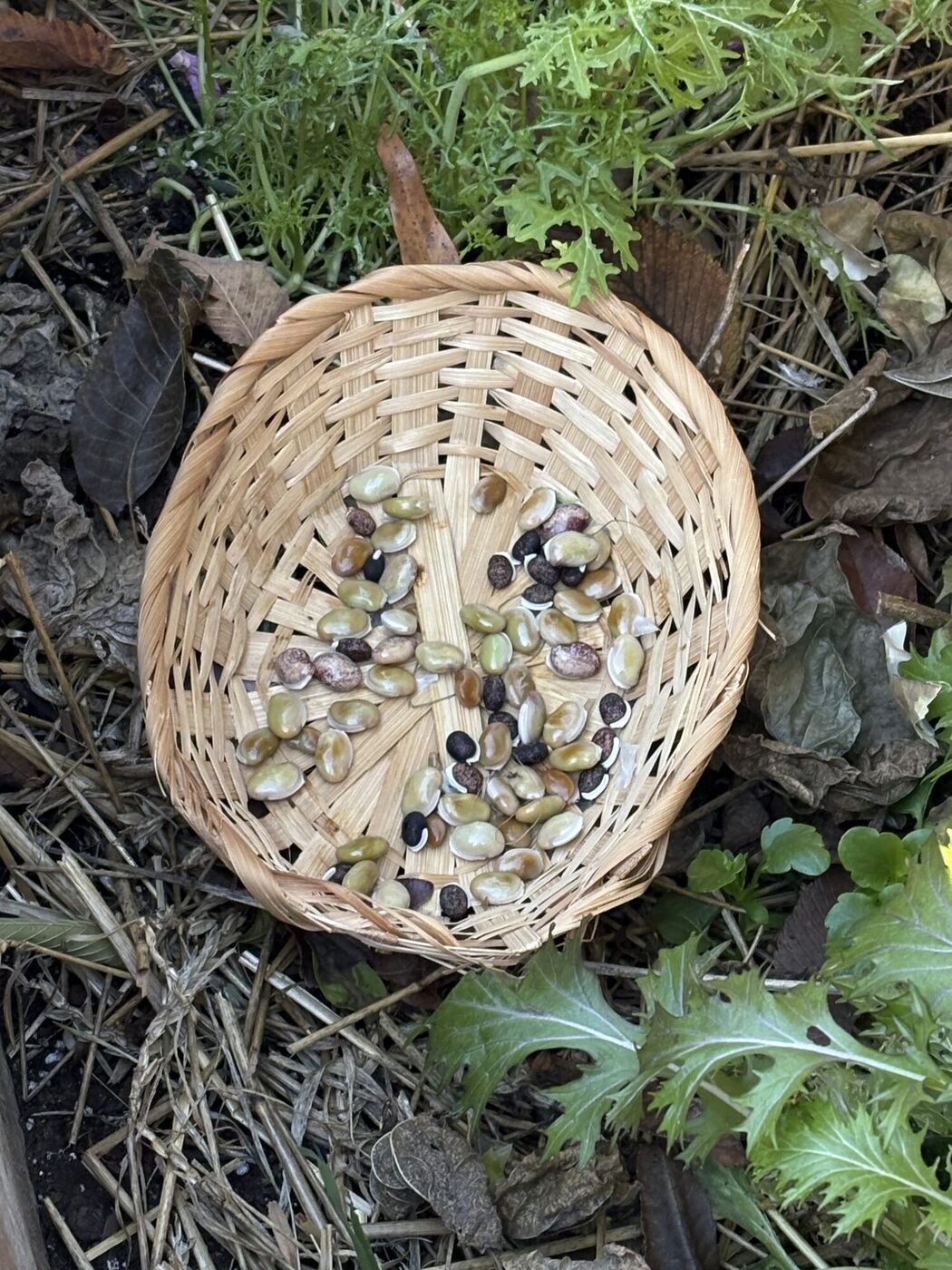
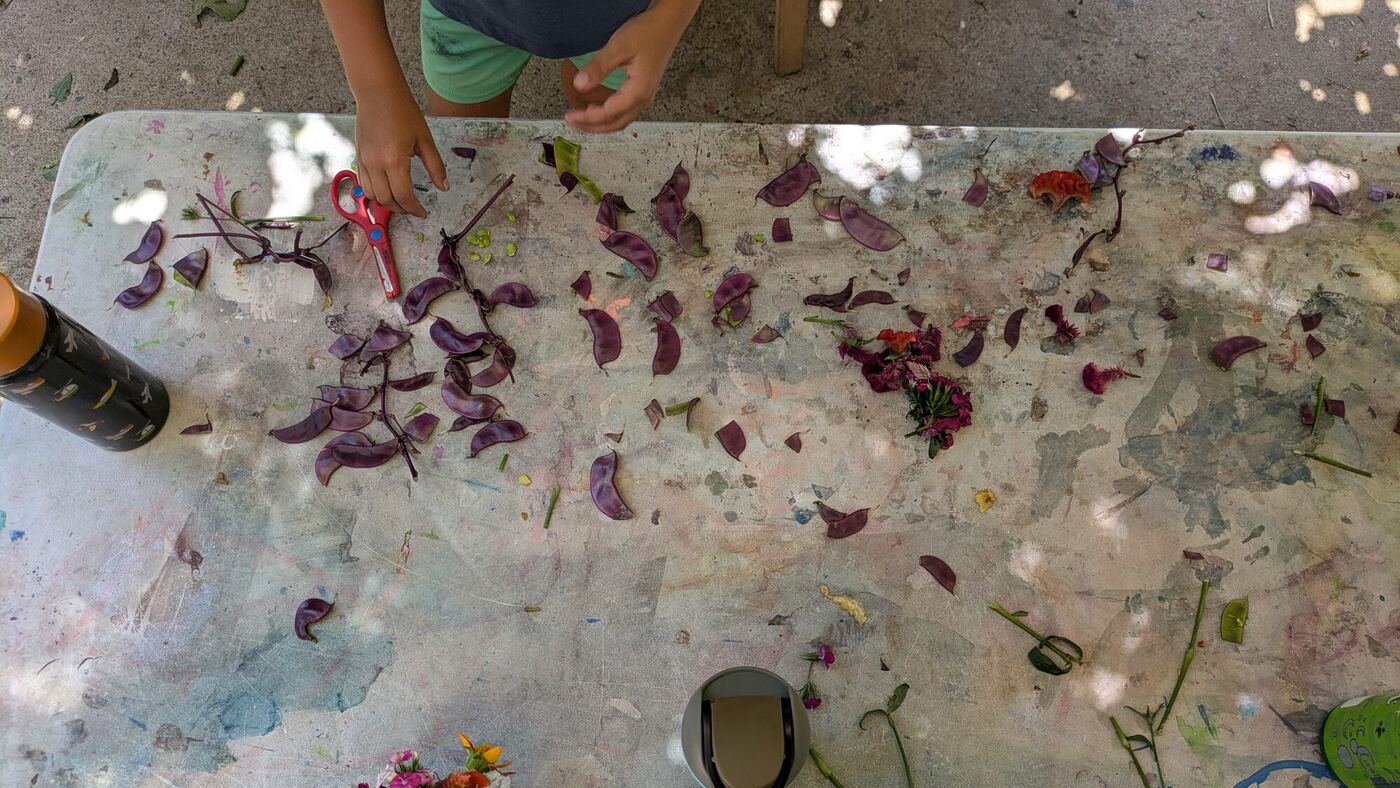
Hyacinth peas, harvested and taken apart at the outdoor table.
October
54 entries
Eight months to a luffa
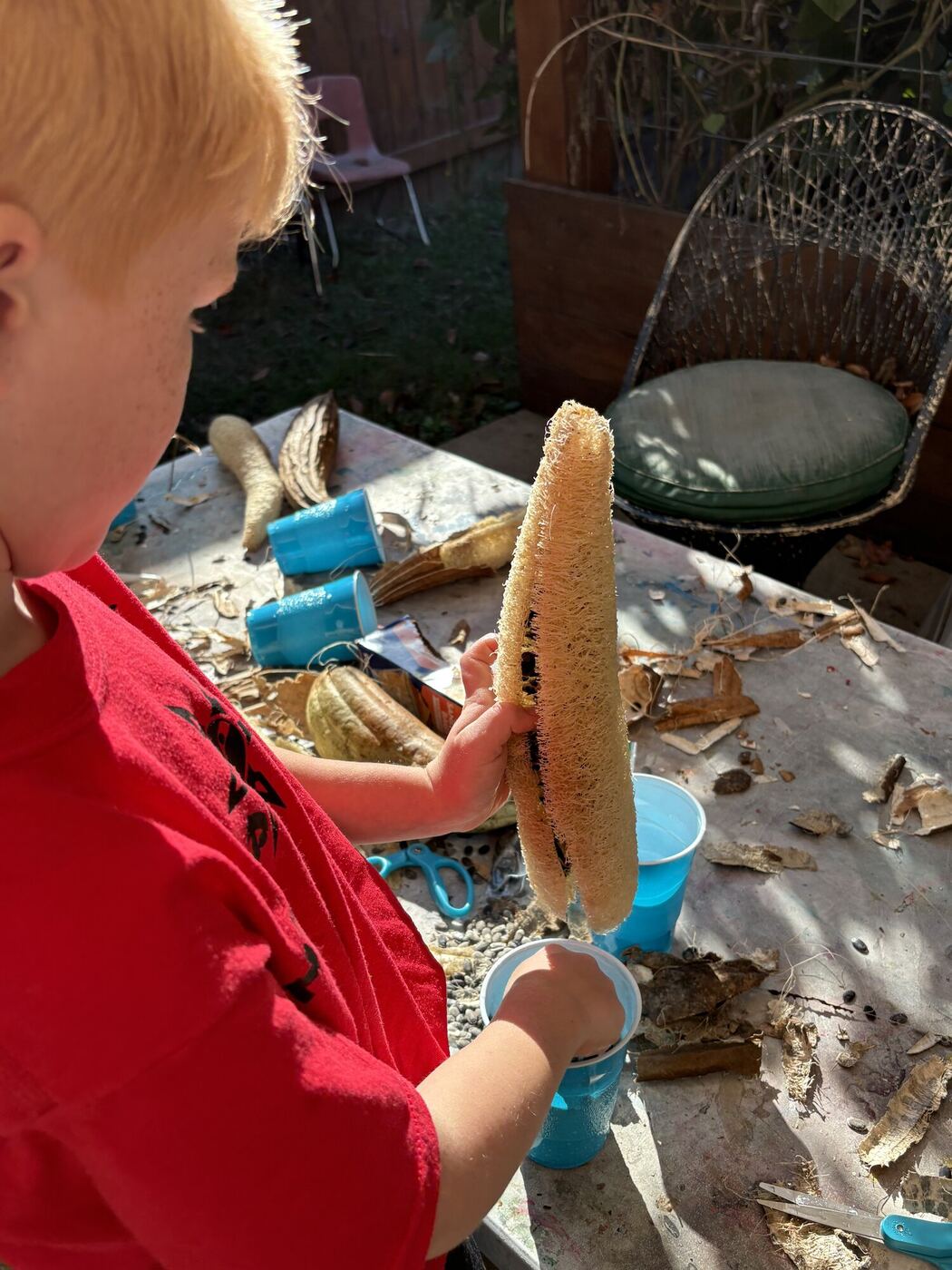
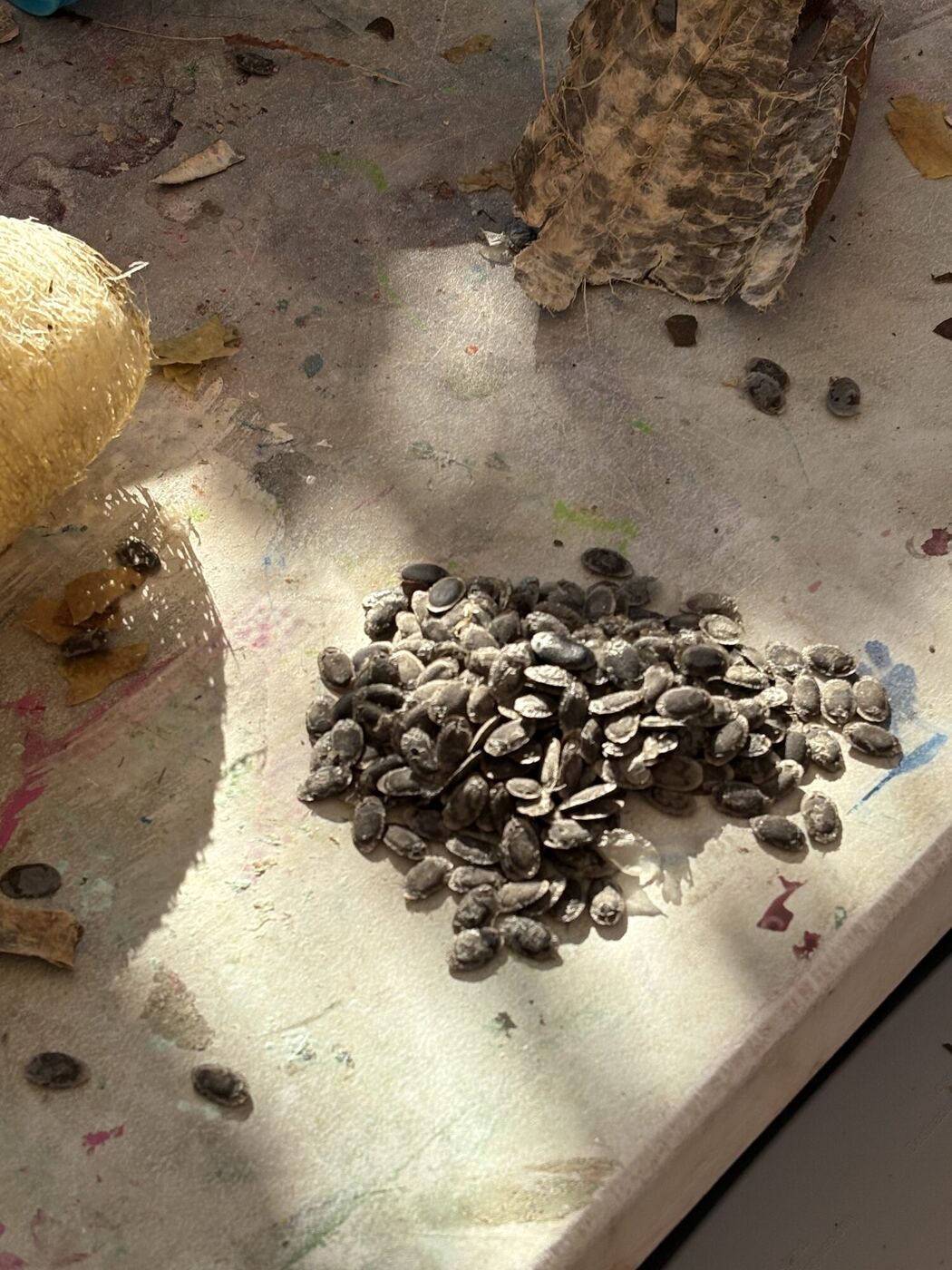
The luffas in the raised bed came ready in October, eight months after they went in. The dried gourds peel by hand once you get through the hard outer shell, and then you cut them open with scissors and find the black seeds. They put the spongy insides in water to see what water would do to them. Everyone took a bag of seeds home to plant in the spring.
Botany · Agricultural Science · Observation · Fine Motor Skills · Gardening
Two pumpkin challenges
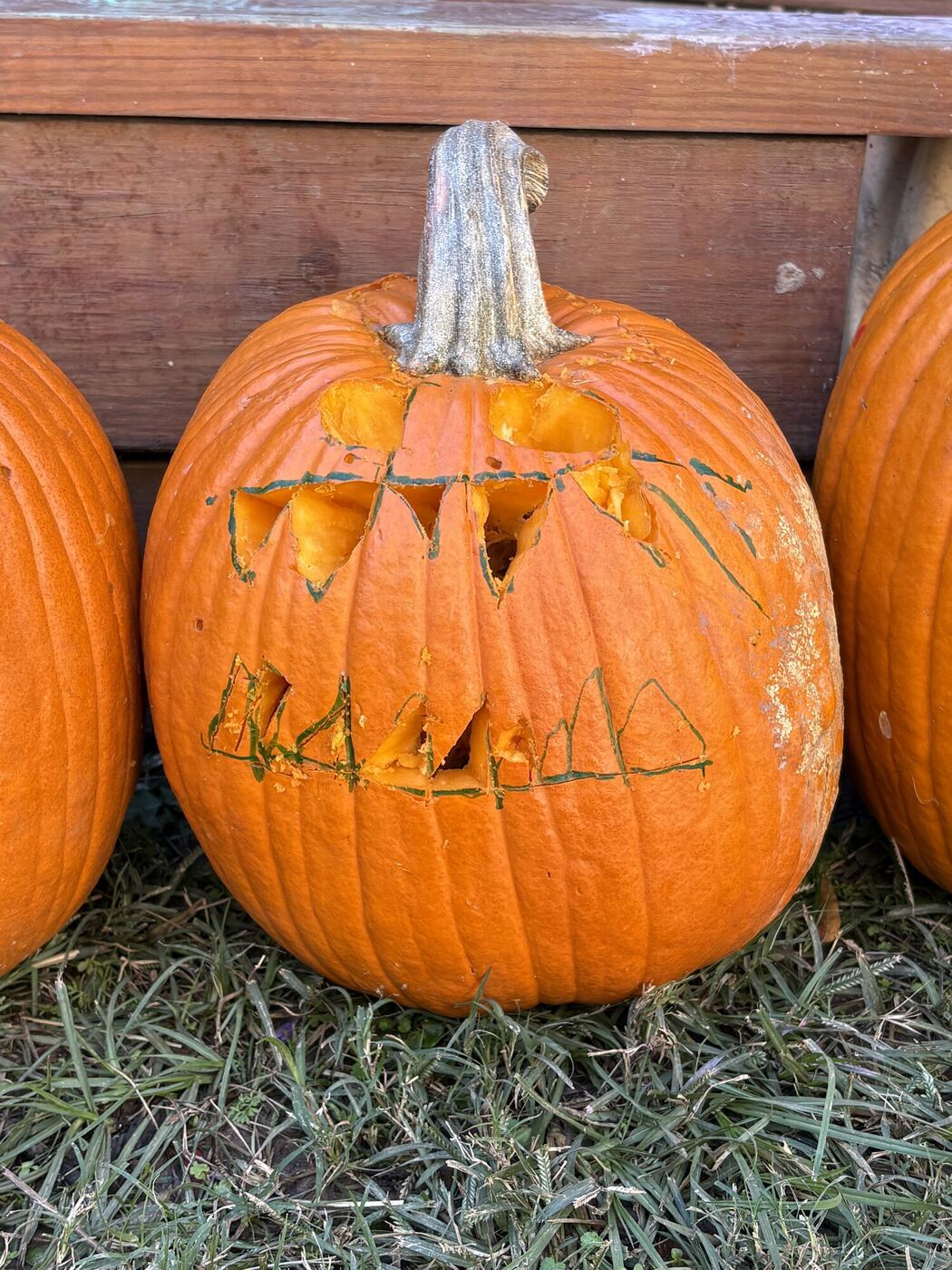
First, every nail and every rubber band you were given had to go into the pumpkin: nails hammered in, bands stretched across between them. Then a design of your own, carved out of shapes, with the carving tools and almost no help.
Engineering · Geometry · Visual Arts · Fine Motor Skills · Problem-Solving
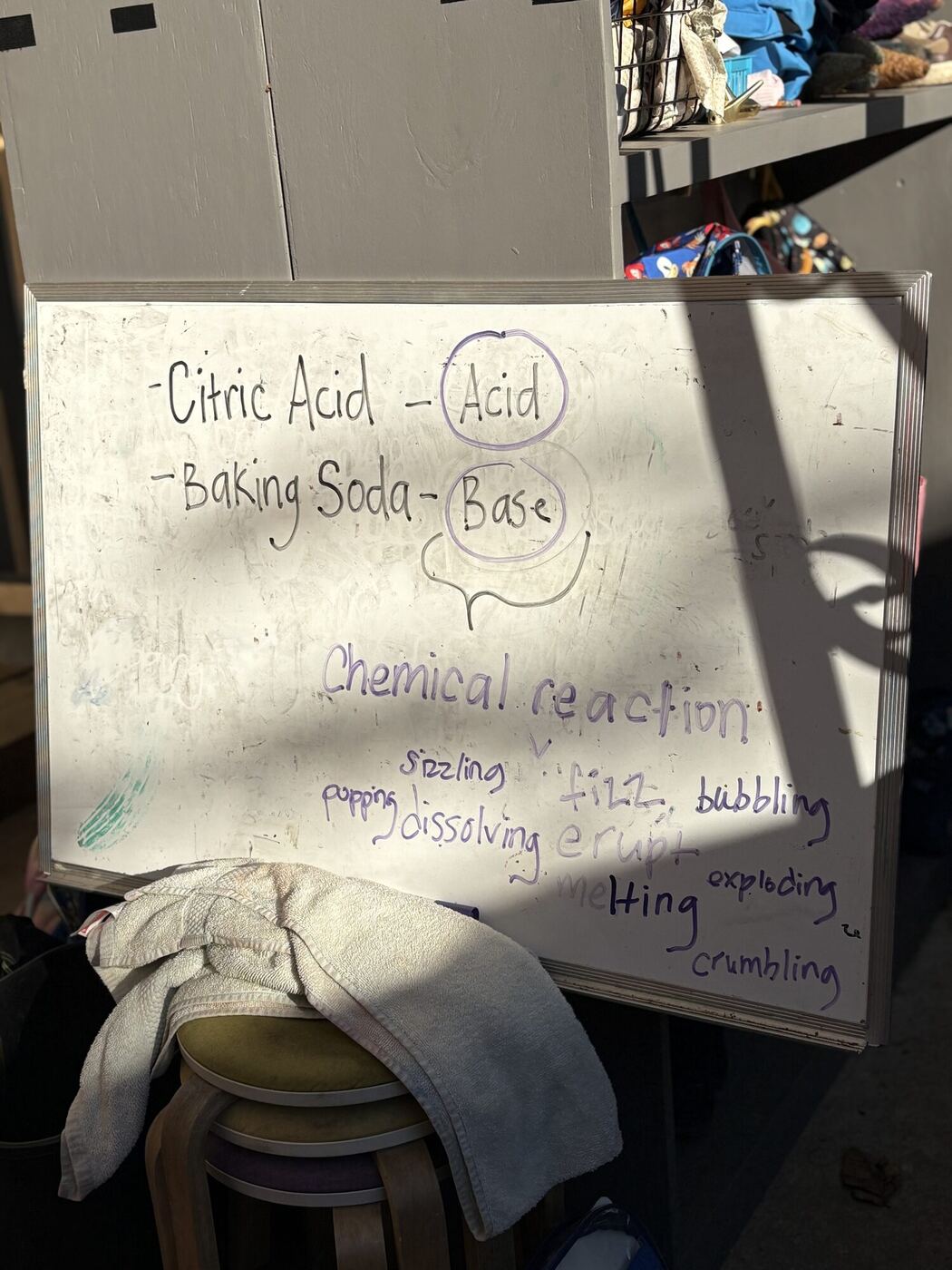
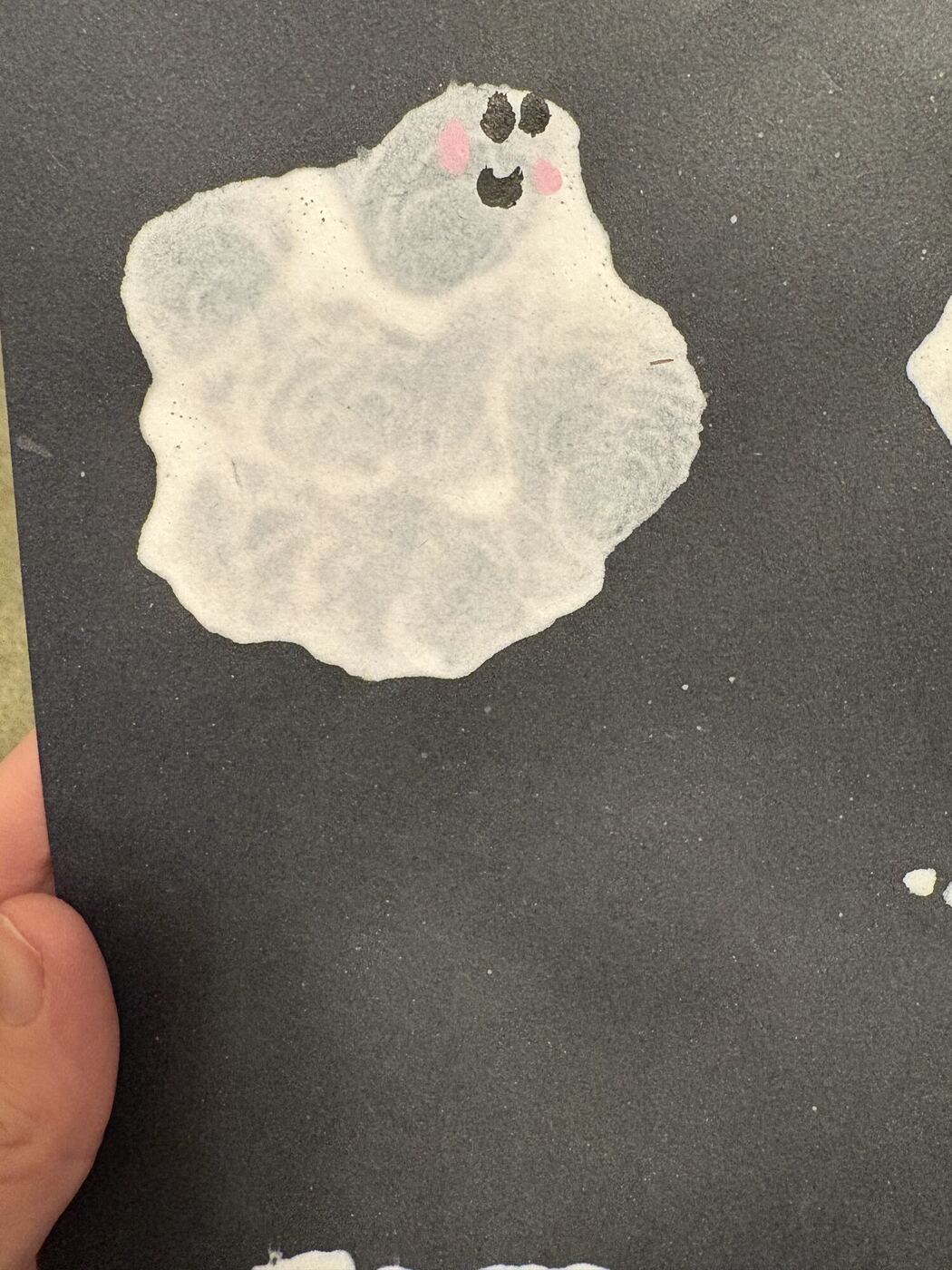
Citric acid, baking soda and water made a fizzing potion, and afterwards they wrote down what they saw. For the ghosts, the paint was blown around with a straw, which is harder than it looks.
Also in October
They guessed how many seeds were in a pumpkin, then scooped them out and counted, most of them in groups of ten.
They filled a pool with rainwater collected from containers all over the campus, and talked through what was allowed to go in it.
A well built from crates and a tire was filled with water, until they decided corn would be better and carried the corn over.
Longan fruit, opened by hand to find the pit inside.
Handwriting has its own words: some letters stand tall, some lie down, and D follows the clock line.
November
24 entries
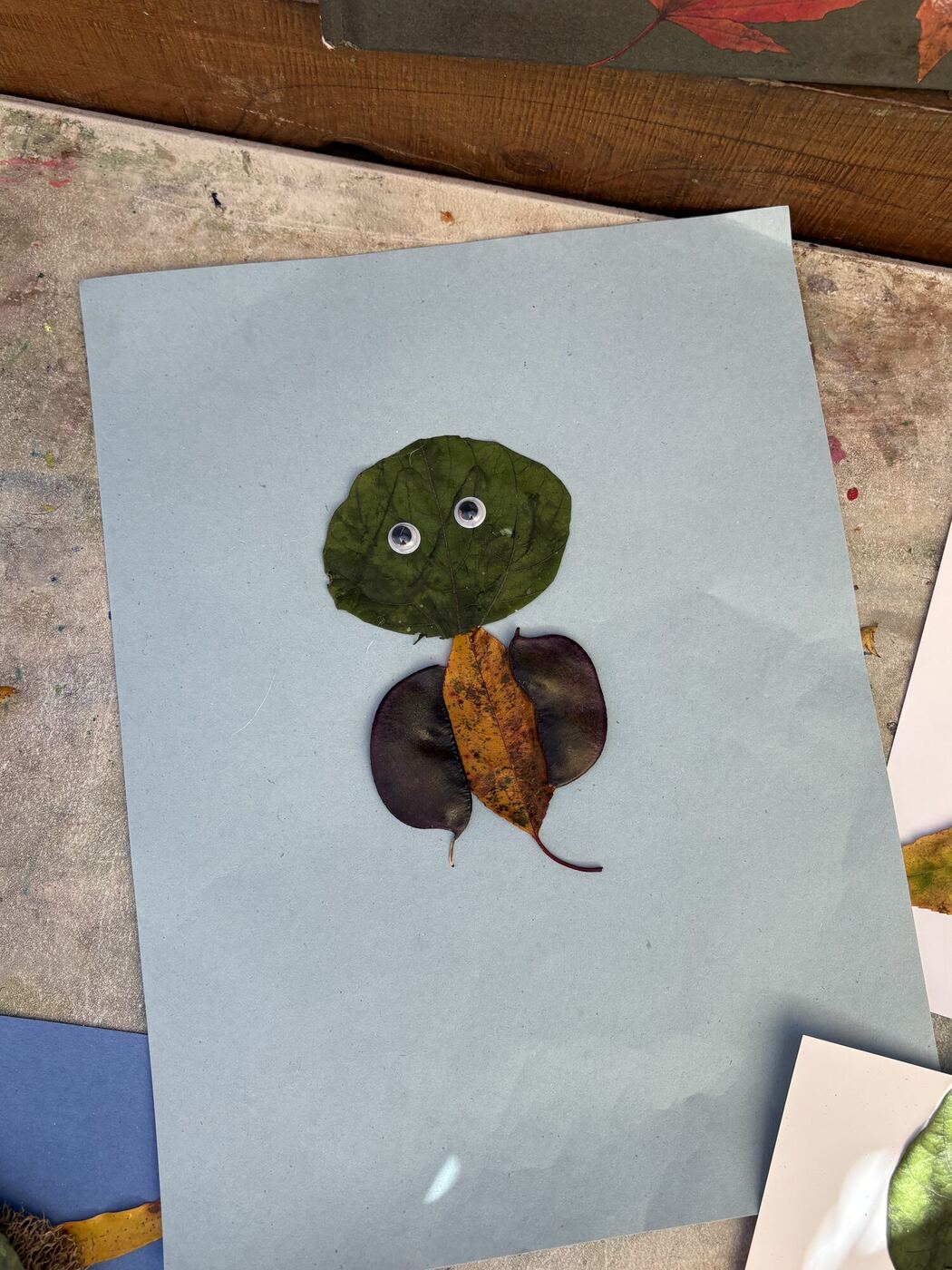
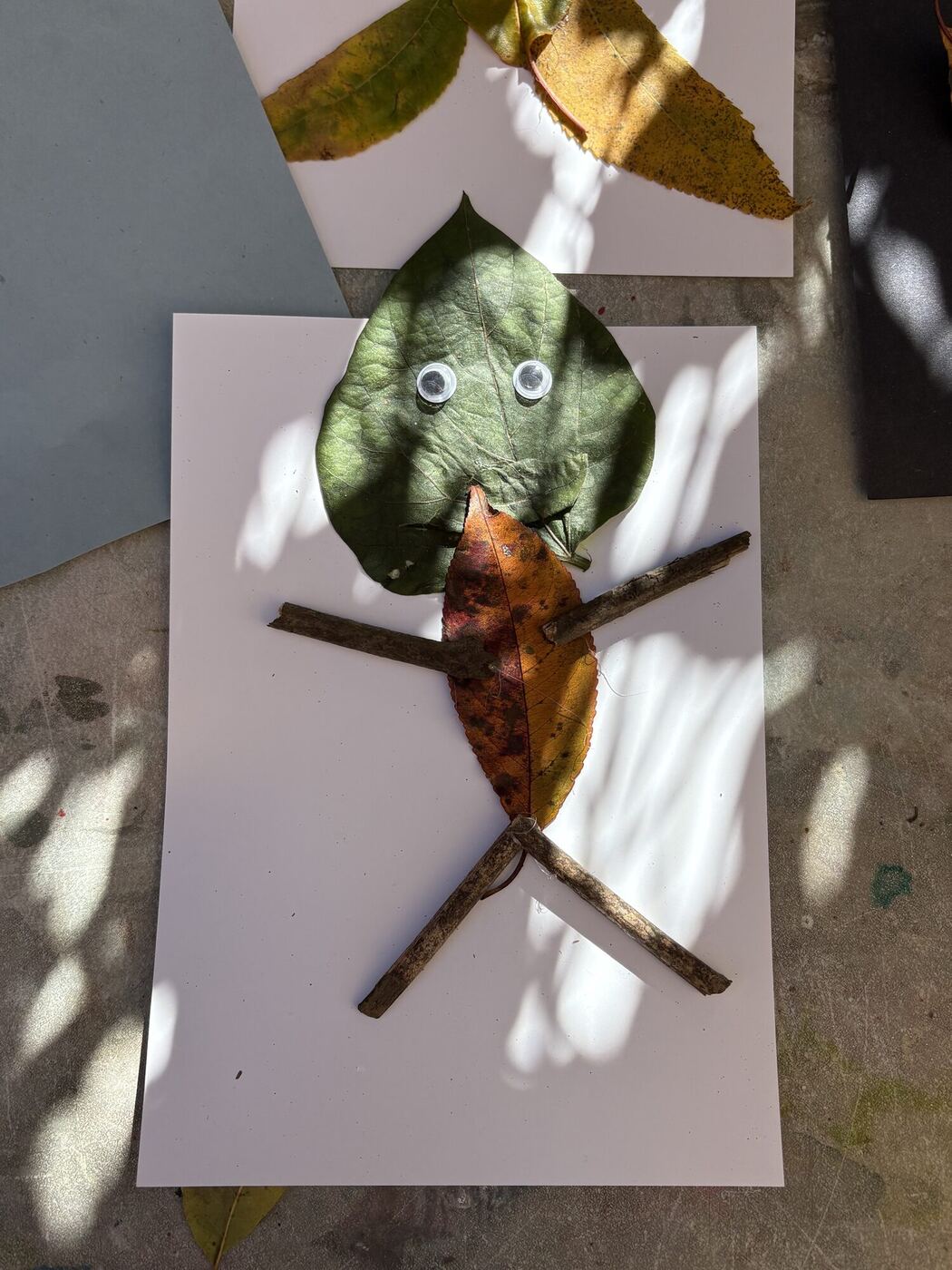
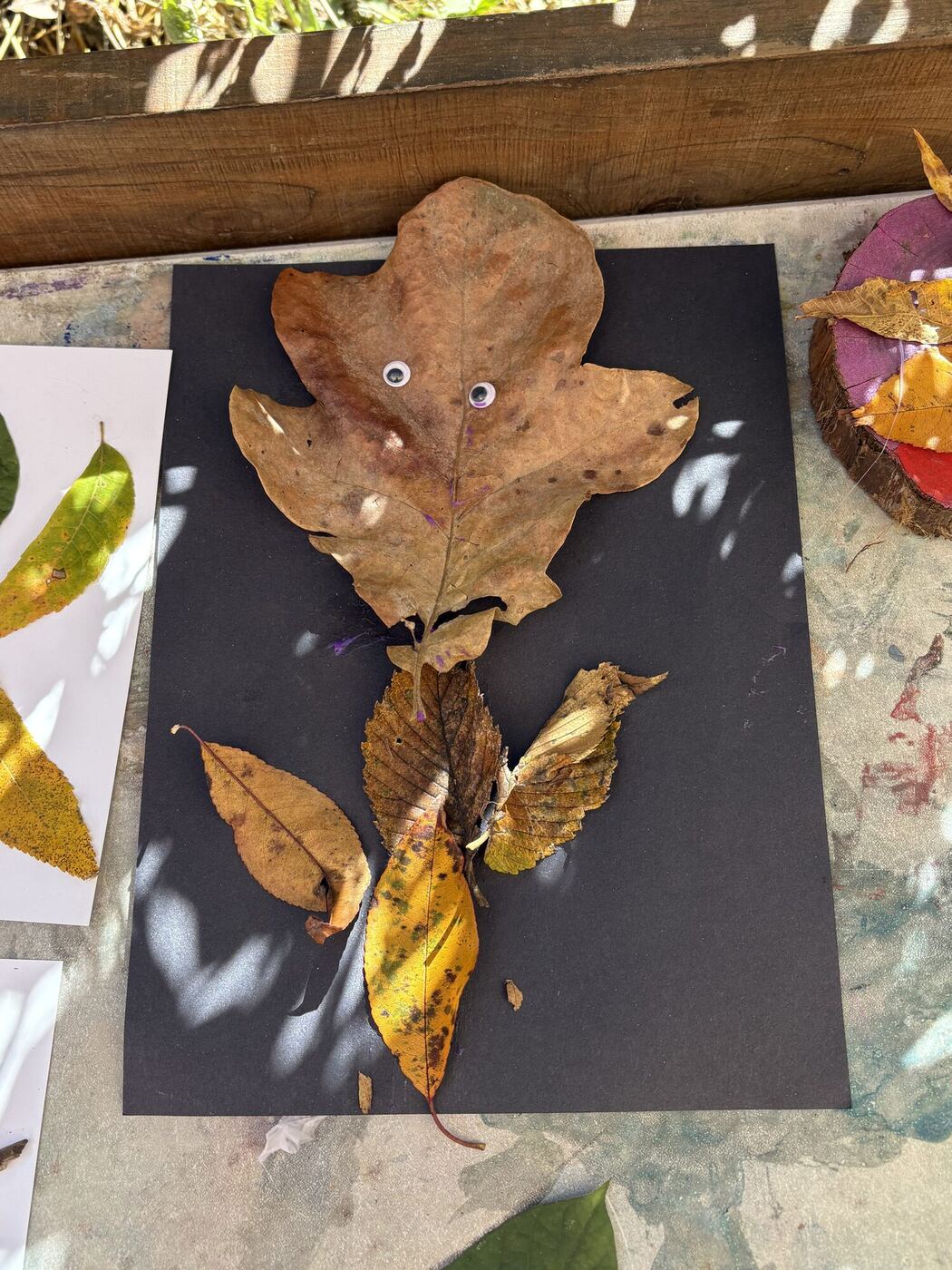
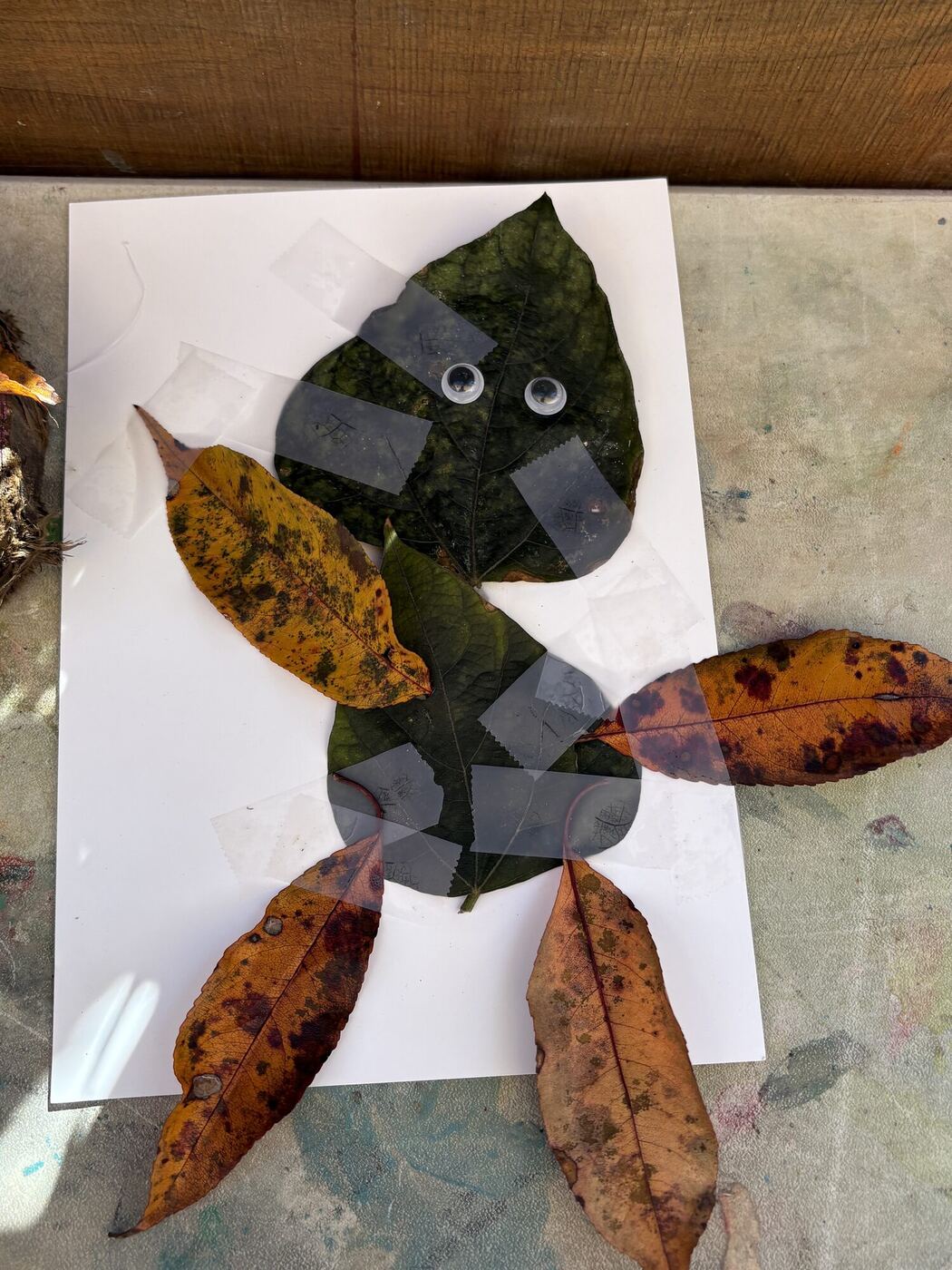
After a picture book about a man made of leaves, they went round the campus for materials and made leaf creatures of their own.
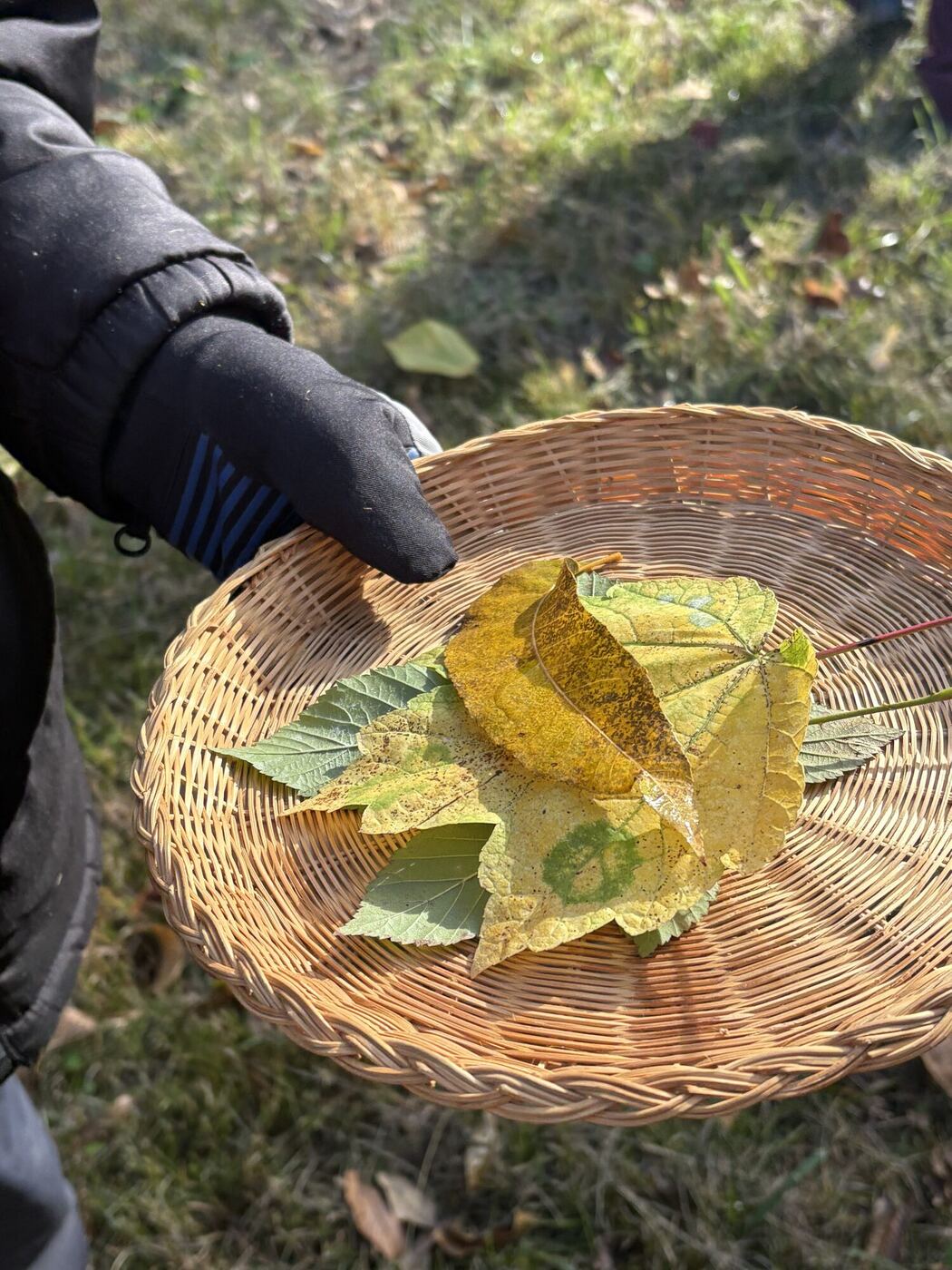
On a leaf hunt they matched what they found against identification guides. The hyacinth beans from the garden beds were shelled, for play and for art.
Also in November
A survival instructor spent a morning showing them how to tell how much daylight is left without a watch. Each of them built a small shelter of their own, which had to stay warm and dry.
They crushed leaves into jars to separate the colors, and talked about chlorophyll, pigment and sunlight.
December
21 entries
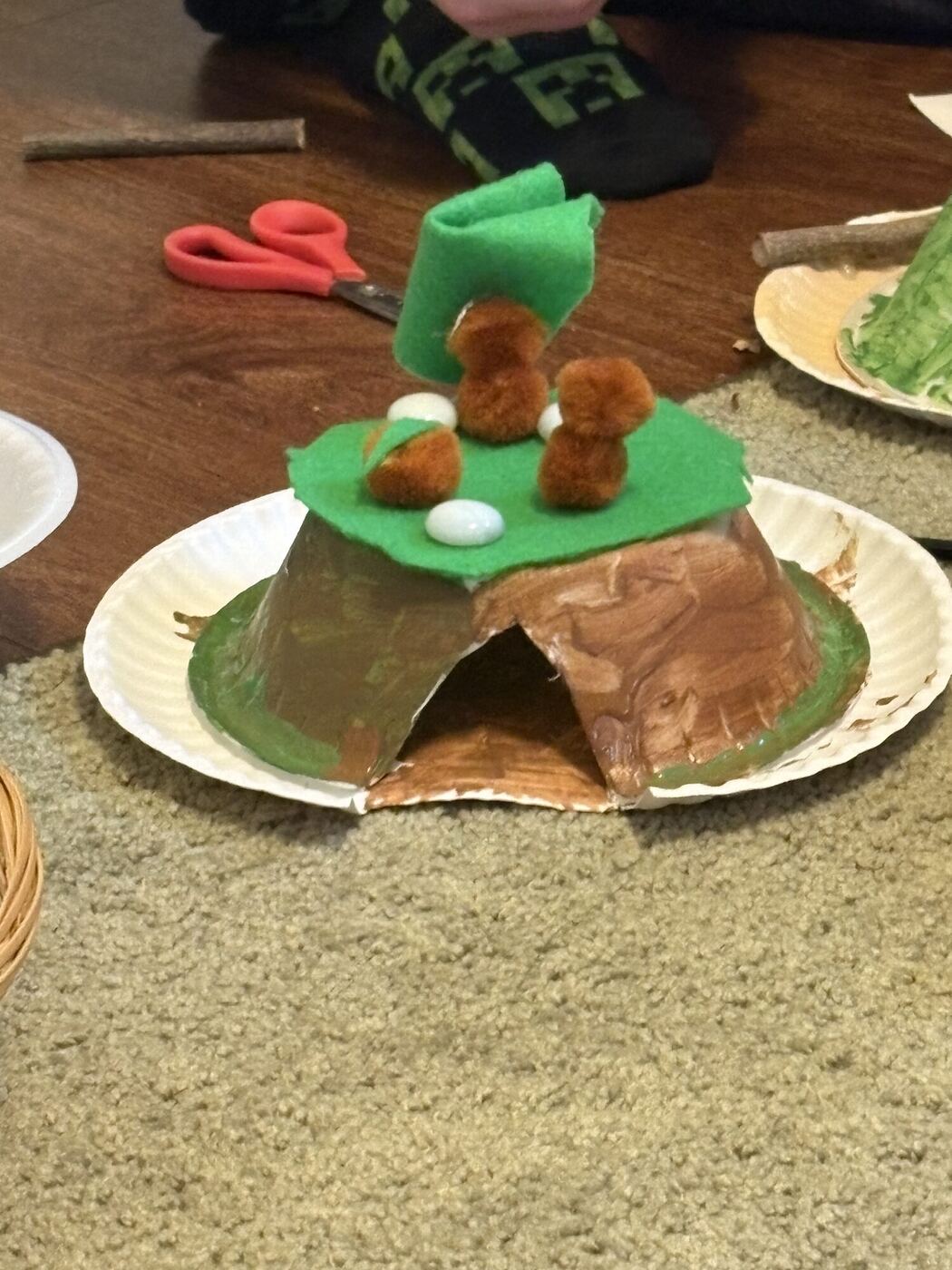
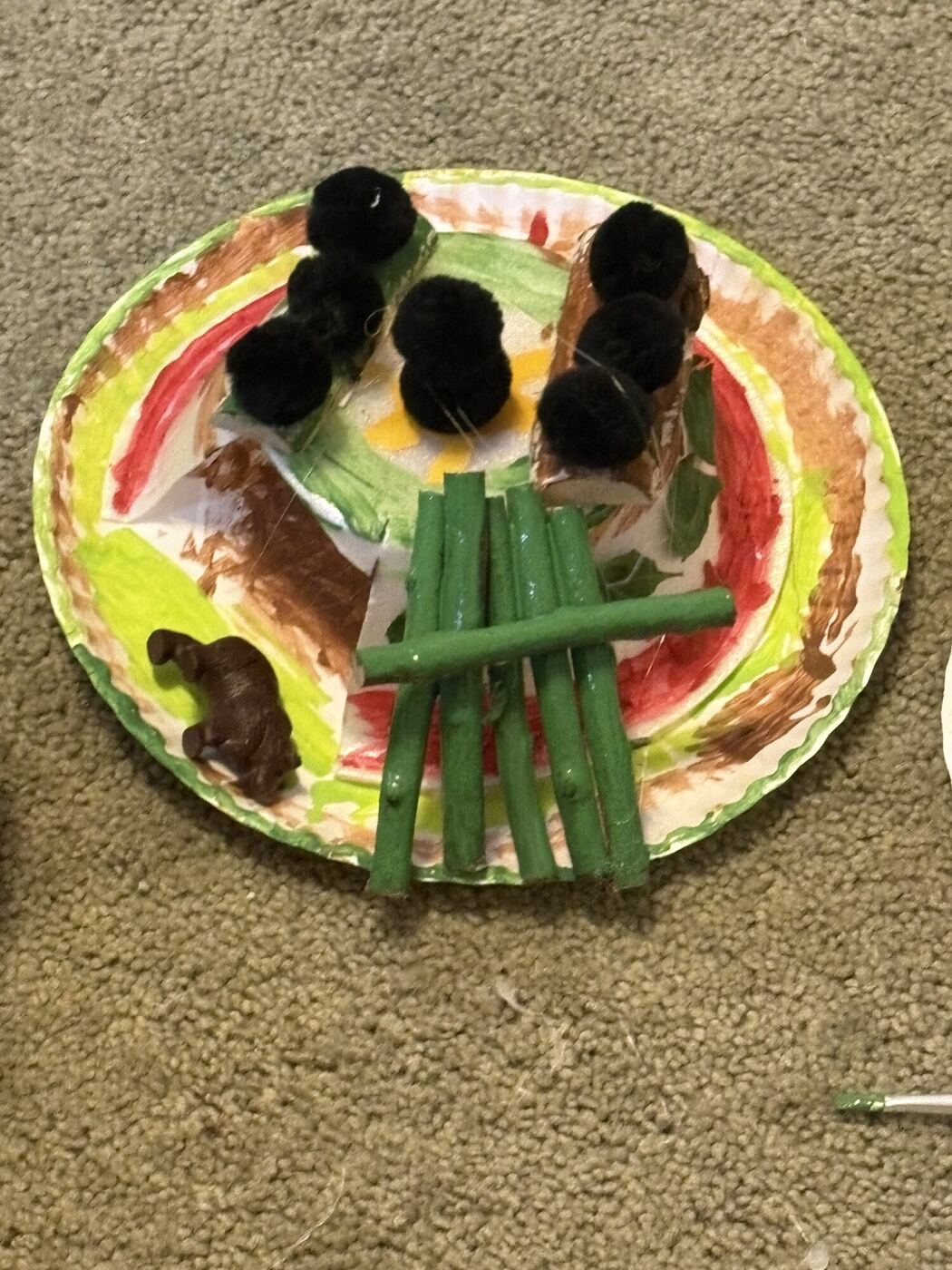
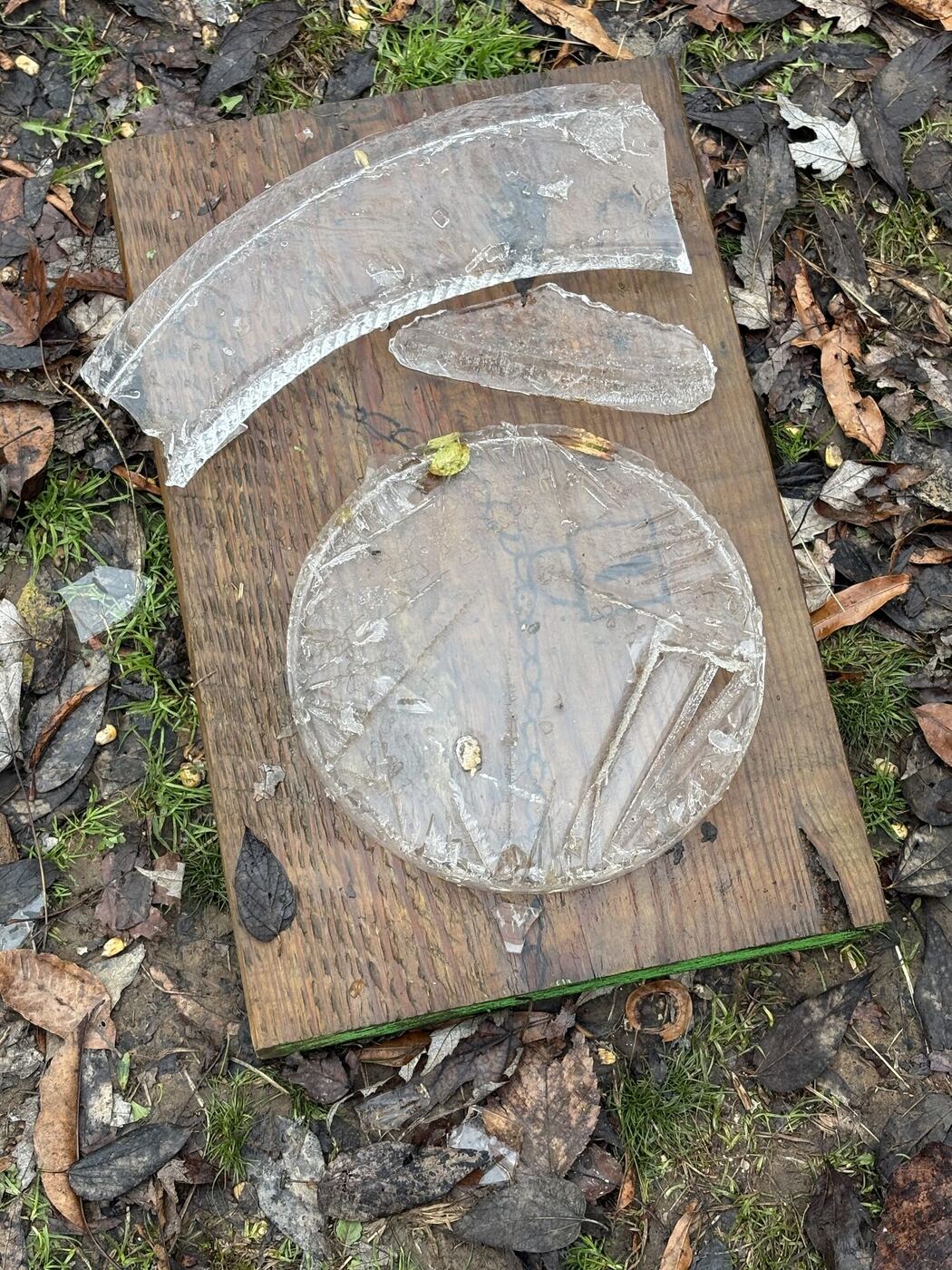
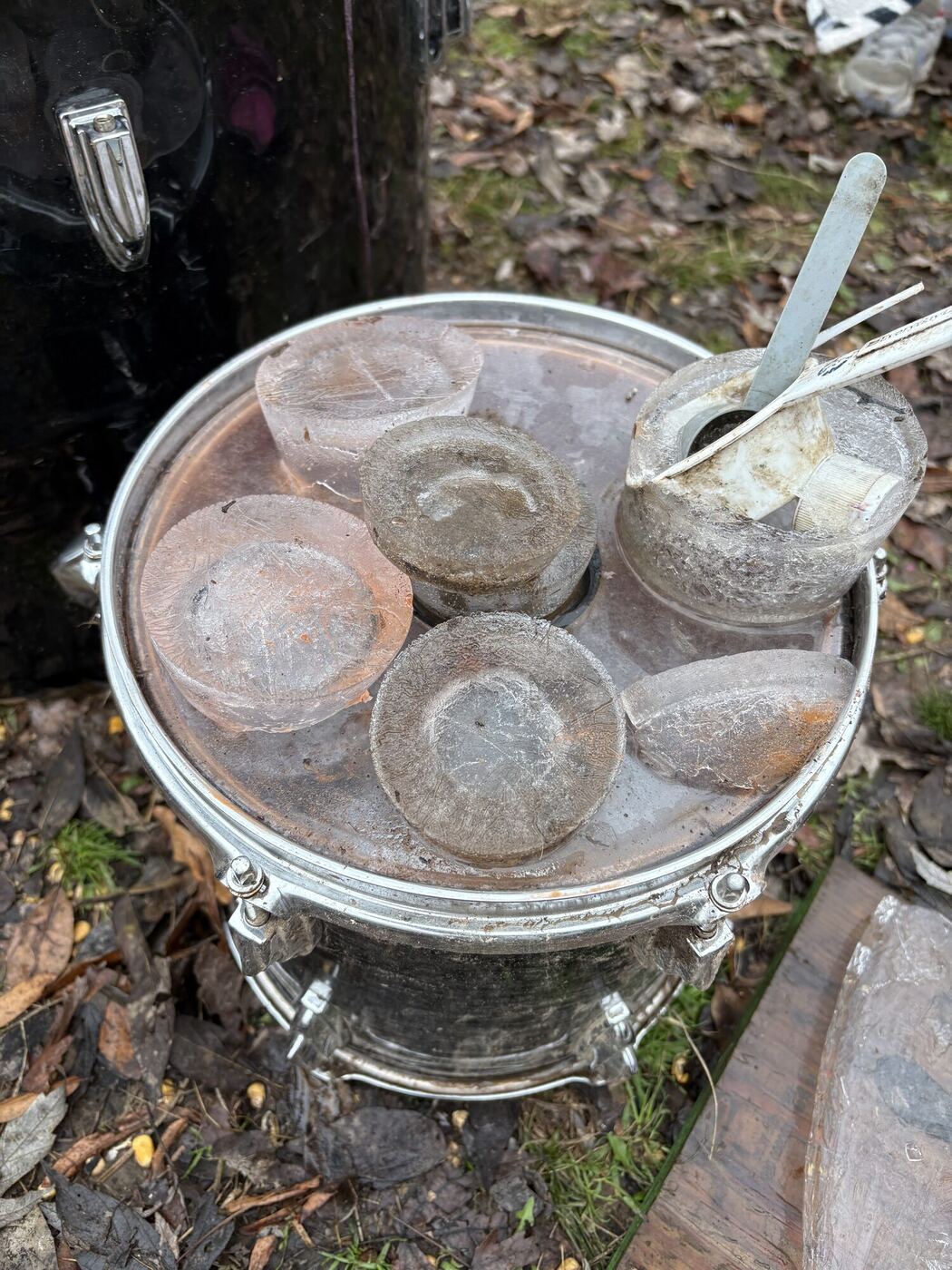
They learned how animals get through the winter, hibernating and adapting, and built a den for an animal of their choice. Then the ice came, and they went all over the campus finding it.
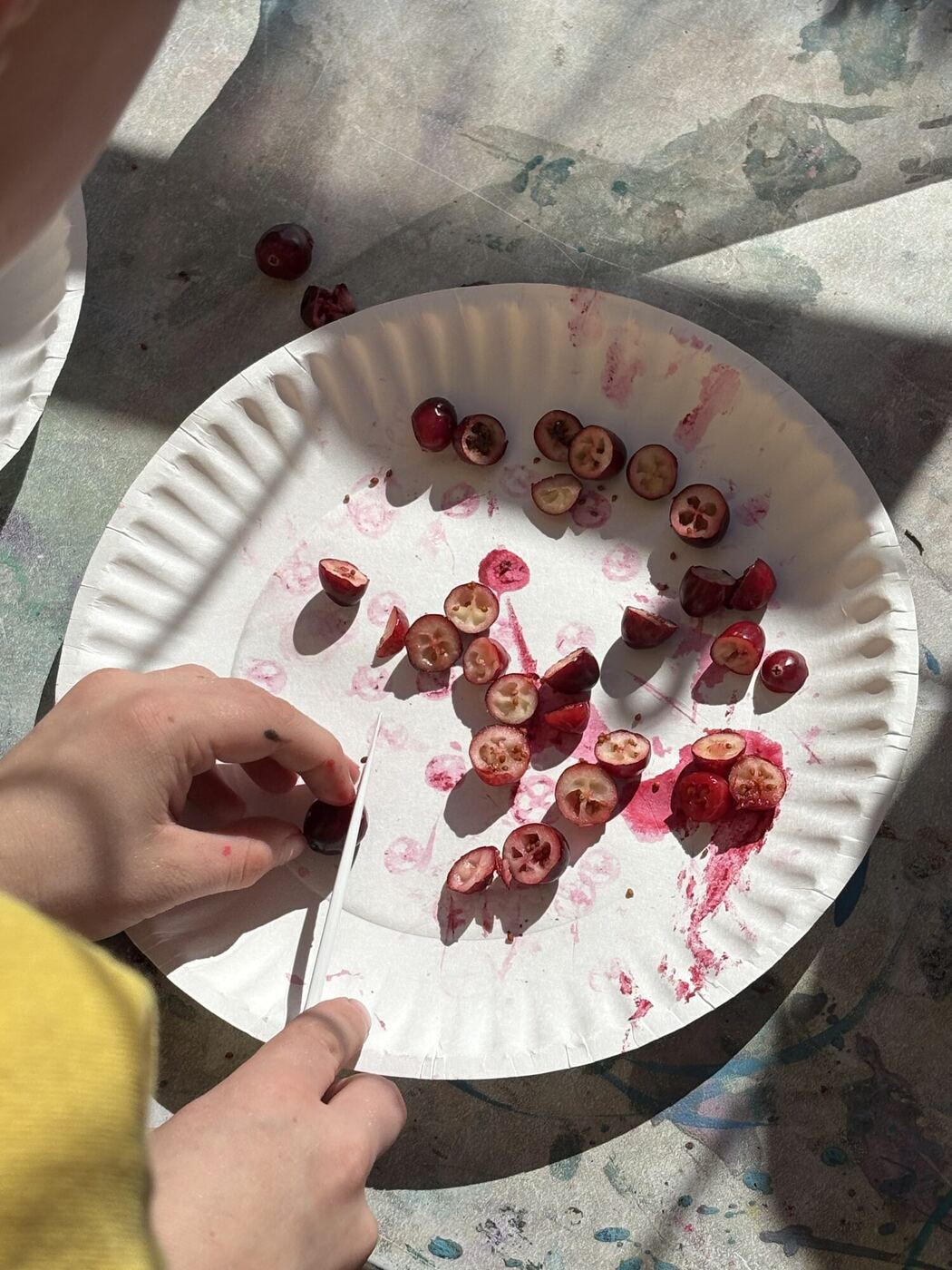
Cranberries float. Cut open, they turned out to be full of air pockets.
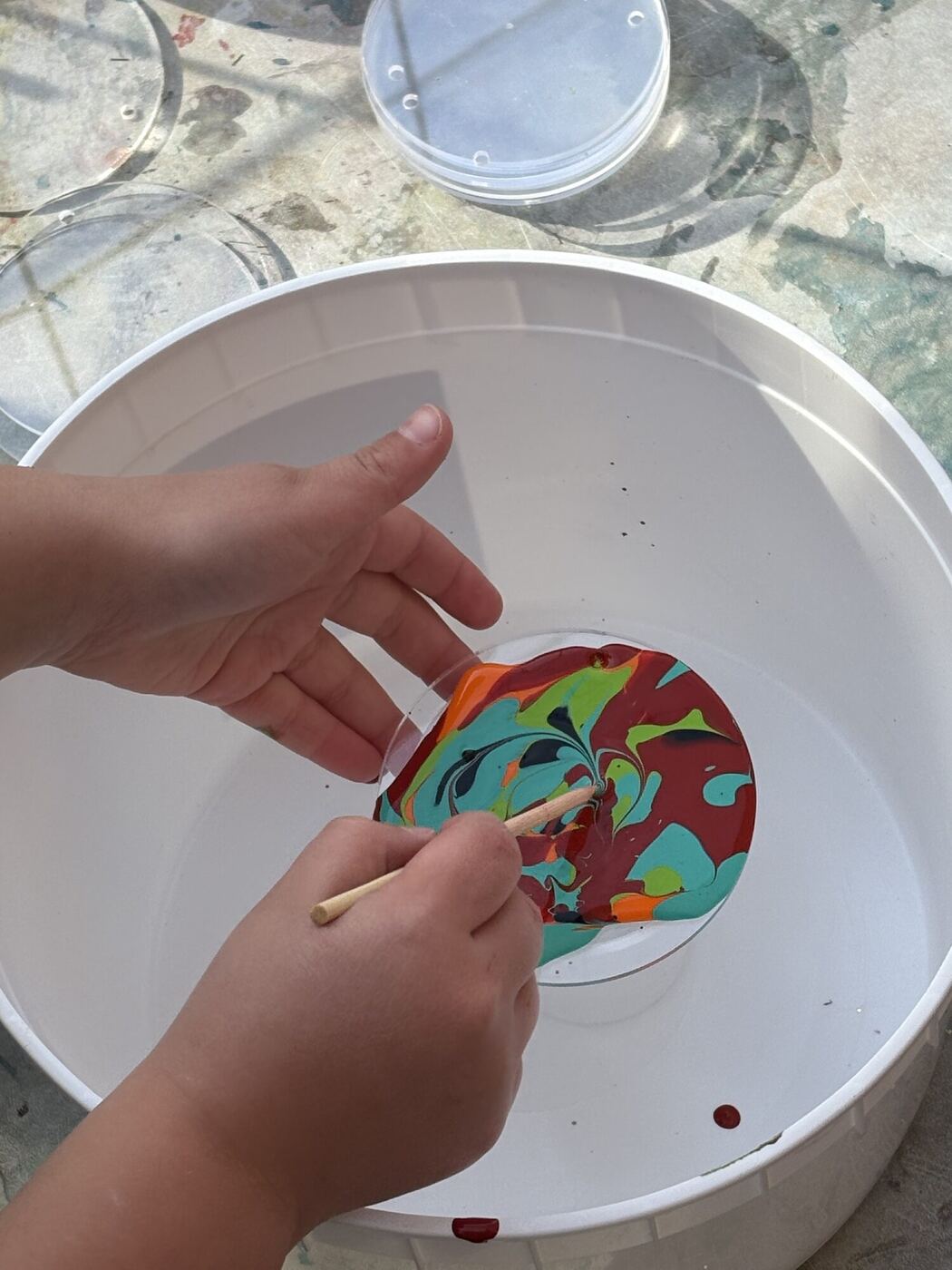
The cranberries went under a handheld microscope, and the parts were graphed: seeds, flesh, air pockets and skin. The ornaments were paint, poured and swirled.
Also in December
They made cranberry play dough from a recipe, then held a baking contest with it and presented the results to the facilitators to taste.
Pecans from the campus tree were cracked open, tasted, and ground into butter with a mortar and pestle.
Bird seed feeders, made to hang around the campus.
Reading moved on to the chunk sounds, ng and nk.
January
86 entries
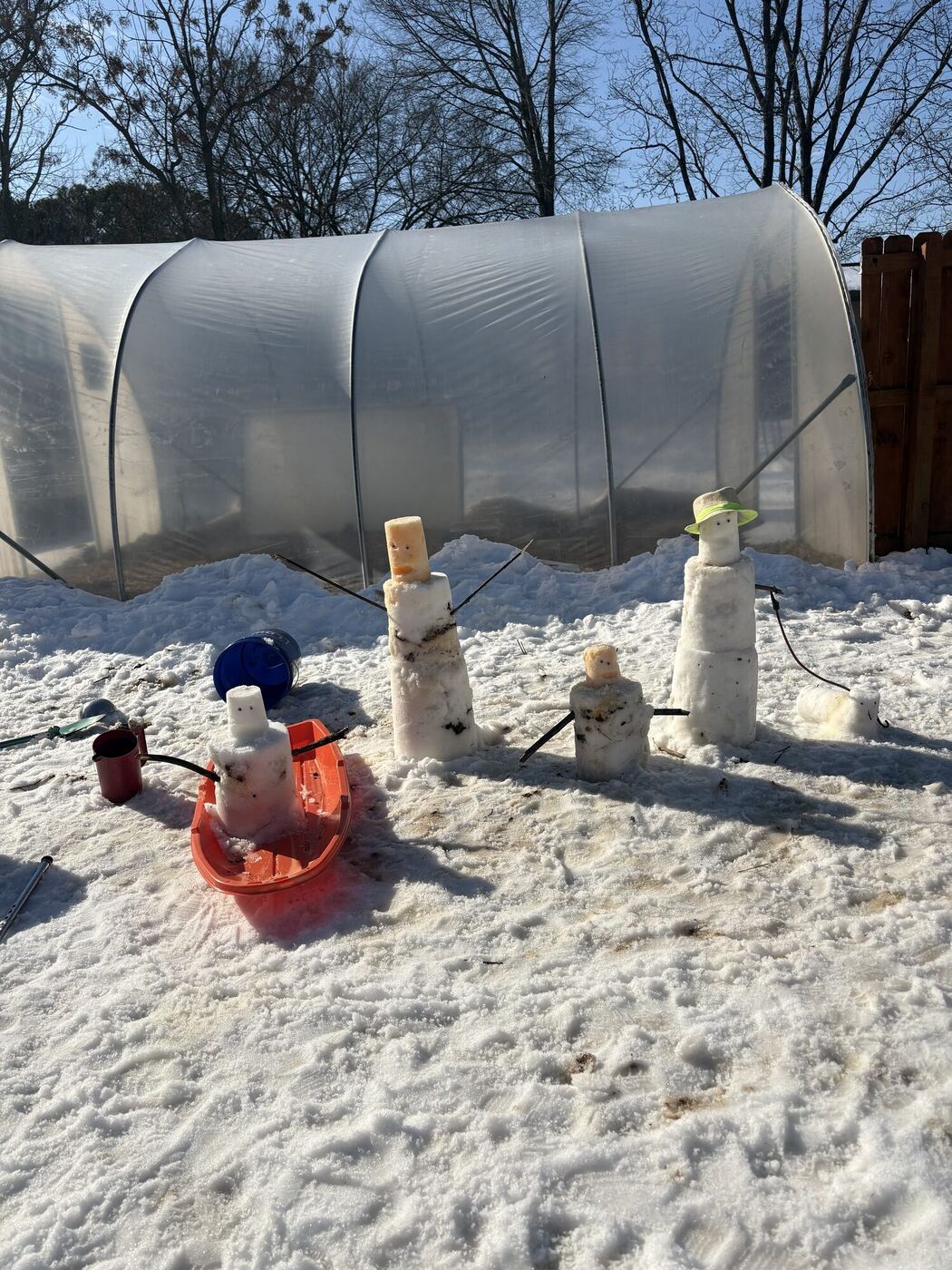
When the snow came they filled buckets of every size, stacked the shapes, and built snow people, a dog on a leash, and a whole city.
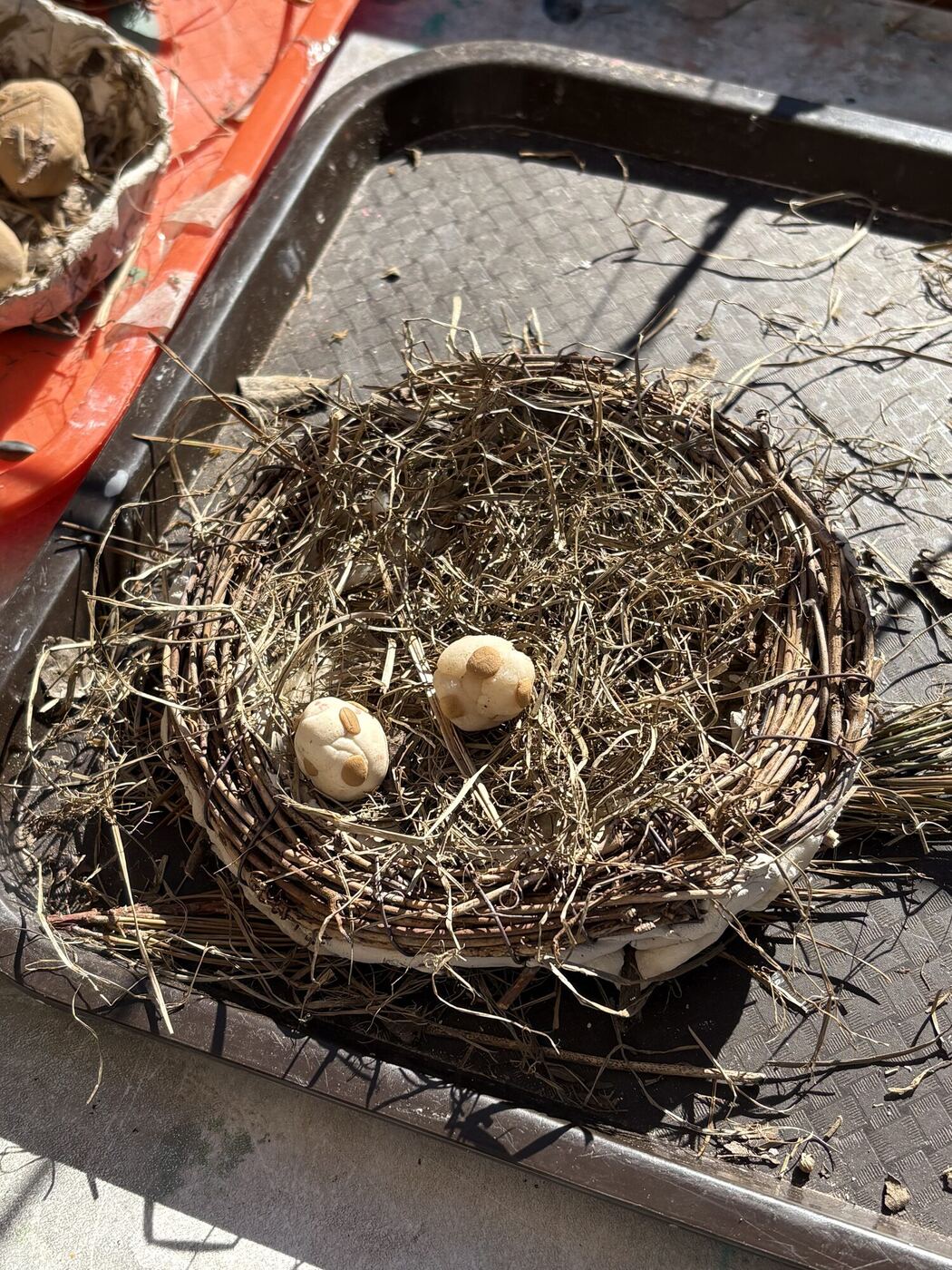
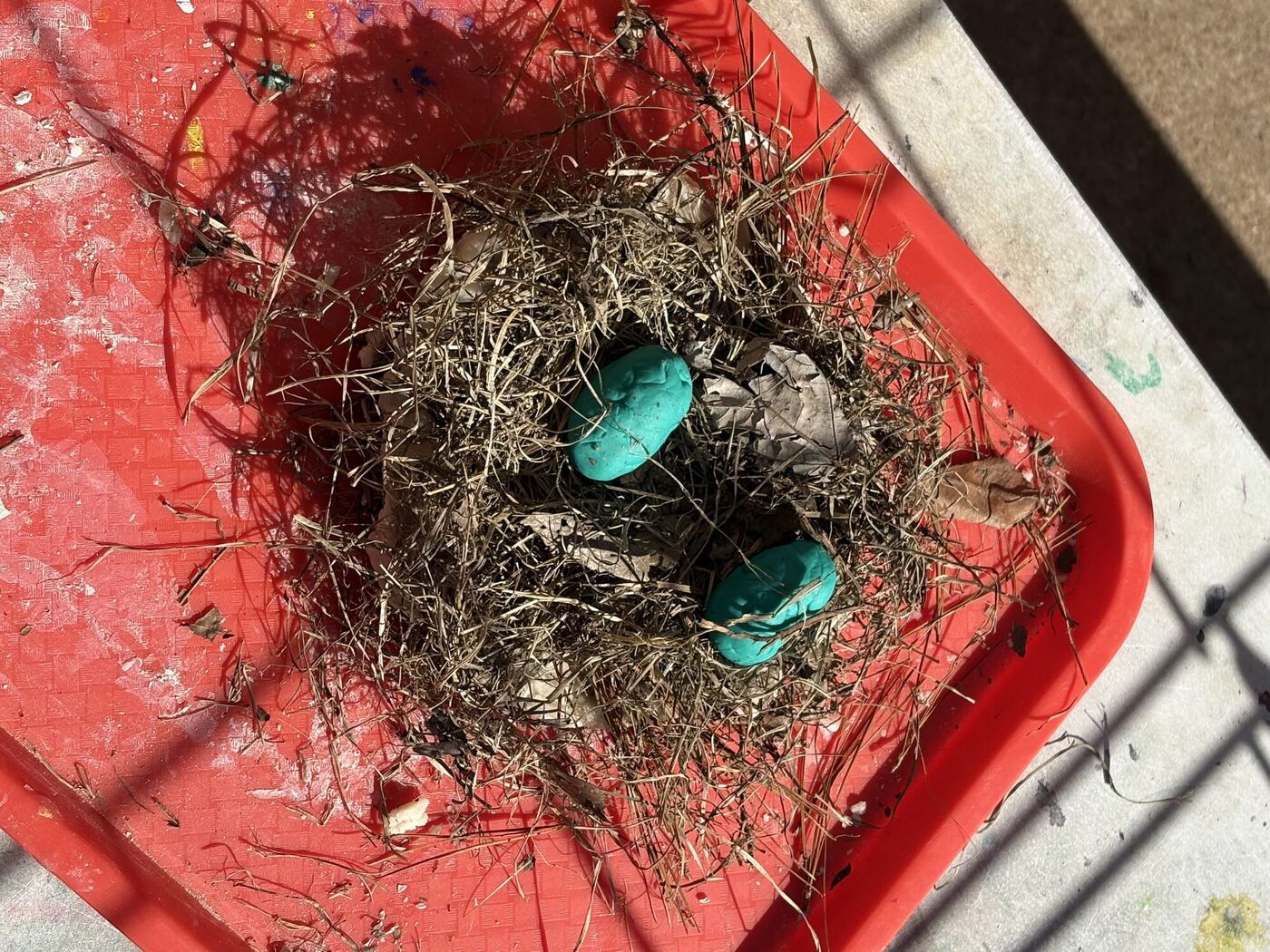
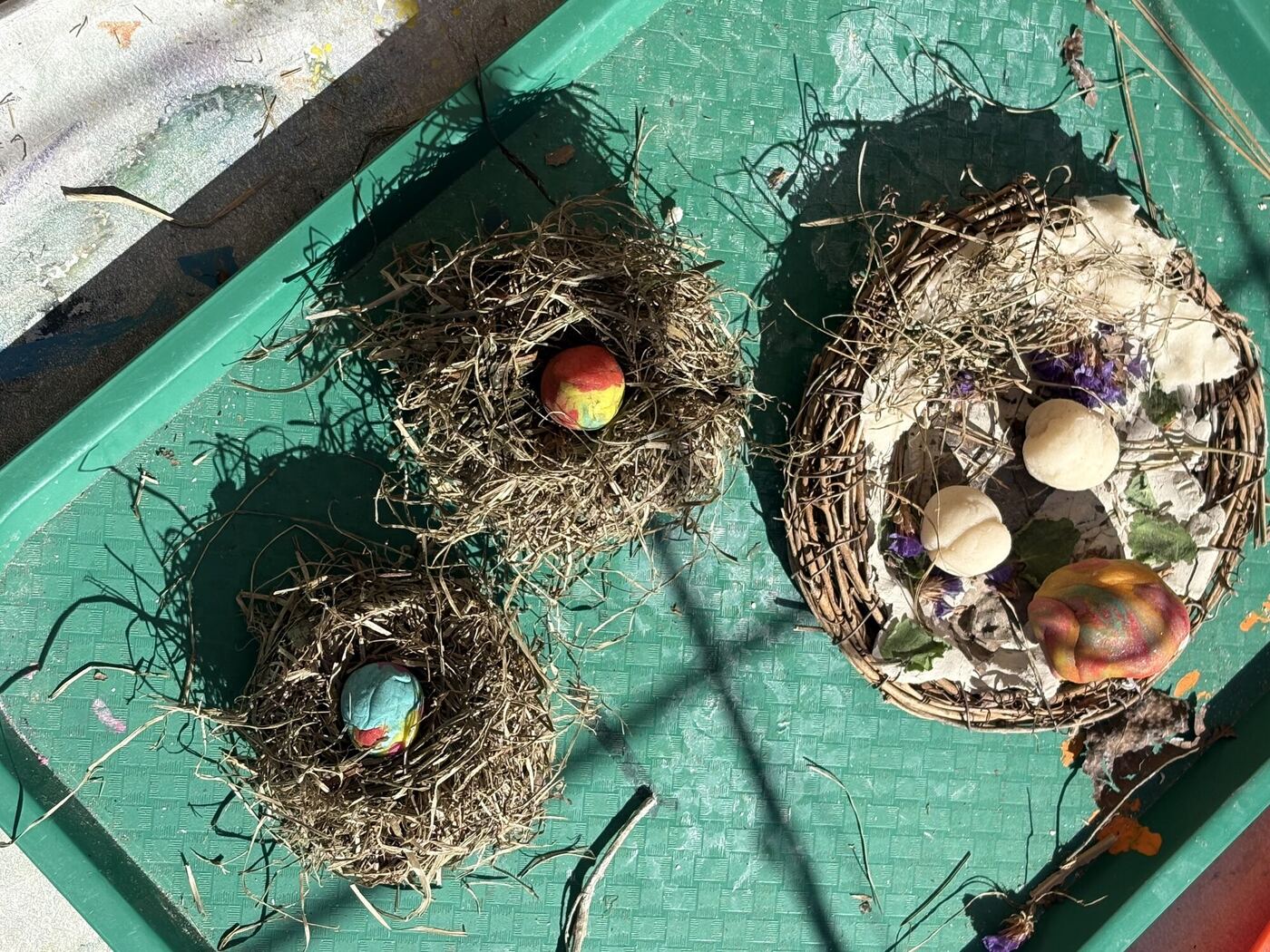
After several books about birds' nests, they talked about what birds use and how, then made nests of their own. Some made eggs to go in them.
They took owl pellets apart in pairs, checked the bones against a diagram, and worked out what each owl had eaten.
Also in January
A shelter of tarps, bungee cords and paracord, which was their idea, put up with a little help.
A group of them built a structure together, each with a job, tested the roof, and added planks to make it stable.
For a zombie game, a poison of plants from around the school, mashed with a mortar and pestle.
The first book reviews of the year.
Oranges in season: everyone juiced one and drank it, then the peel became a cup of suet, cooked on the outdoor skillet, for the birds.
February
67 entries
The gaga pit went into the play yard in January. At first a facilitator was needed for most disagreements. By February they were settling most of them themselves, under rules they had agreed were fair, and playing for long stretches.
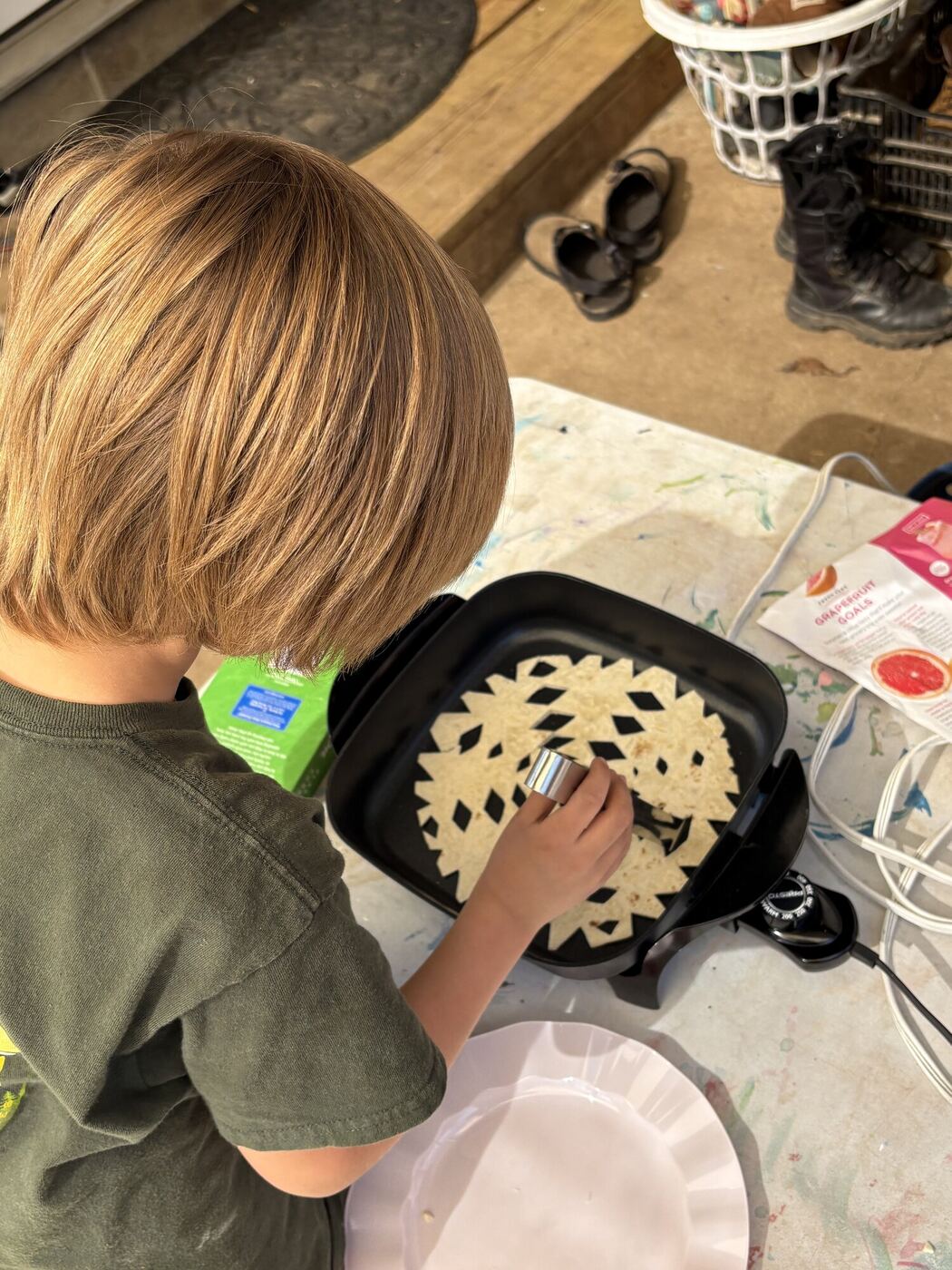
Snowflake tortillas
A tortilla folded into a triangle is a lesson in halves, quarters and eighths. They cut shapes into the folds and opened them out into snowflakes, cooked them one at a time on the electric skillet with tongs, put toppings on, and ate them. Food safety came up along the way.
Mathematics · Health · Fine Motor Skills · Following Instructions · Cooking
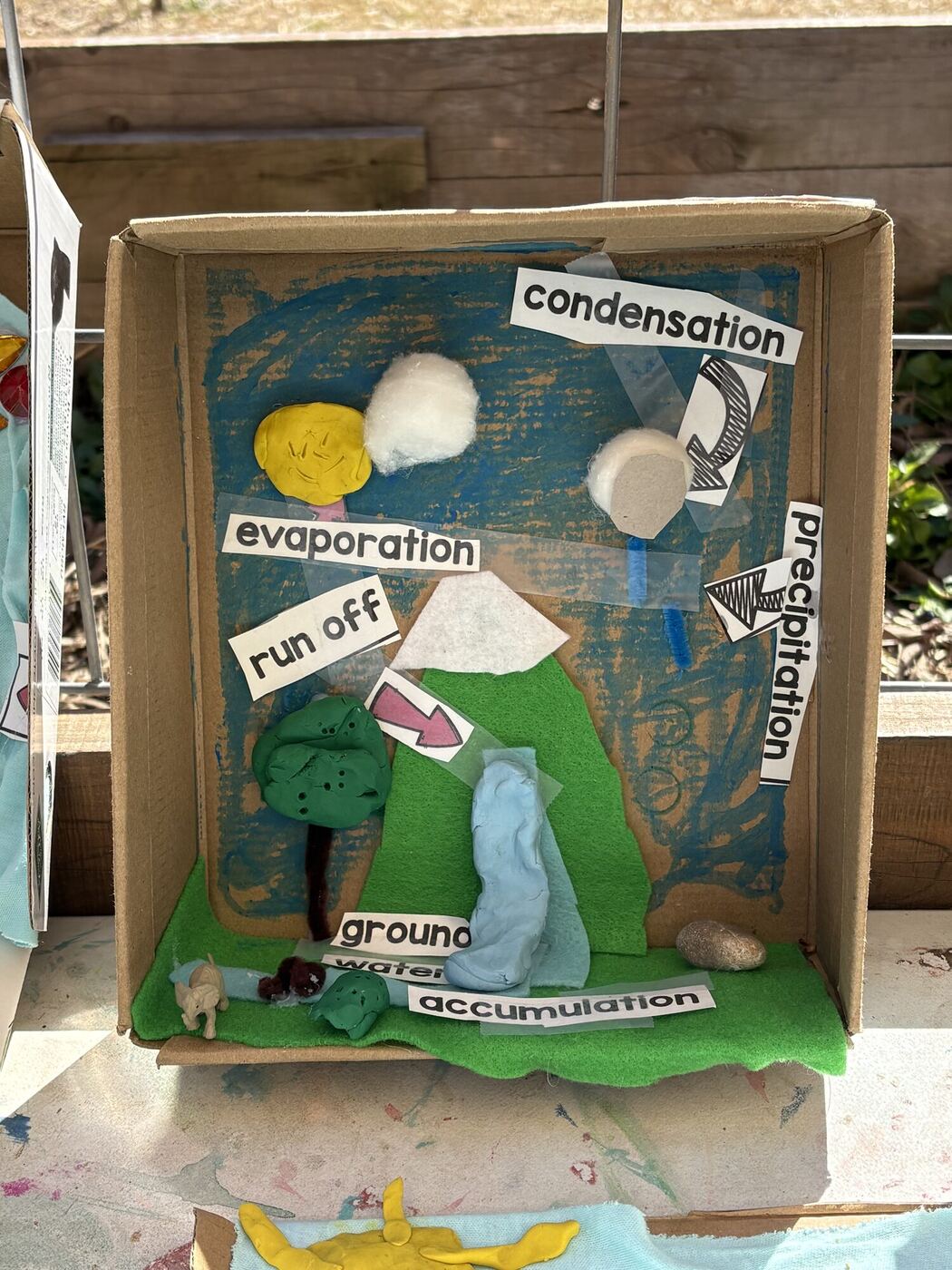
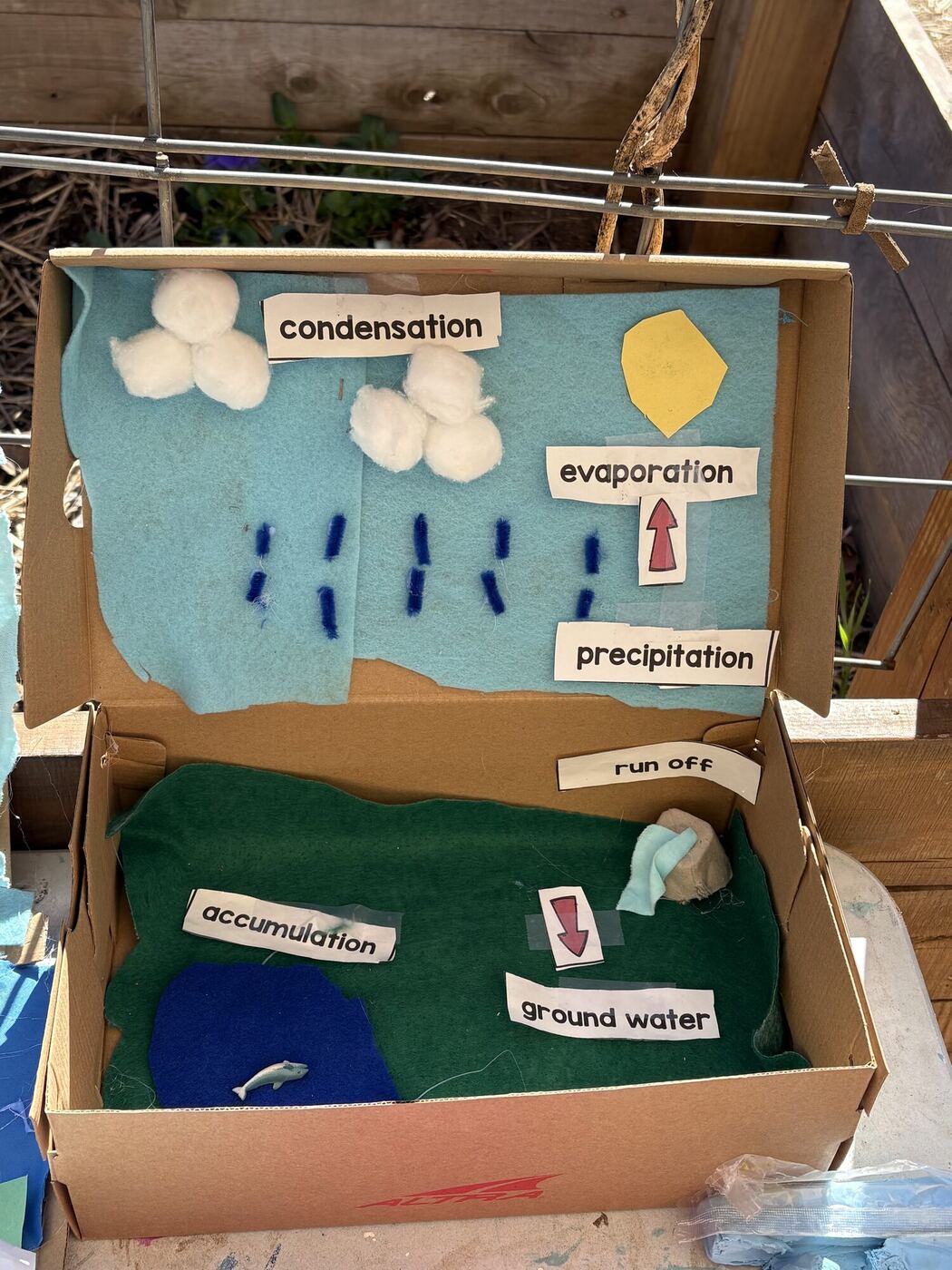
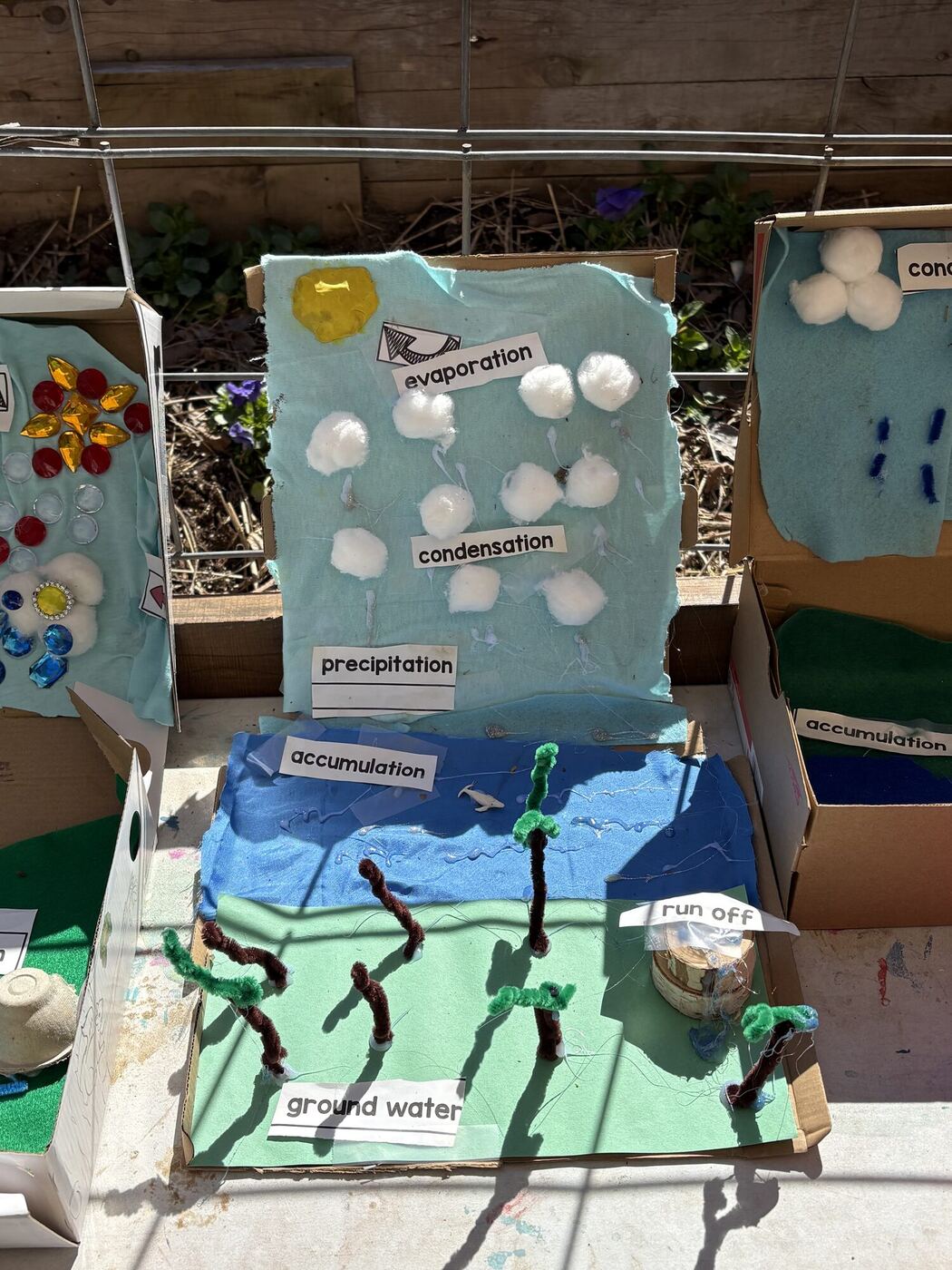
The water cycle study began with the fact that water covers seventy percent of the Earth, and that the water we have now is all the water there has ever been. It ended in dioramas, made with little help.
Also in February
Some of the youngest built a large shop out of crates in free play.
A powder that turns into snow when water goes in: it soaks the water up and swells, which is a physical reaction, not a chemical one.
On a shape hunt in the play yard they counted sides, then put the round planters in order from biggest to smallest.
A log was hauled up from the creek to make a base.
March
35 entries
They watched a hawk swoop down, catch a mouse, and sit with it in the cedar tree for a long time.
The library in the teepee
A facilitator was invited into a library during nature play time and was stopped at the door, which was the entrance to the teepee, to be issued a library card. Inside were crates of hand-drawn books to check out, and a pile of magazines to browse.
Language Arts · Communication · Collaboration · Imaginative Play · Books & Reading
Locking in a word
The spelling routine has five steps and they do all five for every new word. Trace the raised letter card with a finger. Write it in the bead tray. Write it on the plastic grid. Write it on the glass. Write it in the sky.
Language Arts · Reading · Sequencing · Multi-Sensory Learning · Word Study
Also in March
At nature play the group split itself into foraging teams, with help from the older ones: berries, pecans, onion grass, and later wildflowers.
Each grasshead was watered every week and measured. Hunting for the single tallest hair became its own event.
The handwriting prompt that week began: my grasshead taught me.
Clay pizzas, joined by scoring and slipping.
On a sketch walk they looked for an insect, spikes, a seed, something hidden and a fungus. A caterpillar counted for two.
April
27 entries
The bug hotel
During nature play they found caterpillars and built them a hotel out of crates, with a habitat and a nursery for each kind. As the week went on the cocoons formed inside the rooms they had made. There was water put out, and a graveyard, for the caterpillars that did not make it.
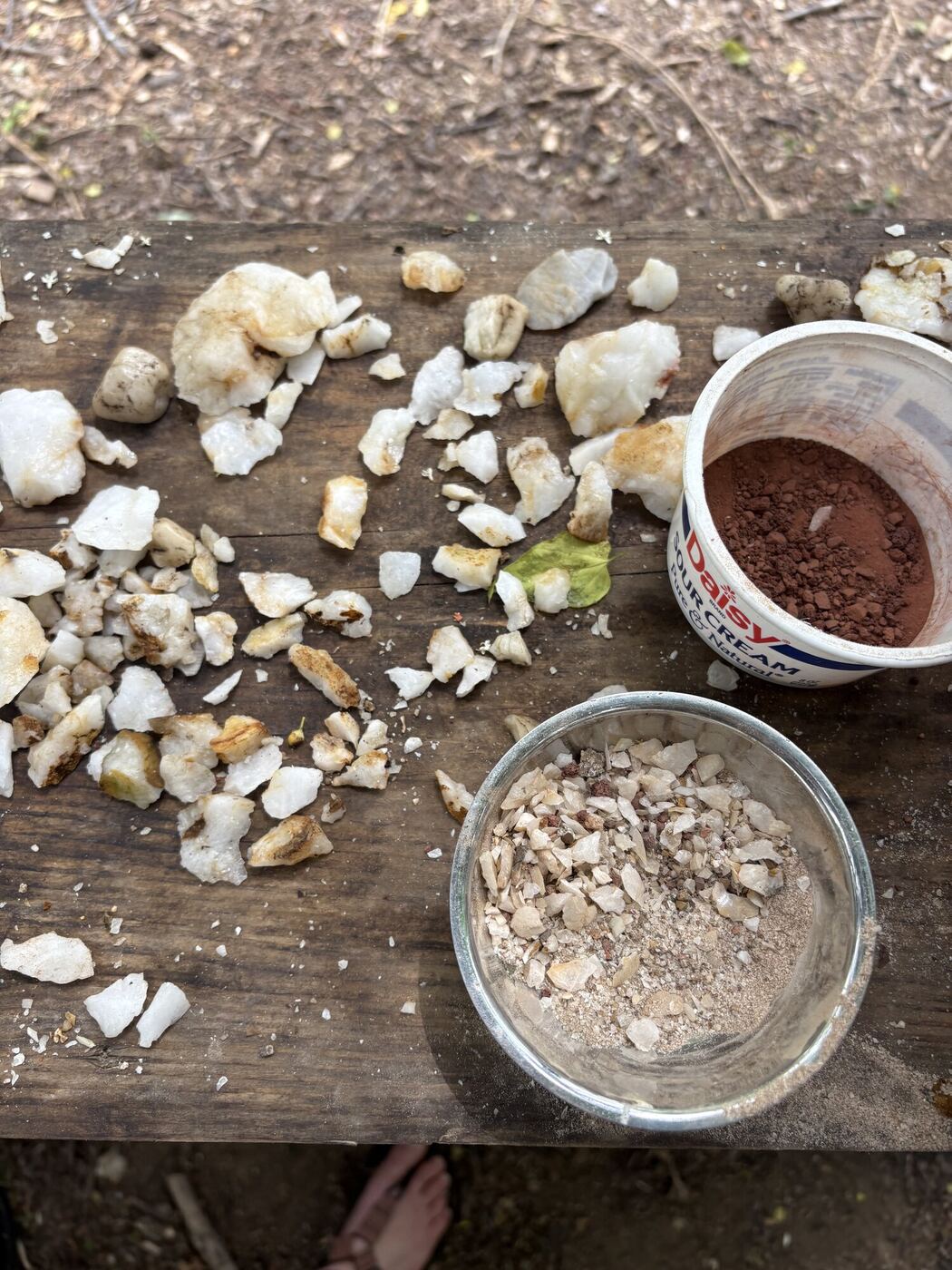
The nature study that month was rocks, and it turned up in play. Most of the week went on chiseling and polishing large pieces of quartz with tools, then laying them out in order from most expensive to least, with price tags for the special ones. Eye protection on, hammers looked after, and reminders to each other about the rules of the work site.
Earth Science · Economics · Classification · Safety Awareness · Rock & Mineral Collecting
Also in April
Geodes cracked open to white quartz, then looked at under the microscope.
Slime from glue, baking soda and boric acid, with gems pressed in, since the nature study was rocks.
Clay, squeezed and pressed by hand, to show how sedimentary and metamorphic rock form.
Rock jewelry with craft wire and wire cutters. Wrapping wire around a rock was harder than it looks.
May
20 entries
In May they noticed birds hunting around the campus for nesting material, so they cut lengths of yarn and string and put them out.
Also in May
The survival instructor came back, in cold rain, and they stayed out almost two hours: three knots, three shelters, and the ferro rod again. Many who had struggled with the ferro rod in November found it easier.
Amphibian week: their traits, habitats designed for them, and 3D models of the life cycle.
A morning discussion comparing frogs and crows.
Baking soda moons, with craters made by drops of vinegar.
Constellations, modeled and then eaten.
In teams, spaceships built from two big boxes. It took most of the day, and the teams shared their designs with each other.
Jump ropes came out in the play yard, then a long rope turned by two people. Some are getting many jumps in a row.
In the 2025-26 year
520
entries, written by the people who were in the room.
10
months of them, and not one month under twenty.
3
people wrote them, in the ordinary course of running the place.
55%
of the entries carry two or more subject areas in their Learning Signals.
What the record shows
Language arts is the most documented subject of the year, well ahead of mathematics, at a school that spends its day outside. It arrives through the picture book that opens the morning and sets up the work that follows, a handwriting routine with its own vocabulary of line and letter size, and spelling traced on a raised card, in a bead tray, on a grid, on glass. Science here is not one subject but a dozen, and the nature study moves unit by unit through the year: luffa in October, cranberries in December, the water cycle in February, rocks in April, the solar system in May. The most documented skill of the year is fine motor. Hands, mostly.
About this page
Written down by the people who were there.
Every moment here comes from Evergreen Academy's own record: the entries its three staff wrote in Prism over the year, a photo and a few sentences at a time. The small capitals under each story are the Learning Signals Prism found in those entries.
“Our students get to enjoy childhood and a school space the way we believe it is meant to be: mixed-age learning, plenty of outside play time, and space to be creative and lead in their learning experience.”
Evergreen Academy, from evergreenacademyconway.com
Visit
Evergreen Academy
A nature based microschool in Conway, Arkansas, for children five to nine, on an urban flower farm.