Durham, North Carolina · September 2025 to July 2026
An anti-racist, LGBTQ+ and neurodiversity affirming community.in its own words
Wildly Inclusive ALC is a full-time self-directed education program in Durham, North Carolina, run by the Wildly Inclusive Learning Collective, a nonprofit, with Jr. Explorers and a Teen Innovators program. In its own words, a place where learners explore and learn at their own pace, and a welcoming and safe environment for all, regardless of race, gender, religion, ethnicity, or sexual orientation.
Wildly Inclusive keeps its record in Prism. Between September and July, its five facilitators wrote 406 entries about what happened there, most of them with a photo. This is that year, a month at a time.
September
62 entries
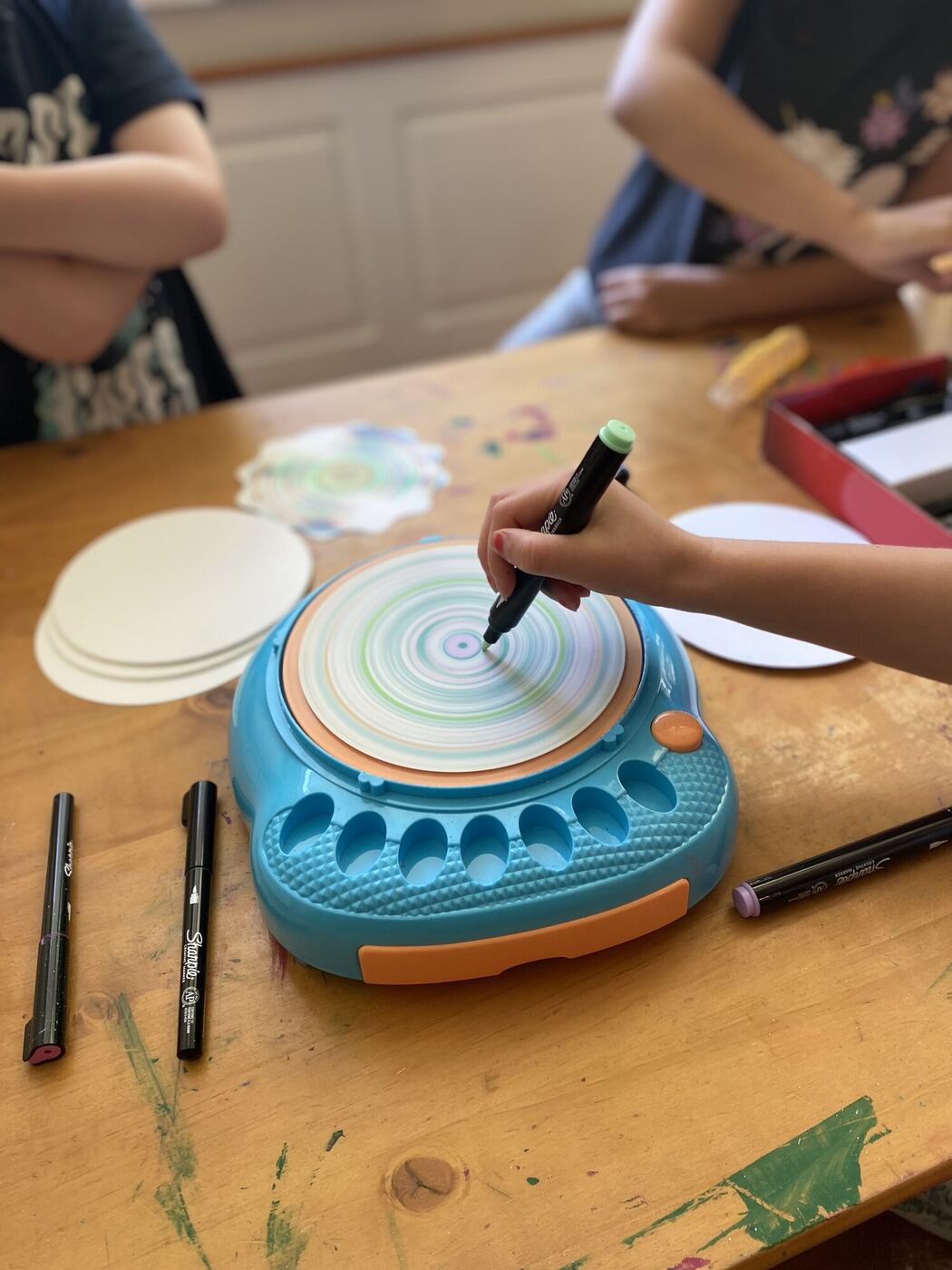
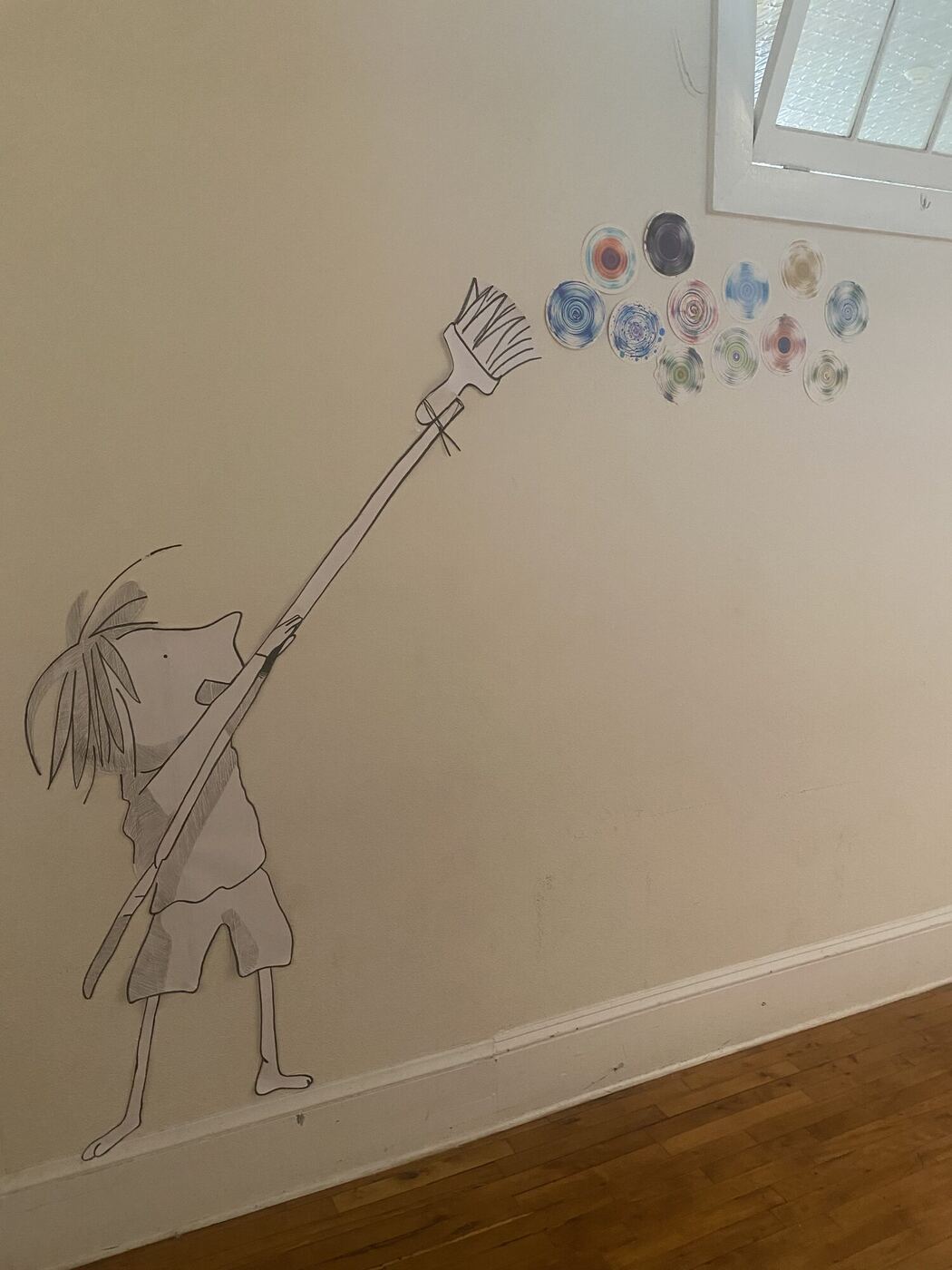
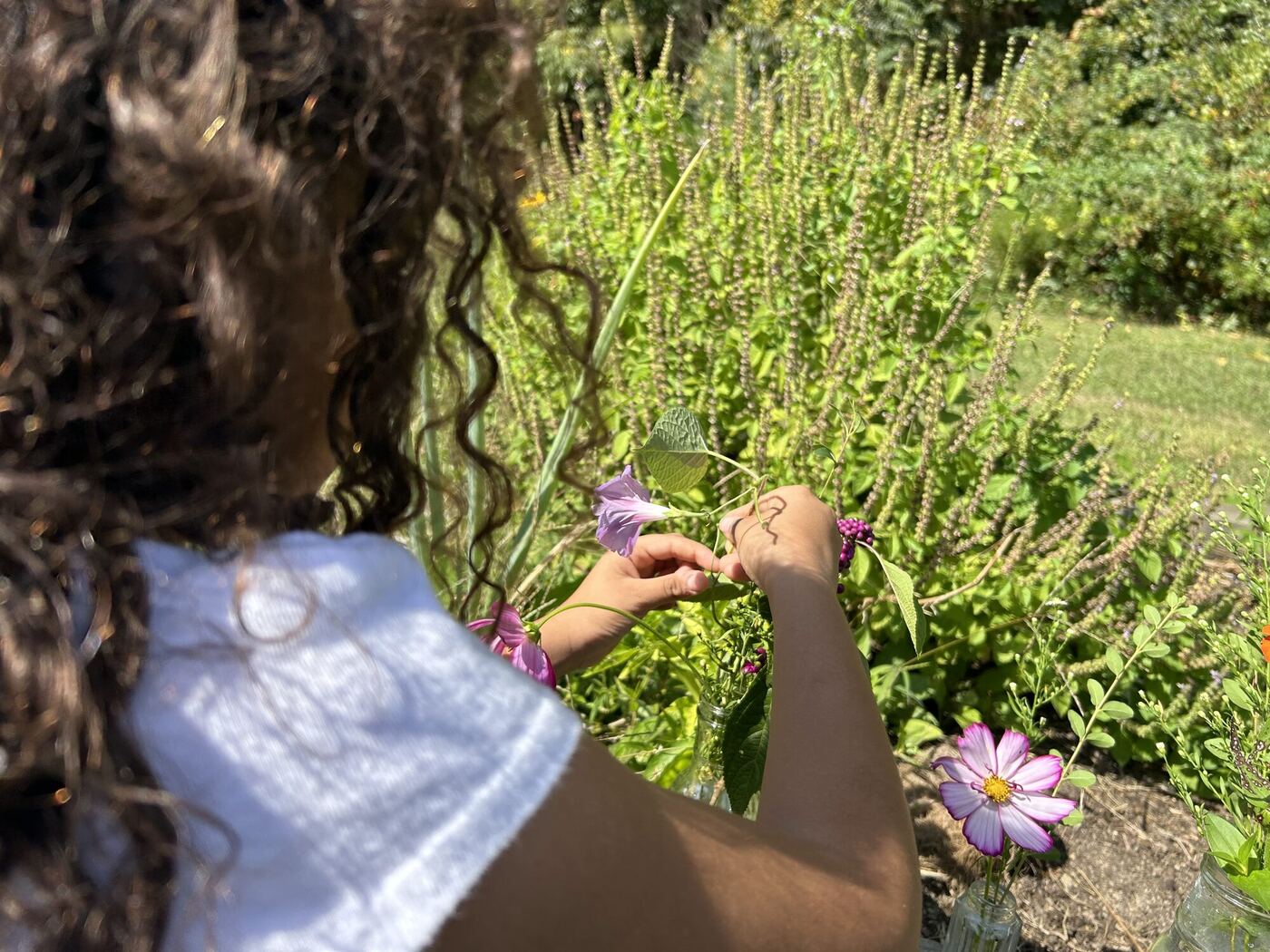
Spinning marker art, taken up again for a whole day. A hallway installation of dots, after a picture book they read together. Flowers cut and arranged for the space and as gifts, with a lesson in how to green a vase.
At a surprise puppet show in the auditorium, a puppet tried to eat lunch, and everything in the lunch box kept running away.
Also in September
Outside, they found a mushroom and looked up its name: dead man's foot, also called dog turd fungus.
Dungeons and Dragons took up most of the first week for some of them. By the end of the month it was almost daily.
A facilitator led a tulsi harvest from the garden: how to collect the seeds, what the seeds do in water, and how to dry the leaves for tea.
Finding a tiny toad was good. Telling everyone was better, and it turned out a lot of people had frog facts to share.
The melted-bead stained glass took a lot of patience. They stuck with it.
For Navratri, a facilitator brought dandiya sticks and taught Raas, a line and pair dance from Gujarat.
The acrobat club started.
October
31 entries
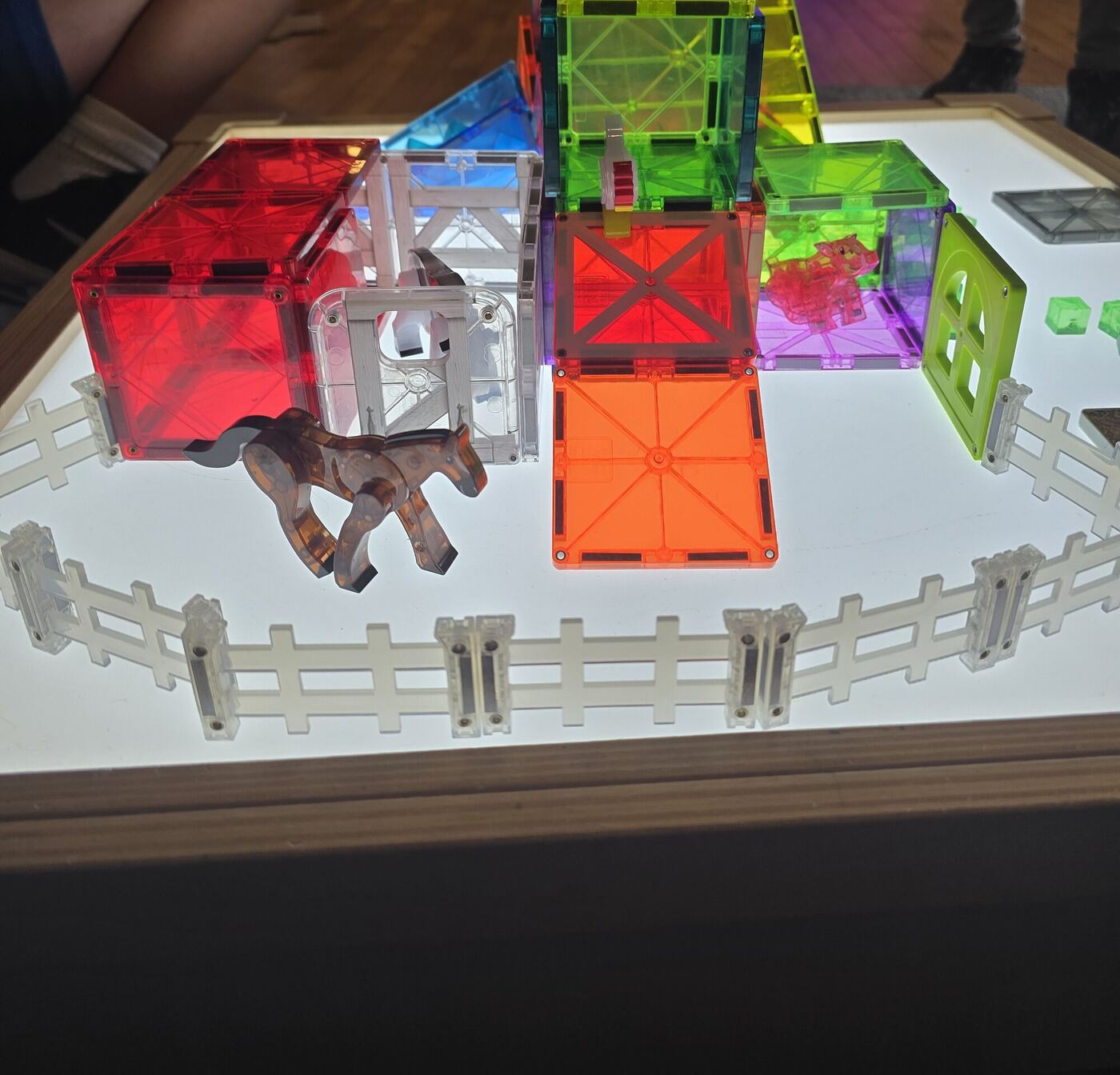
On the light table: building together, scrapping the plan, and starting again.
Also in October
The first relay race was close at the finish, and everyone completed it.
One crew invented a sport: hit a puck toward a football, and count the strokes like par in golf.
Wiffle ball in the auditorium, back when everyone thought that was safe.
Roller chair derby, for anyone who needed big body play.
In the middle of a kid-led Dungeons and Dragons campaign, the players started setting each other math problems and comparing how they solved them in their heads.
Spirit Week had an Animal Day and a Rainbow Day.
A game of Heads Up with everyone in the room in it.
November
17 entries
The Blender
Someone offered a drawing game called Fake Artist. Nobody wanted to be called a fake, so the group renamed it the Blender and played it under the new name. Several rounds, with adjustments as they went for what different players needed.
Visual Arts · Collaborative Problem-Solving · Communication · Group Game Design
Also in November
A chair had been waiting for repair for a while, until they found its seat made a frisbee.
They built a model of the heart out of balloons and zip ties, then went hunting for things to put under the microscope. That lasted days.
A game of keep-away, played competitively and gently at the same time.
Obstacle courses for every size, with everyone cheering each other on.
Something dug up in the garden beds was cleaned, tested with a hammer and looked at under the microscope. It was an old ceramic water pipe.
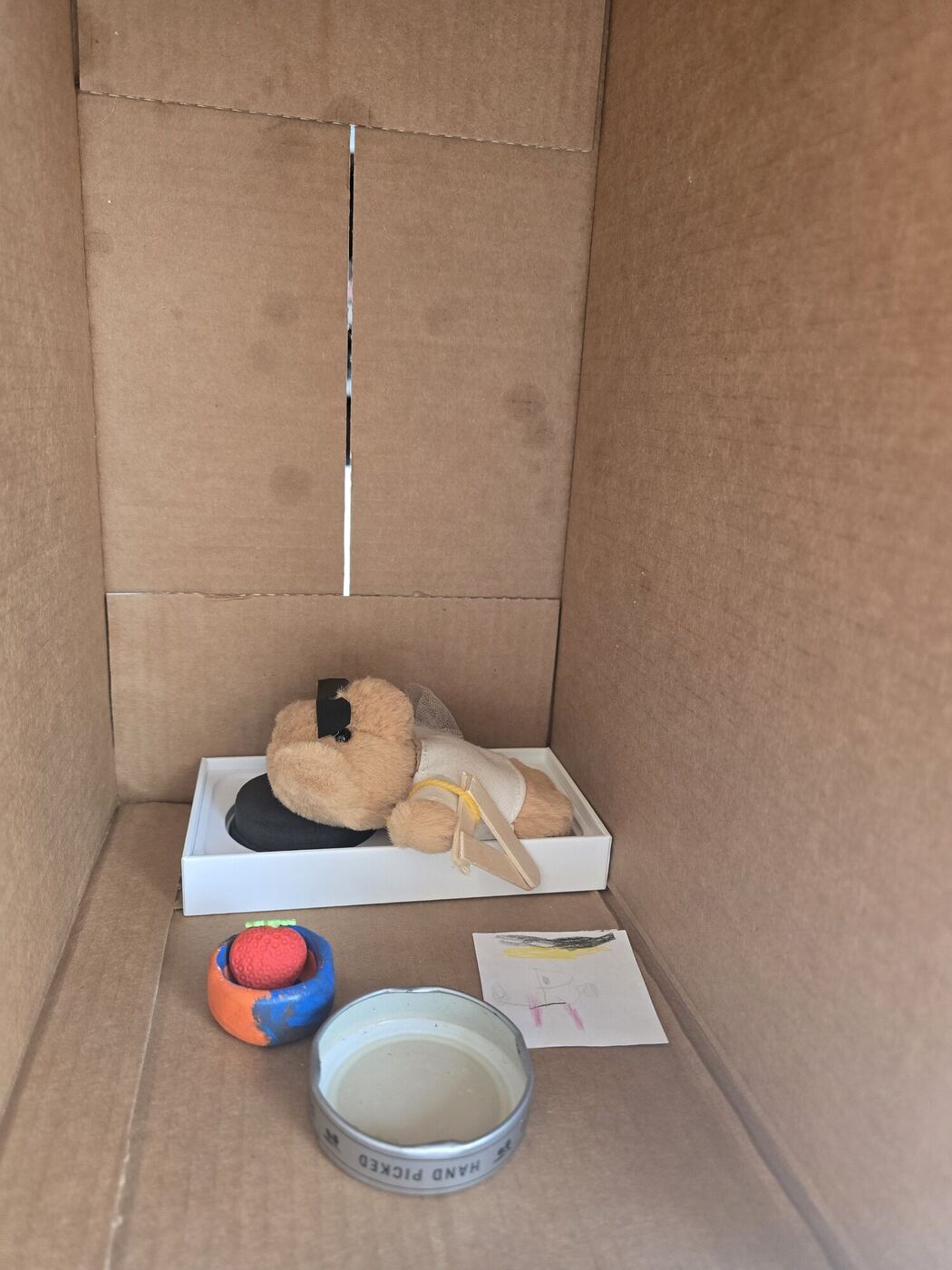
They built a box to feel safe inside when things get overwhelming.
The Friday before the Thanksgiving break was a small group, so it was forts.
December
26 entries
They invented a new game, then went through every object in the room deciding whether it was safe to play with. The unsafe ones were moved to a no pile.
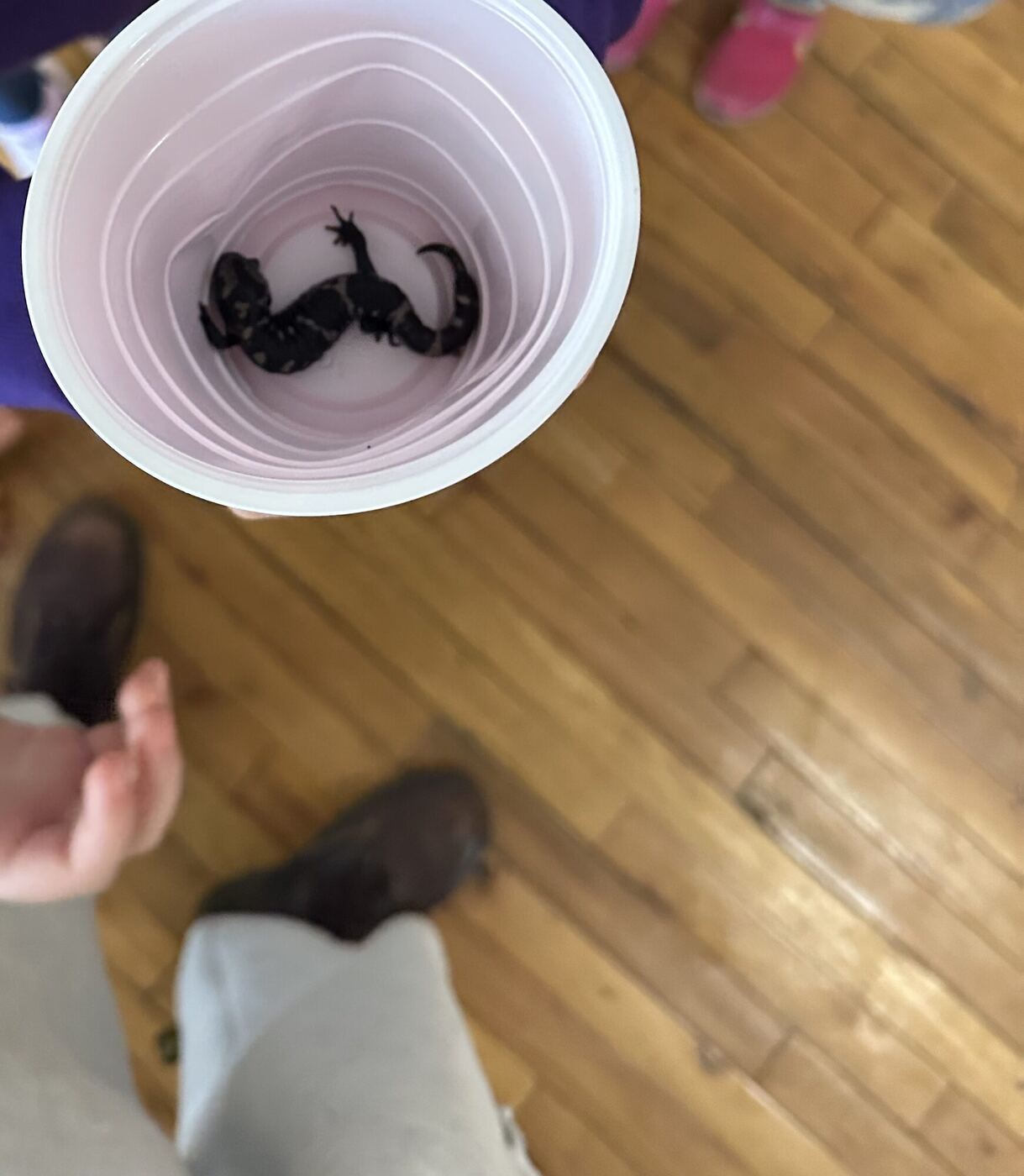
Back from a surprise visit from the fire truck at the station nearby, they found a salamander standing very still on the walkway, and started working out why.
Also in December
They sorted a sea of broken pottery for pieces that matched, and glued them back together, the way kintsugi does.
Floor is lava, on courses they built themselves and made harder as they went.
Balloons balanced on an air current, and predictions about which one would knock the other out.
A small stuffed bear turned up in the street. After several washes it was ready for a cast and crutches.
Gem mining: digging tools, taking turns, and trading.
Snow, and a chance to play in it.
January
55 entries
When players were knocked out of the musical chairs game, they started a second game alongside the first, so it did not have to end.
The hospitalAfterward
The bear
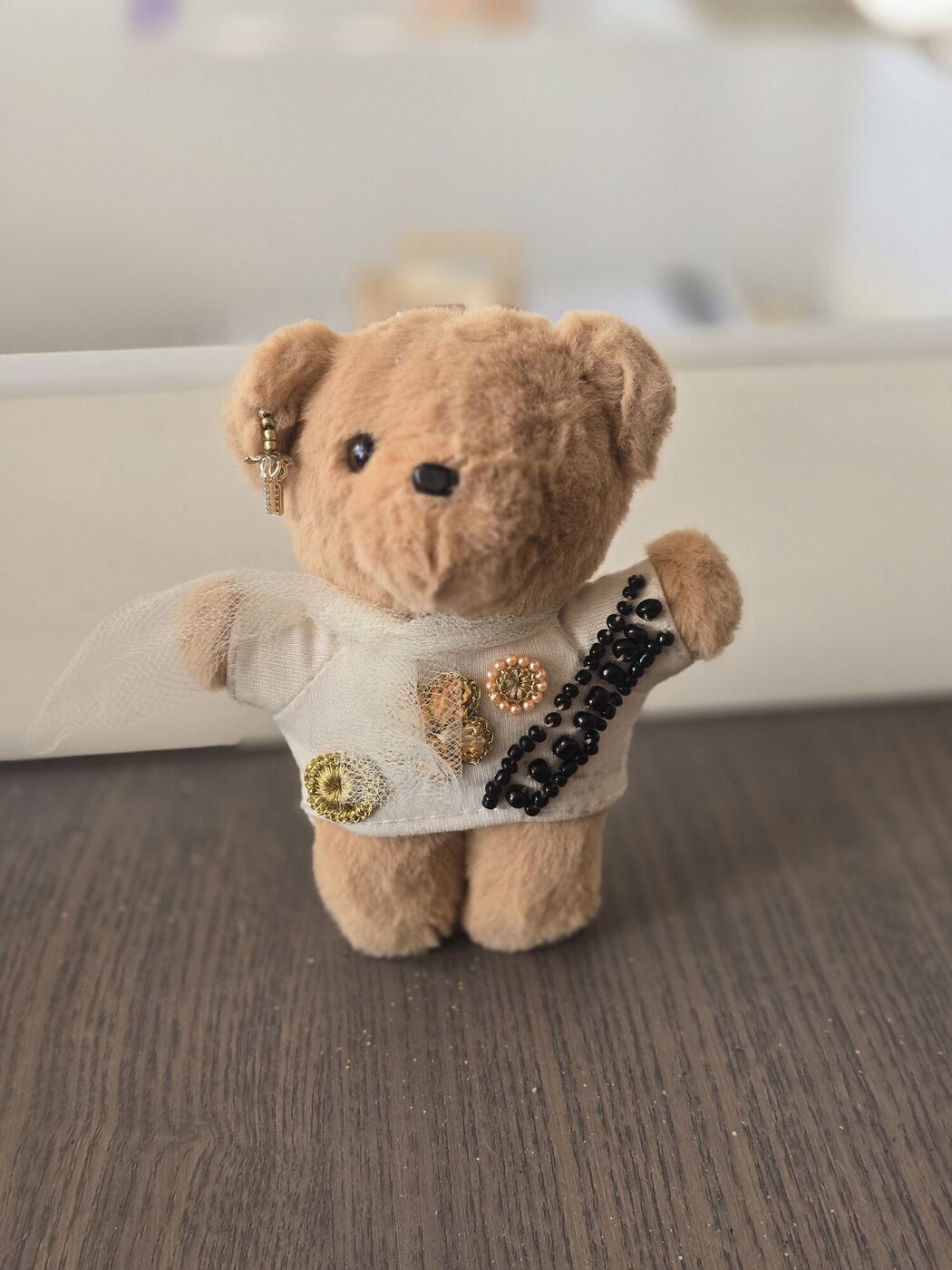
A facilitator brought in a small stuffed bear that had been run over. For the weeks that followed they looked after it: a hospital went up out of cardboard while the bear was repaired and decorated, and it came out of it with one eye and a pair of crutches. Along the way they talked about not throwing things away, about what an injury changes, and about who belongs to the place. The bear stayed.
Science · Social Studies · Empathy · Problem-Solving · Care & Nurturing
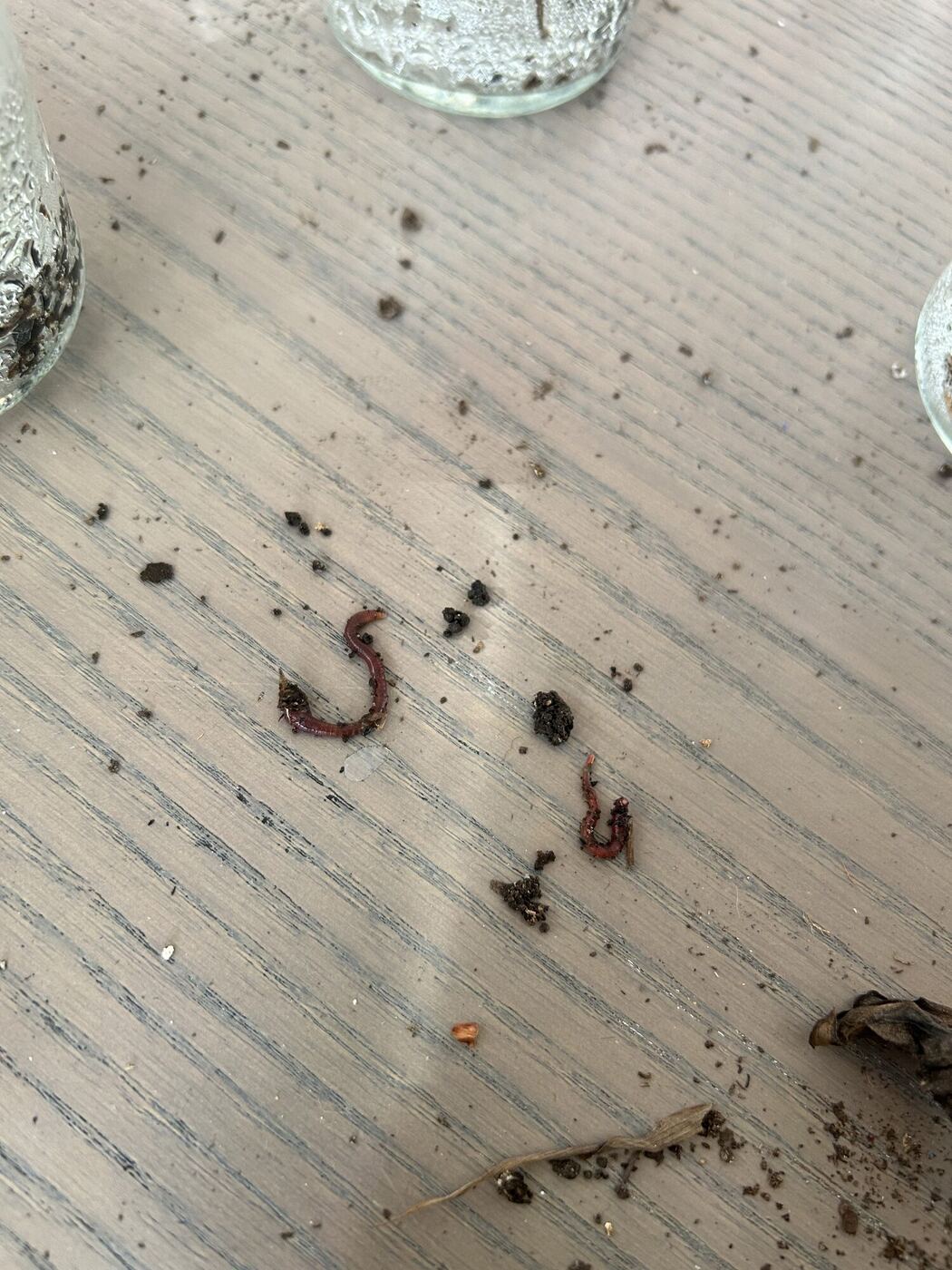
A facilitator brought compost from home that had turned into soil, worms and all. Getting used to the worms took a while.
Also in January
Pancakes on the grill: just enough batter, then the flip.
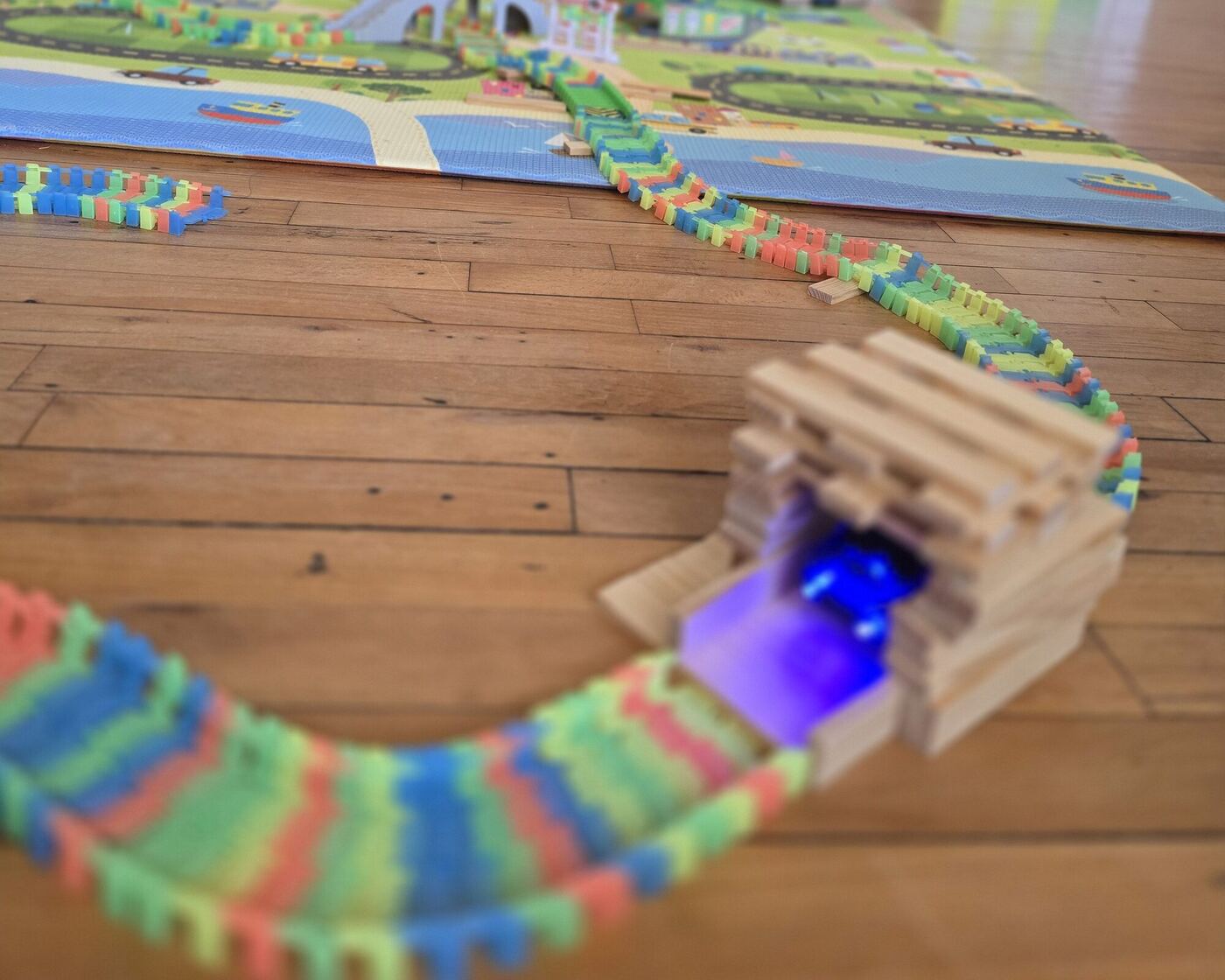
They built race tracks with loops and curves, working out how much push a car needed to get all the way around.
Ice had formed on the porch steps. They smashed it with rocks and looked at the chips.
A phone from the nineties, and how landlines worked.
A new multi-sensory room was set up, with help.
A game of sardines.
February
33 entries
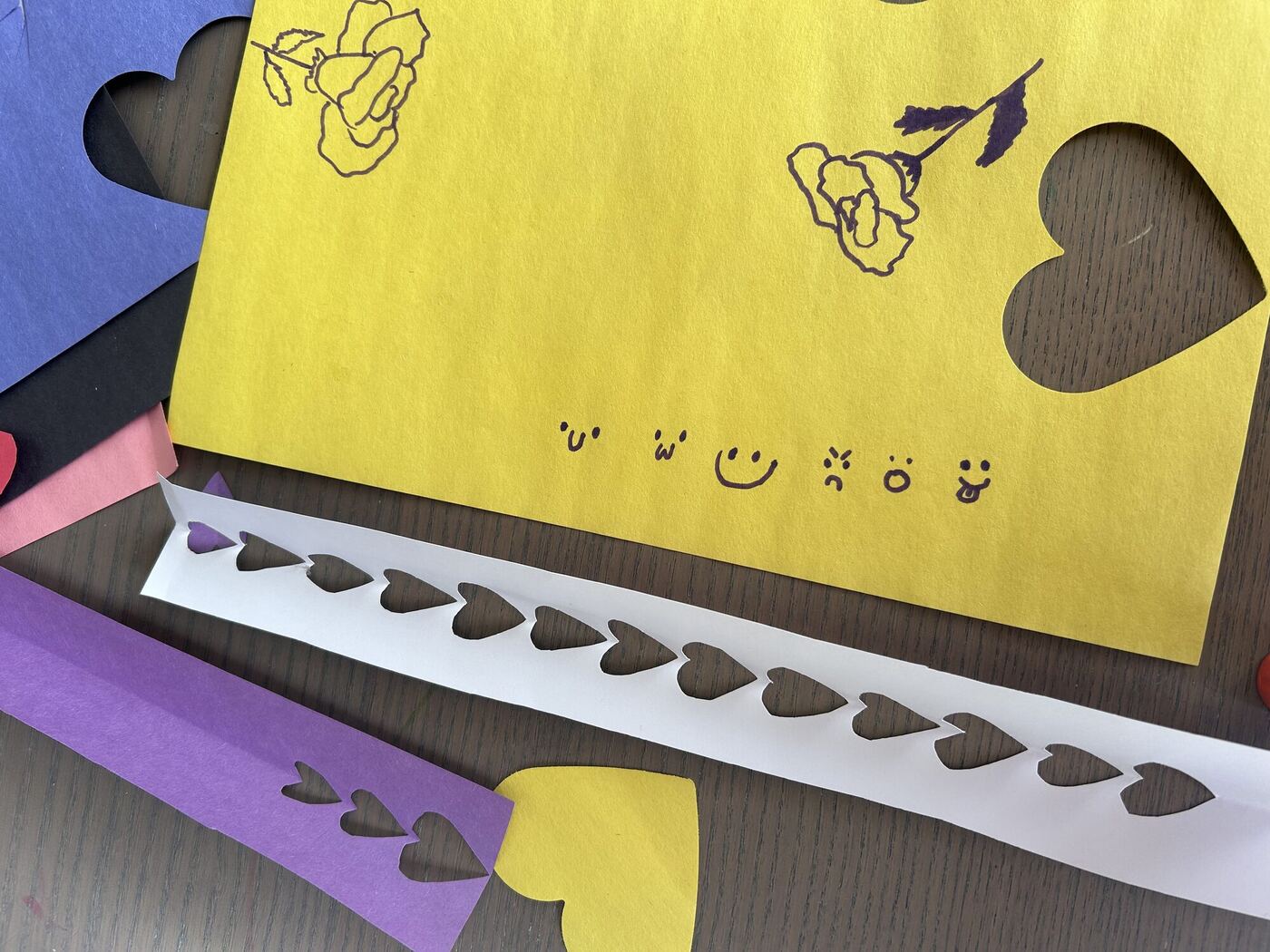
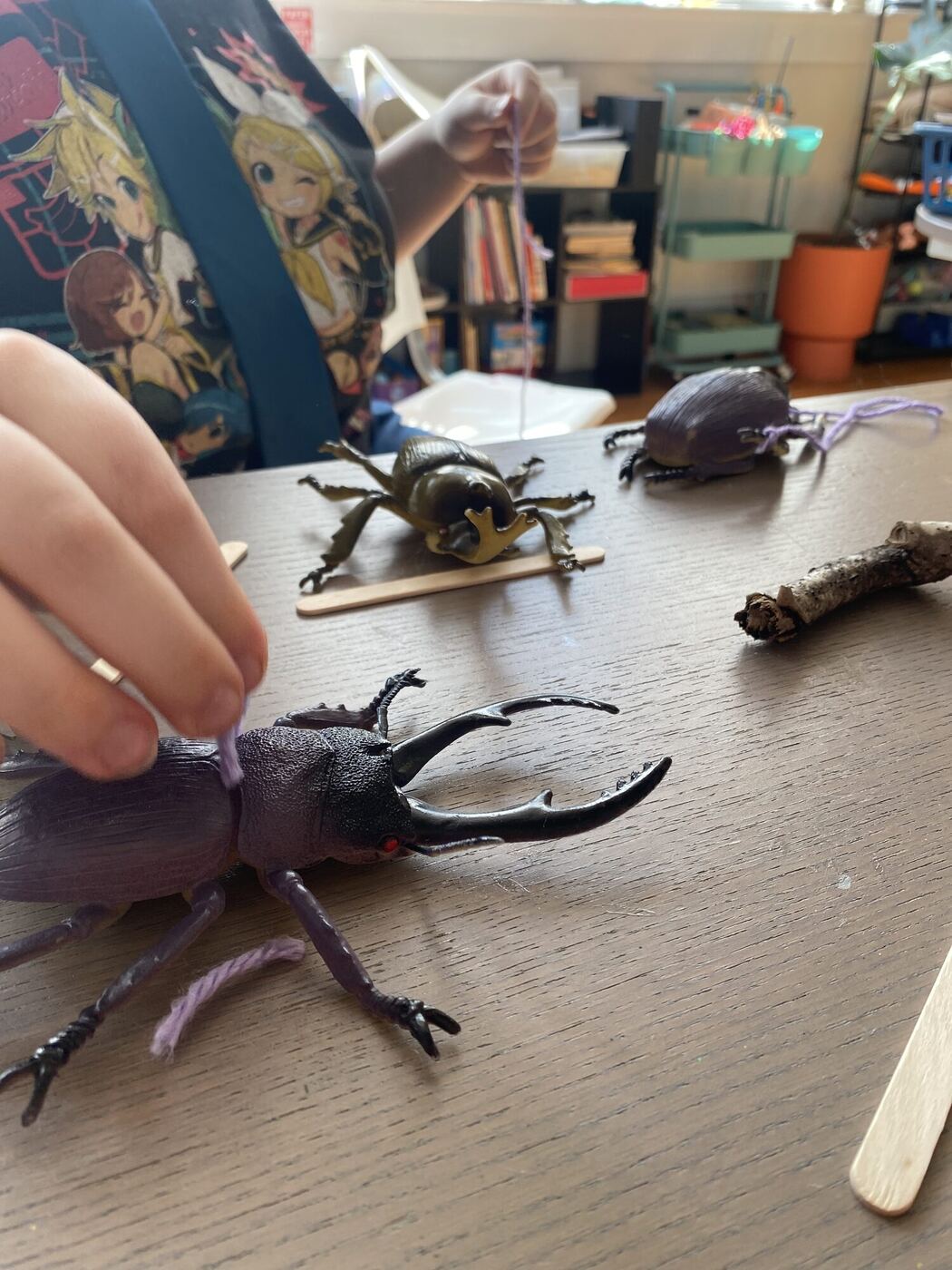
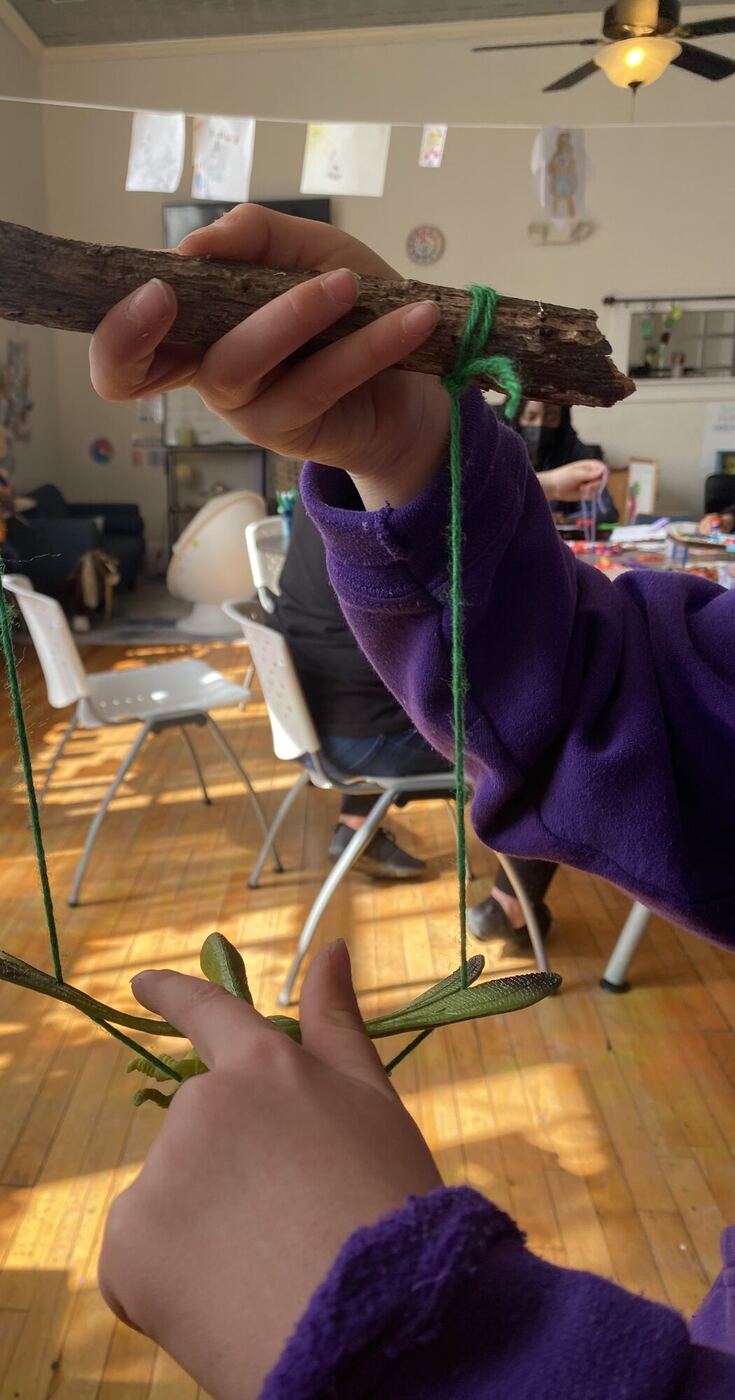
Back from the garden and the field, they emptied a bin of toy bugs, and the bugs became puppets on sticks and yarn. Valentine's cards, for each other and for people they care about.
Waiting to be picked up, they played Bubblegum, the old rhyme for choosing who is it, as a whole game of its own.
Also in February
A learner offered freeze tag at morning meeting, and it was played until everyone had worked up a sweat.
Can Jam came out, and with it the first lunch picnic of the season.
Flag football, with a facilitator commentating and the experienced players explaining the rules to the new ones.
Fig tree starts went into the garden, and seeds that need to begin indoors were planted inside.
Lanterns for the Lantern Festival, each with a platform for an electric candle.
March
50 entries
The museum
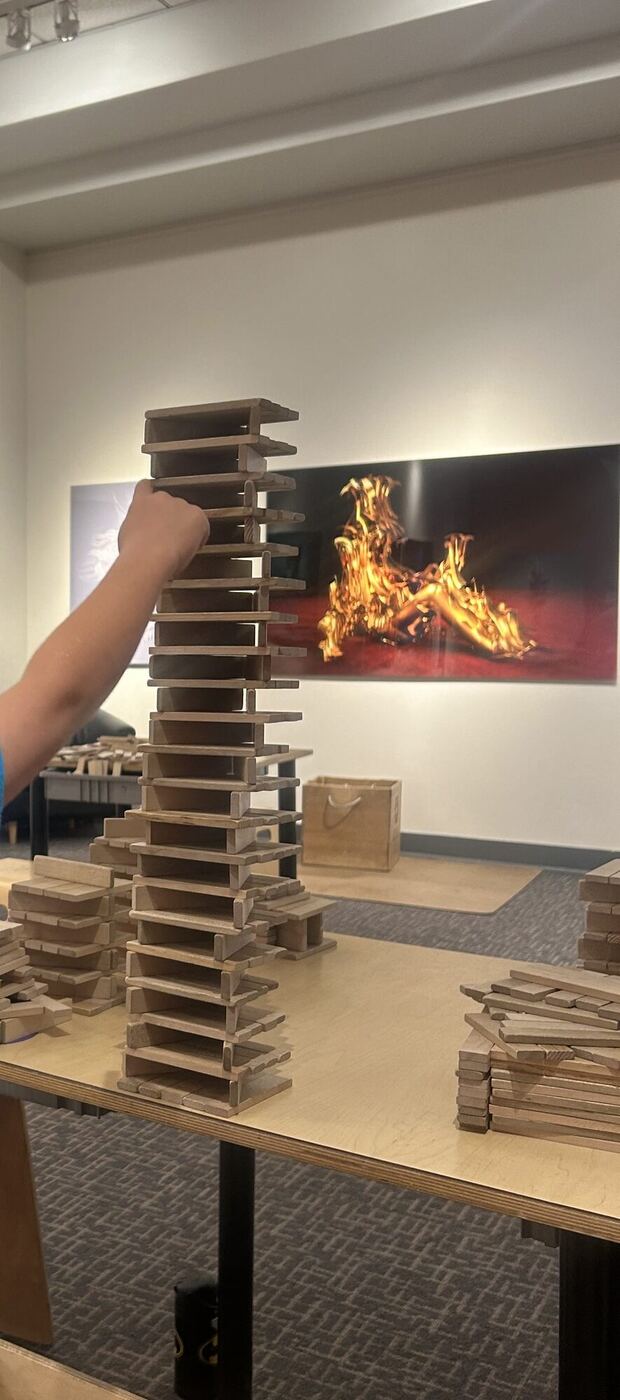
A Friday spent at the science museum. Paper planes tested down a hall, the new room of spacecraft and satellites, buildings run up out of wooden planks. The group worked out its own route through the building and took each other's input on where to go next.
Engineering · Collaboration · Problem-Solving · Space Exploration · Building & Construction
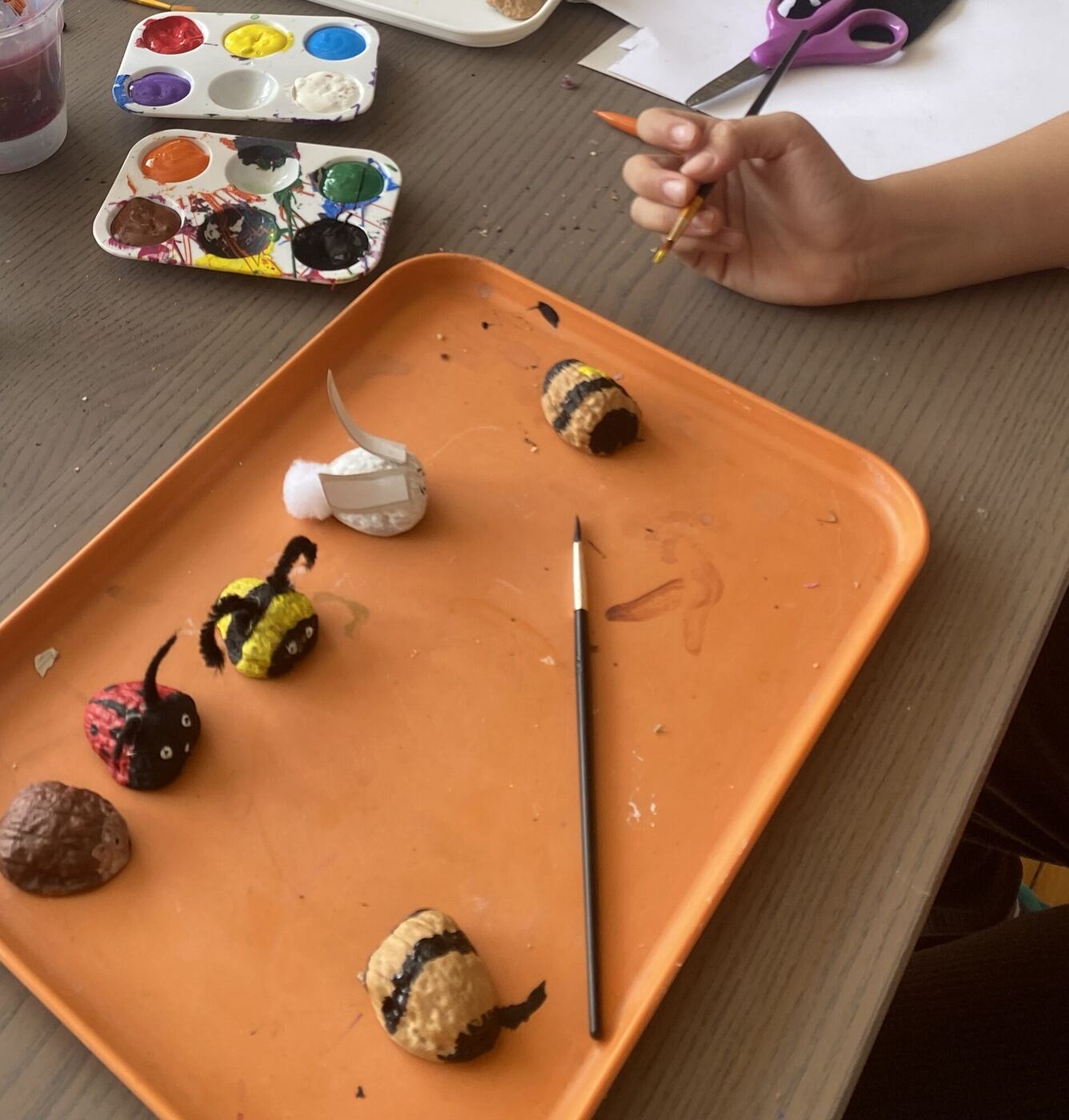
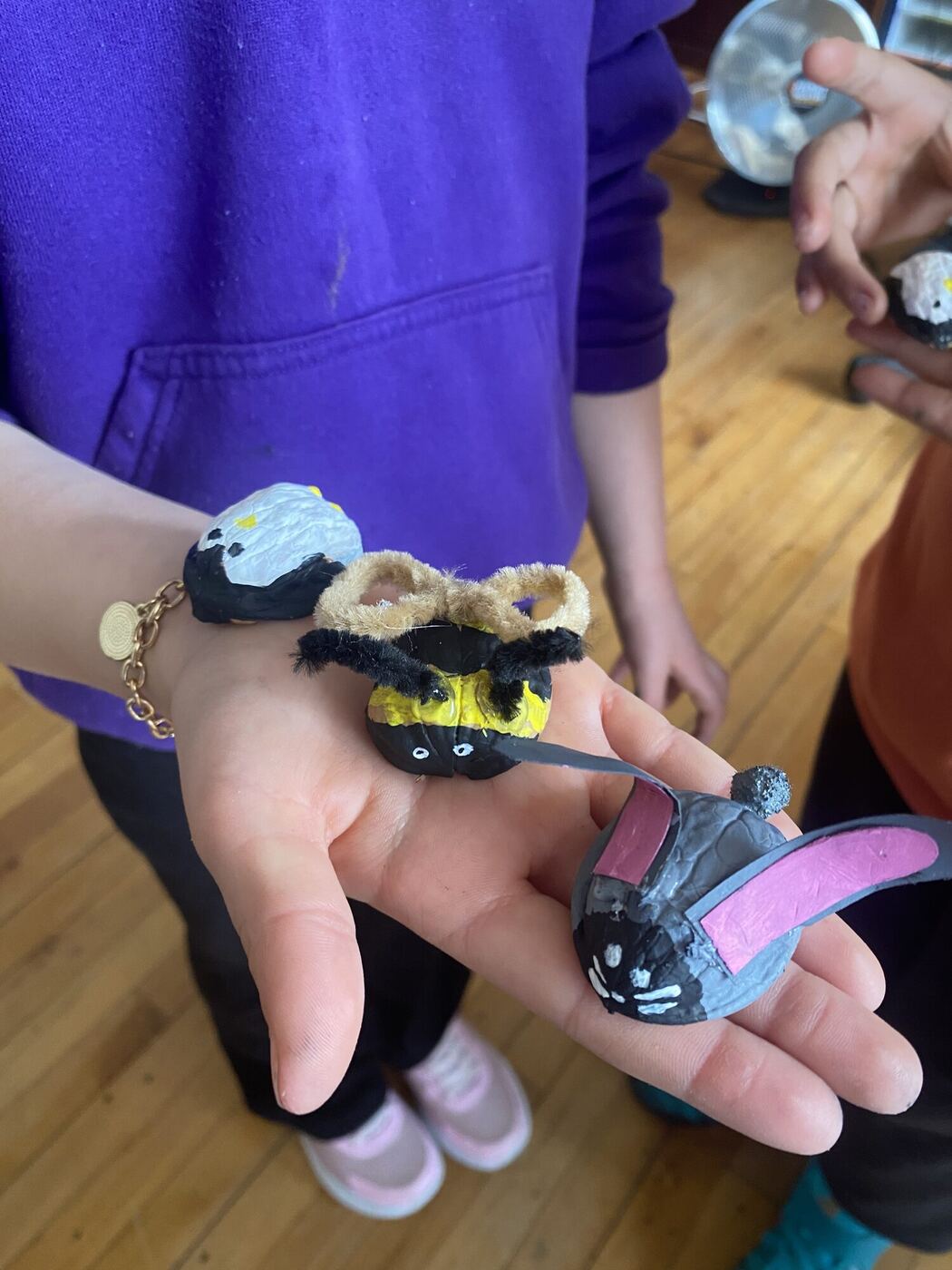
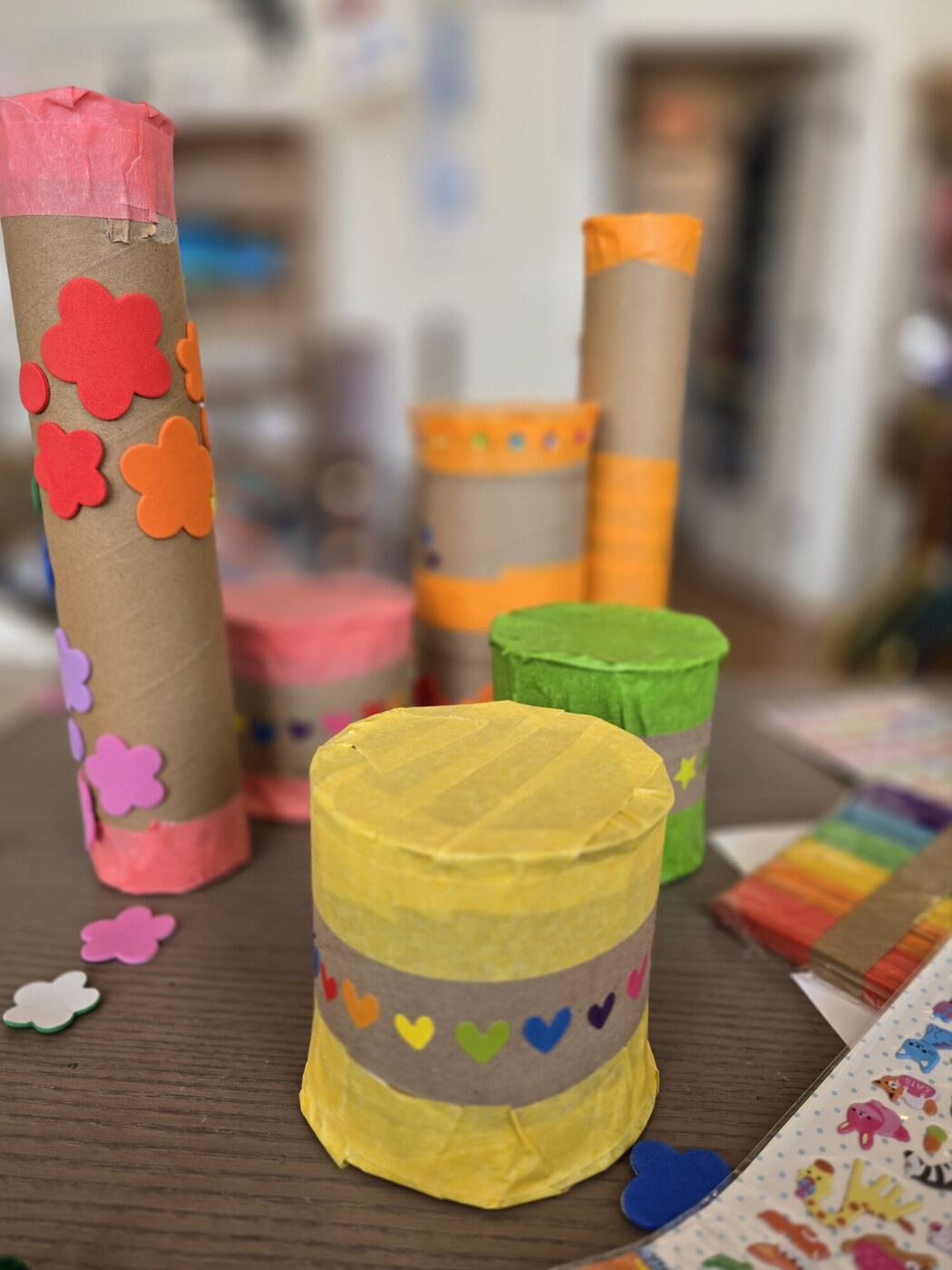
Raw walnuts, opened with a lever so both halves of the shell stayed whole, then painted into palm pets. Shakers for the music collection, from cardboard tubes.
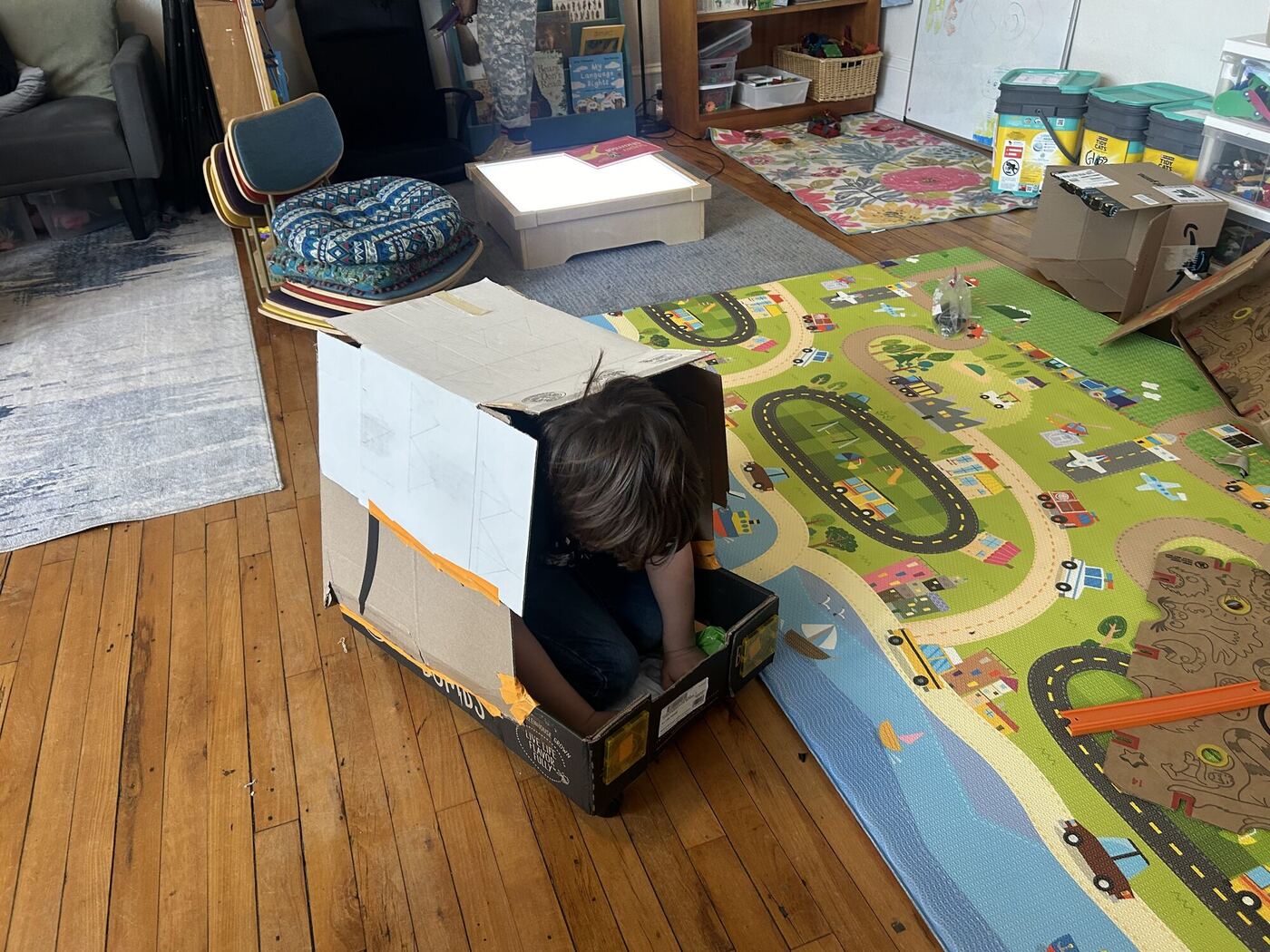
Several of them tried to build a cart big enough to ride in. It took more than one attempt.
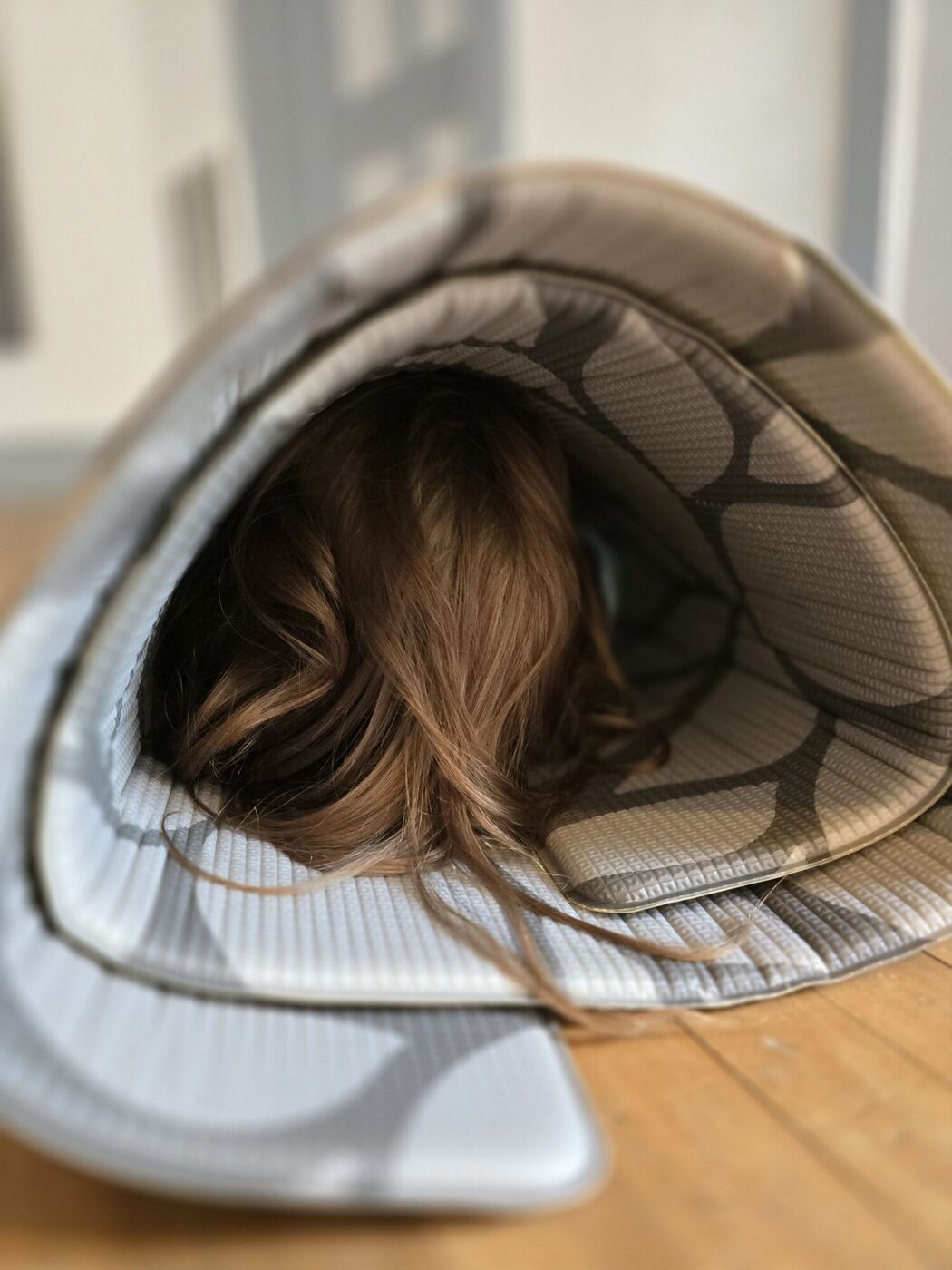
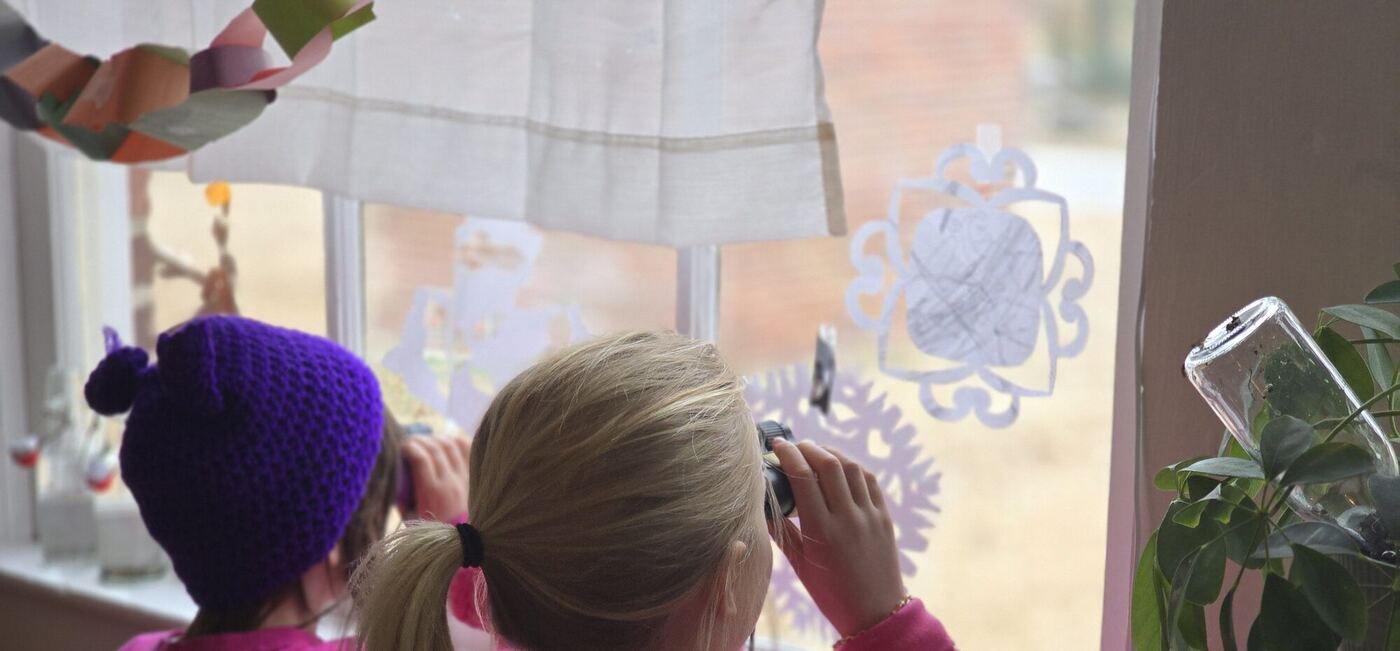
Burritos: choose your fillings, then get rolled up in a mat. Bird watching from the window.
Also in March
Bath fizzies from a kit with almost no instructions, so the ratio of powders, oil and color became the experiment.
Park Ranger: pick an animal, and run when the ranger calls out one of its traits.
An injured butterfly was stuck on the entrance ramp. They looked up how to move one safely, and a facilitator set it on a daffodil.
At reset, two of them carried a tower of foam blocks taller than both of them down the hall.
At a planet-building offering one person made the whole solar system, and the others made planets of their own.
They took turns between jigsaw puzzles and a word-guessing game.
April
31 entries
Before a sword fight, they agreed on the rules, showed each other how hard or light they were okay being hit, and stopped often to check in.
When someone brought in soft swords and shields, the game was adjusted until it fit everyone.
Movie making: one learner as cinematographer and a director, others happier in the background or behind the scenes.
An offering on balance: a yardstick held level on the forearms, and a talk about gravity and equilibrium.
Four hockey sticks, a puck and a ball, brought from home for a game with friends.
Tie-dye week started, with rubber bands and squeeze bottles.
Talent show preparation took the whole day: box car racing around the audience, the sound system hooked up and tested, an art gallery.
A board game that walks through the evolution of species, and a slide built on the staircase, the safest one they could make.
A game of Twister.
May
41 entries
Two players, one scene
Two learners spent the start of the week acting out favorite Star Wars scenes. They negotiated who played which part and what order the scenes came in, then ran them again.
Drama · Negotiation · Sequencing · Star Wars
One room, four kinds of work
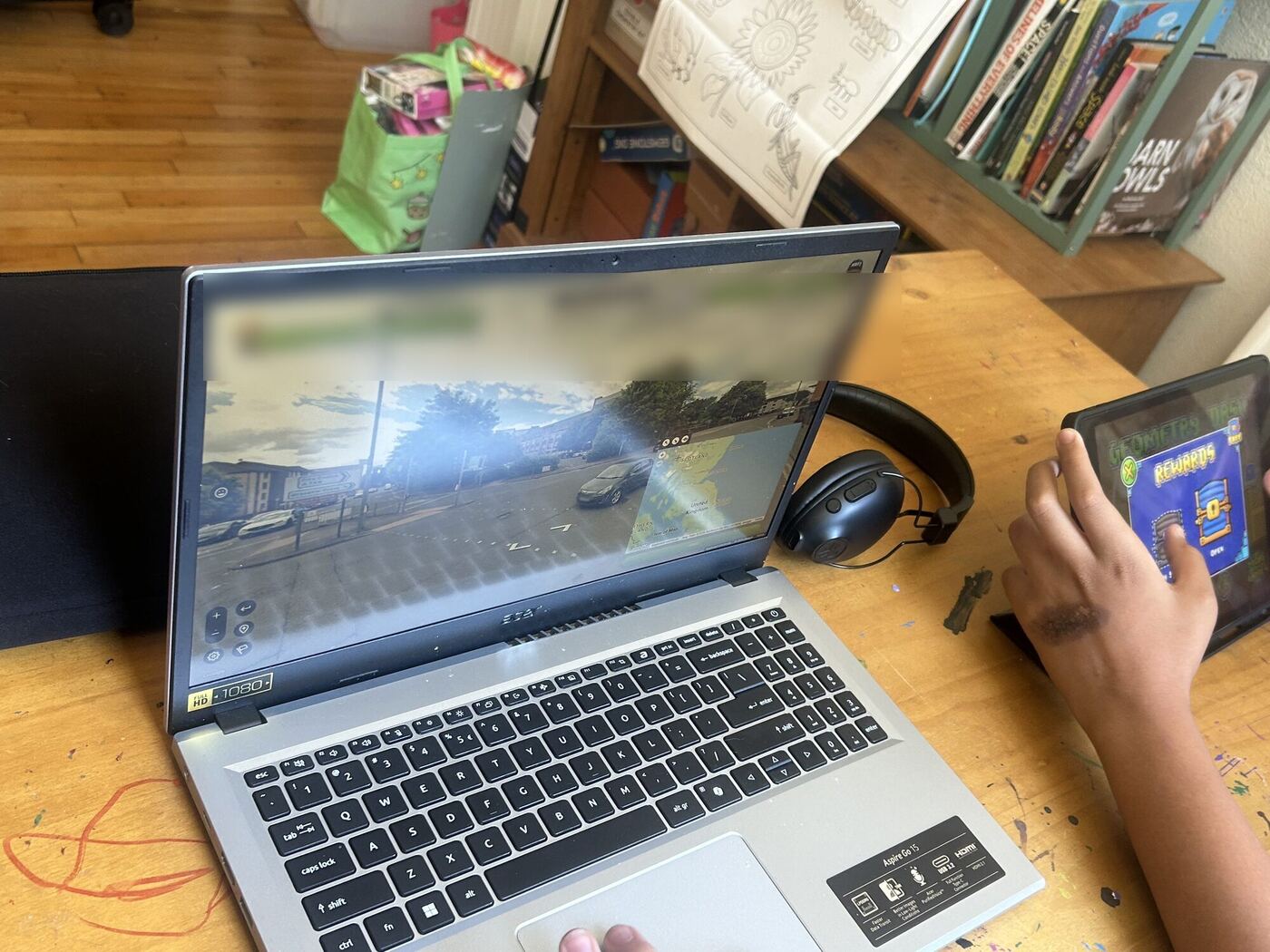
A Monday in the main classroom: logic puzzles at one table, a textbook read aloud at another, a personal website being built, a map being worked through. All of it at the same time, in one room, chosen by the people doing it.
Mathematics · Language Arts · Computer Science · Geography · Logic
Where the stairs go
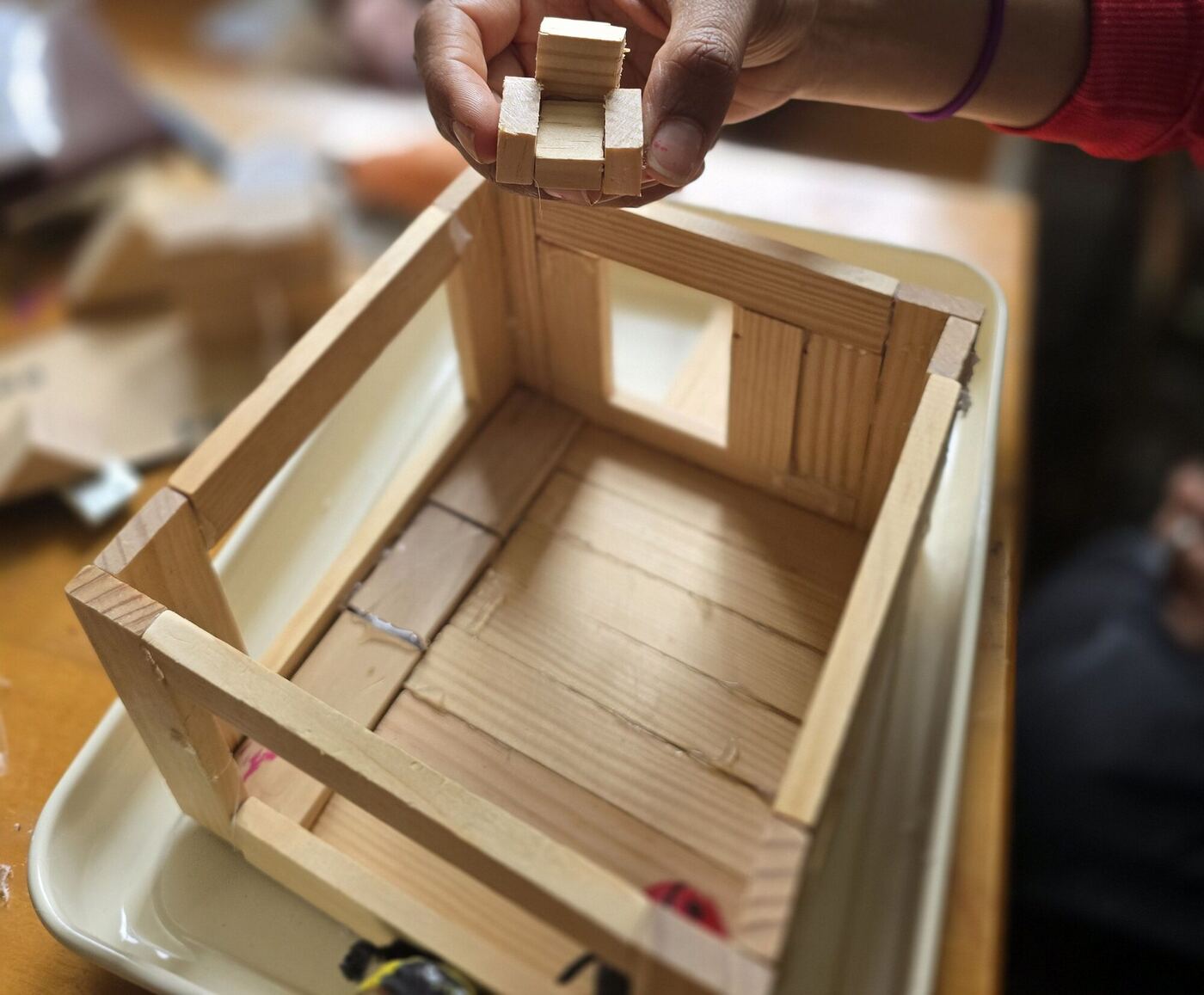
Over a fortnight a group built a model house out of real wood. They took turns measuring and designing while a facilitator did the sawing and the gluing. Where the stairs should go took a while to settle. The offcuts became furniture, and the plan grew into a ranch with a lot of rooms.
New scooters you ride sitting down arrived for the auditorium, and the games kept coming: trains of riders, then human bowling. A race track that ended in a domino run. A DJ deck that had stopped working, taken apart on the table.
Also in May
Newspaper kites on upcycled wooden rods. The rods were too heavy for the paper, so on to round two.
A four-leaf clover got stuck in the laminator, so they took the laminator apart to rescue it.
The Wildly Inclusive Olympic Games: sports they invented, with commentary into a mic and commercial breaks.
Before a whole chicken was cooked, they learned its anatomy.
A secondhand DJ deck arrived, and they inspected it for signs of a scam, as Lead Inspector, Researcher, Detective and Inspector.
Chess was out on the table almost every day.
June
52 entries
The teens, at the end of the year
Two rounds of a party game on a laptop. The first was a rap battle written on the spot, which meant rhyming at speed and reaching for metaphors. The second was a pitch contest for absurd inventions, voted on for how funny they were and whether they would actually solve the problem.
Language Arts · Creative Writing · Persuasion · Rap & Poetry
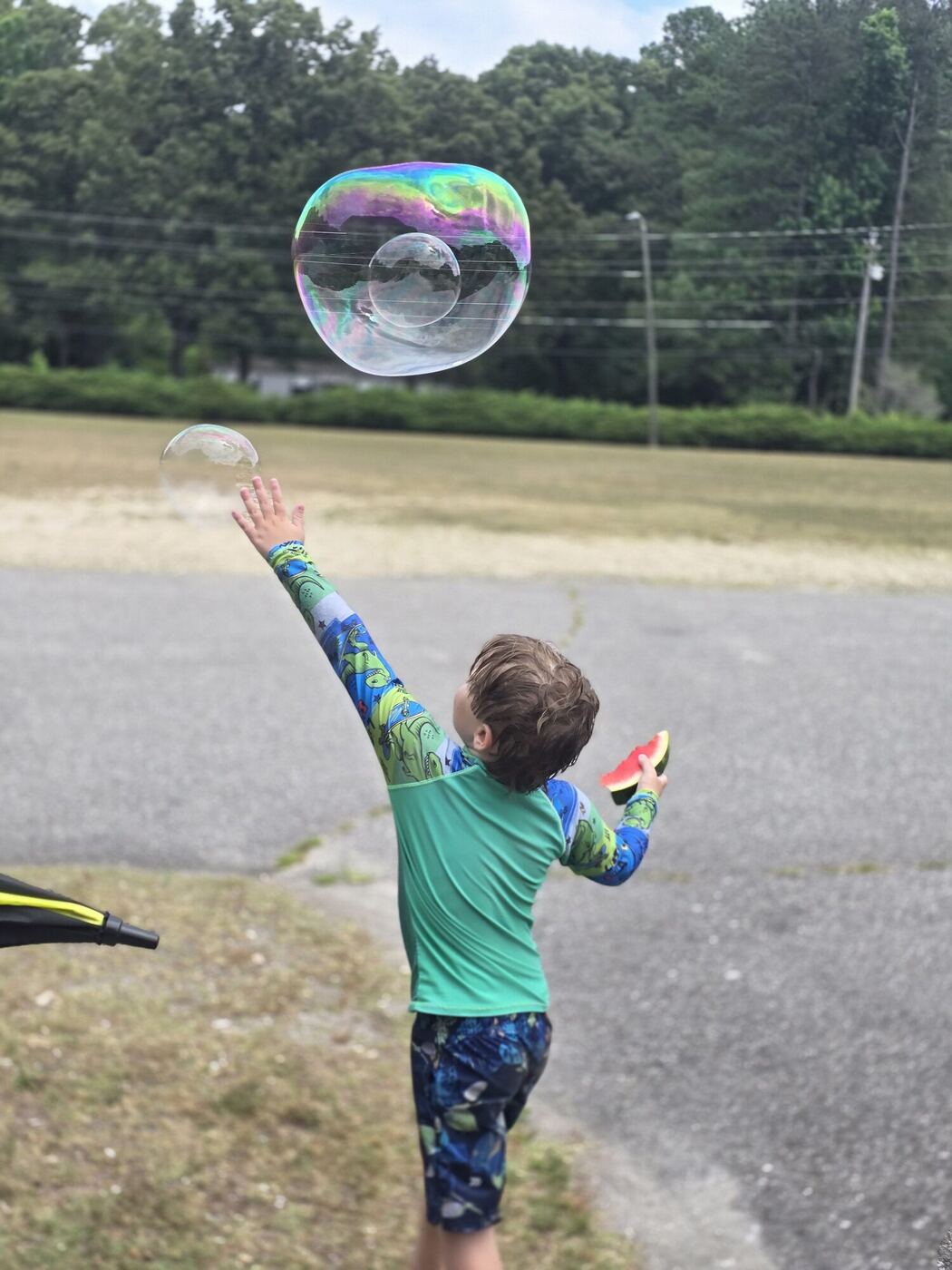
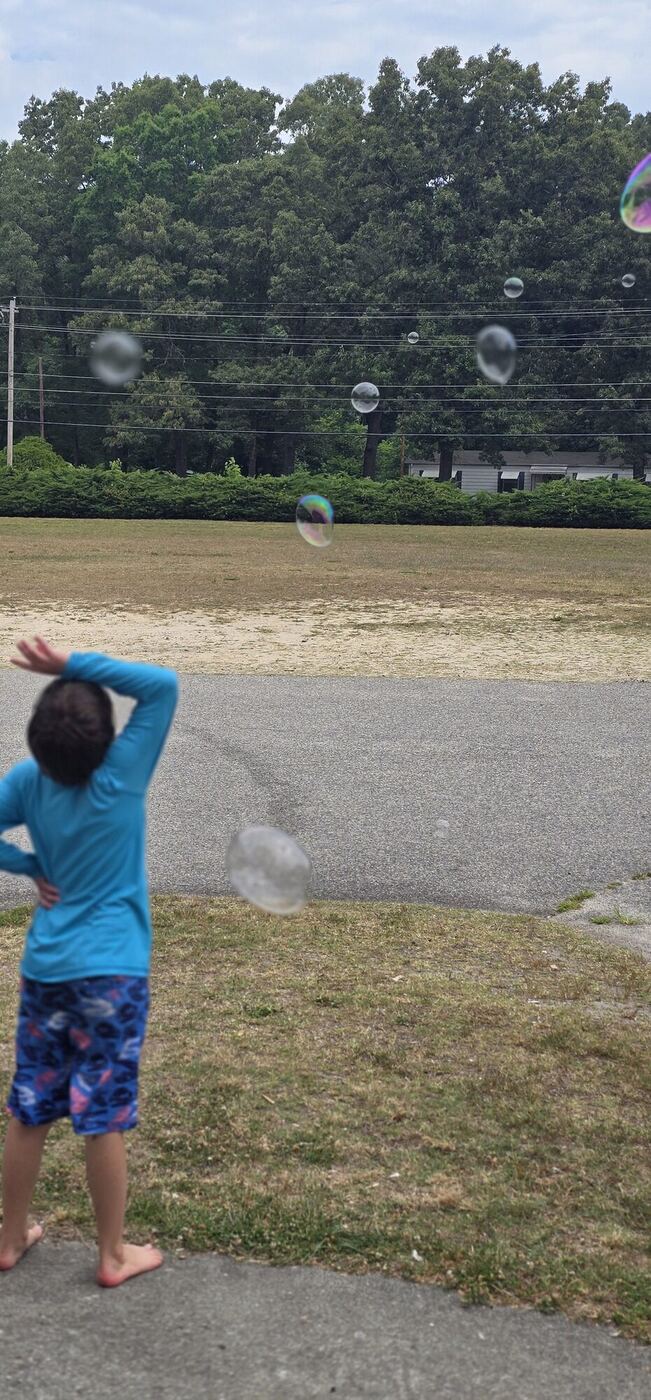
At the end-of-year celebration they tried to catch a friend inside one of the giant bubbles. The bubbles weren't quite big enough.
Every member of the community got a Paper Plate Award: a shiny paper plate with a silly title on it, for what they had brought to the place.
Also in June
A year-end tradition: the watermelon explosion, then the watermelon.
An old board game came back, and this time they ran it themselves with no facilitator in the game, checking in with each other as they went.
A storytelling game about student wizards, solving problems with spells they could barely control.
A kite from bubble wrap and straws. Not enough surface area to catch the wind.
July
8 entries
Over the summer, a dance camp.
In the 2025-26 year
406
entries, written by the people who were in the room.
5
facilitators wrote them, and no one else.
36%
of the entries carry two or more subject areas in their Learning Signals.
What the record shows
Language arts is the most documented subject of the year, with mathematics and visual arts close behind, and almost all of it arrives inside something else: a card read to work out what it does, a score kept, a five-letter word guessed from clues. The program's own two biggest categories are Offerings, things one person brought and opened to whoever wanted it, and Free Play. Social and emotional learning shows up on more of the year's moments than any other domain, well over half of them.
About this page
Written down by the people who were in the room.
Every moment here comes from Wildly Inclusive's own record: the entries its five facilitators wrote in Prism over the year, a photo and a few sentences at a time. The small capitals under the stories are the Learning Signals Prism found in those entries.
“Prism allows us to easily make visual all the embedded learning happening at Wildly Inclusive. Parents love seeing what learners are up to all day.”
Amber Crews, program director, Wildly Inclusive
Visit
Wildly Inclusive
An inclusive, affirming self-directed learning community in Durham, North Carolina, for ages 5 to 18.